You notice it first in the mirror under bright bathroom lighting – a wider part, less volume around the crown, more scalp showing than it used to. For many women, searching for the best treatments for female hair thinning starts after months of trying to ignore subtle changes that suddenly do not feel subtle anymore.
Hair thinning in women is common, but that does not make it easier emotionally. It can affect confidence, styling choices, and the way you feel in professional and social settings. The good news is that effective treatment exists, but the right option depends on why the thinning is happening, how advanced it is, and what kind of result you want.
What causes female hair thinning?
Female hair thinning is not one condition. It is a symptom with several possible causes, and that matters because treatment should match the diagnosis.
One of the most common reasons is female pattern hair loss, also called androgenetic alopecia. This usually shows up as diffuse thinning over the top of the scalp rather than a receding hairline. Hormonal shifts can also play a role, especially after pregnancy, during perimenopause, or with conditions such as PCOS. Some women experience shedding after stress, illness, surgery, or rapid weight loss. Others may be dealing with iron deficiency, thyroid imbalance, inflammation of the scalp, traction from tight hairstyles, or breakage that mimics true thinning.
This is why a proper assessment matters. If a woman with temporary shedding is treated as though she has permanent follicle miniaturization, results may disappoint. On the other hand, waiting too long to treat progressive pattern loss can make restoration harder later.
Best treatments for female hair thinning depend on the stage
There is no single best treatment for every woman. The strongest results usually come from a personalized plan rather than one standalone option. In early or moderate thinning, non-surgical treatments may stabilize loss and improve density. In advanced cases, a transplant may be the treatment that creates the most visible change.
Medical evaluation comes first
Before choosing a treatment, the first goal is to identify the pattern and rule out contributing issues. A clinician may review your medical history, recent stressors, medications, menstrual or menopausal changes, family history, and scalp condition. In some cases, blood work is recommended to look at iron, thyroid markers, vitamin levels, or hormone-related factors.
That first step can feel basic, but it is often what separates guesswork from a plan that actually works.
Topical minoxidil
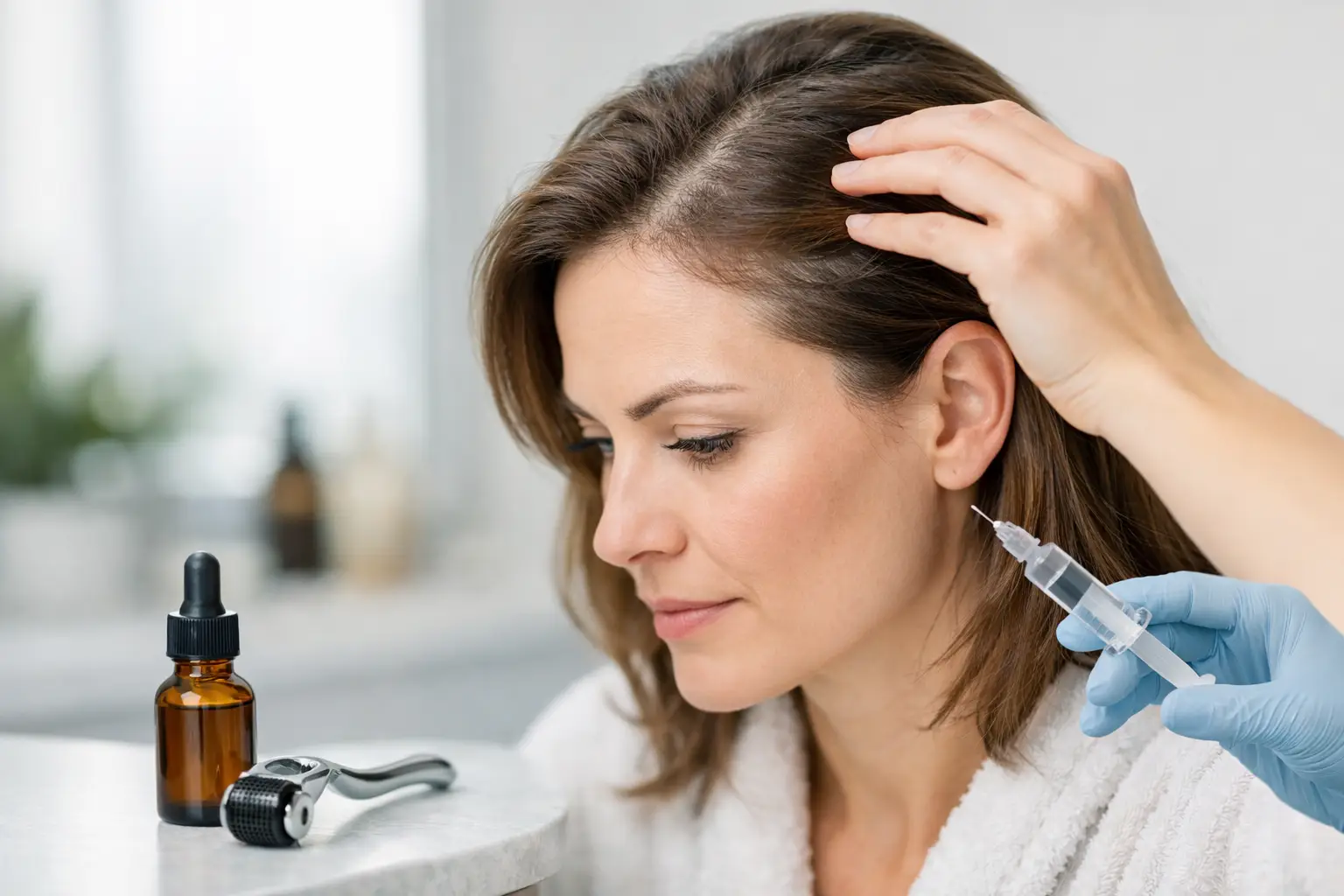
Minoxidil remains one of the most widely used first-line treatments for female pattern thinning. It helps extend the growth phase of hair and can support thicker, longer-lasting strands over time. For many women, it is a practical option because it is non-surgical and can be used at home.
The trade-off is patience and consistency. Minoxidil usually takes several months before improvement becomes noticeable, and some women experience temporary shedding at the start. It helps maintain and improve existing follicles, but it does not create instant density. It also needs ongoing use if you want to preserve the benefit.
Oral medications
For selected patients, oral treatment may be appropriate. Depending on the underlying cause, a physician might consider options that address hormone-related thinning or support hair growth systemically. This can be especially relevant in women with androgen sensitivity, PCOS-related loss, or persistent pattern thinning that has not responded enough to topical care.
This is not a one-size-fits-all category. Some medications are not suitable during pregnancy or while trying to conceive, and others require monitoring based on age, health history, or hormonal status. That is why medically supervised treatment matters.
PRP for hair thinning
Platelet-rich plasma, or PRP, is one of the most requested in-clinic options for women who want a minimally invasive treatment with little downtime. PRP uses a concentration of your own platelets, prepared from a blood sample, then injected into areas of thinning scalp to support follicle activity and improve hair quality.
Women often choose PRP because it can fit well between topical treatment and surgery. It is especially useful when follicles are still active but weakened. The goal is not to replace every missing hair overnight. The goal is to improve the environment around the follicle and encourage stronger growth.
Results vary, and PRP tends to work best as a series rather than a single session. It may also be combined with other treatments for a more complete plan. Women with severe follicle loss or shiny bald areas may need a different approach, because PRP cannot revive follicles that are no longer functioning.
Scalp health treatment
Sometimes the issue is not just the hair follicle itself but the scalp environment. Inflammation, excess oil, buildup, or certain scalp conditions can interfere with healthy growth and make thinning look worse. When the scalp is irritated, even good home care may not be enough.
A treatment plan may include medical shampoos, anti-inflammatory treatment, changes in hair care habits, or targeted scalp therapy. This part is often overlooked, but a healthier scalp can make other treatments more effective.
When hair transplant becomes the best option
For some women, a hair transplant offers the most meaningful improvement, particularly when thinning is stable and there is enough healthy donor hair. This is usually considered when non-surgical treatments are not giving enough density or when the thinning pattern has become more advanced.
Female hair transplants are not about creating an artificial look. Done well, they are designed to restore density in a natural pattern that suits the face, age, and hair characteristics of the patient. Precision matters here – direction, angle, spacing, and donor management all affect the final result.
Not every woman with thinning is a transplant candidate. Diffuse loss across the entire scalp can limit donor strength, and active shedding conditions should usually be stabilized first. But for the right patient, transplantation can provide a long-term solution that dramatically improves visible fullness.
At a specialist clinic such as A H T Aesthetic Medical Center, this decision is typically part of a broader treatment strategy rather than a rushed recommendation. That matters because women often need a combination of stabilization and restoration, not just one procedure.
The best treatments for female hair thinning often work together
The most effective plans are often layered. A woman with early female pattern loss might use minoxidil and PRP to strengthen existing follicles. A woman with hormonal thinning may benefit from medical management plus scalp treatment. A woman with advanced thinning in a defined area may combine a transplant with maintenance therapy to protect surrounding hair.
This combination approach is usually where the best outcomes happen. Hair thinning is dynamic. It changes over time, and treatment should adapt with it.
What results should you realistically expect?
This is where honest guidance matters. Hair treatment can deliver excellent improvement, but results are rarely immediate. Most non-surgical options take several months to show visible change. Hair grows slowly, and follicles need time to respond.
Some treatments are better at slowing progression than creating dramatic density. Others, like transplants, can produce a more visible transformation but still require planning, recovery, and growth time. The right question is not just, Which treatment is strongest? It is, Which treatment fits my type of thinning, my goals, and my timeline?
That shift in expectation helps women make better decisions and avoid the frustration that comes from chasing fast fixes.
When to seek professional help
If your part is widening, your ponytail feels thinner, styling no longer covers the scalp the way it used to, or shedding has lasted longer than a few months, it is worth getting evaluated. The earlier you identify the cause, the more treatment options you usually have.
It is also worth seeking expert care if you have already tried supplements, shampoos, or online remedies without a clear plan. Hair thinning can be treated, but the strongest outcomes usually come from diagnosis first and treatment second.
Confidence often starts to return before the final result does – simply because you know what is happening and what can be done about it. When a treatment plan is tailored to your pattern of loss, your hair goals, and your stage of thinning, the path forward feels much clearer.