Hair loss rarely starts all at once. For most people, it shows up in the shower drain, in old photos, or under bright light when the scalp suddenly seems more visible than before. That is exactly why interest in Exosomes Treatment has grown so quickly. Patients want an option that feels modern, medically guided, and focused on improving hair quality before thinning becomes harder to manage.
Exosome-based therapy is being discussed more often in regenerative medicine, especially in hair restoration. It is commonly presented as a way to support the scalp environment, encourage healthier follicles, and complement other non-surgical or surgical hair treatments. But as with any advanced treatment, the real value is in understanding what it can do, what it cannot do, and whether it makes sense for your stage of hair loss.
What Is Exosomes Treatment?
Exosomes are tiny extracellular vesicles released by cells. They carry signaling molecules such as proteins, lipids, and growth-related factors that help cells communicate with one another. In aesthetic and regenerative medicine, these signals are being studied for their potential role in tissue repair and recovery.
When used for hair concerns, exosomes treatment is typically delivered into the scalp in a controlled clinical setting. The goal is not to transplant new follicles. Instead, the treatment is intended to support the scalp and existing follicles by improving the local environment around them. That distinction matters. Patients with thinning hair often assume every injectable treatment creates new hair where no viable follicle exists. In reality, regenerative therapies are generally most useful when follicles are still present but weakened, miniaturized, or underperforming.
This is one reason proper assessment comes first. Hair shedding, pattern baldness, stress-related thinning, hormonal shifts, and post-procedure recovery can look similar at a glance, but they do not respond the same way.
How Exosomes Treatment for Hair Loss Works
Hair follicles cycle through growth, transition, and resting phases. In many forms of hair loss, especially androgen-related thinning, that cycle becomes disrupted. Follicles may shrink over time, produce finer strands, and spend less time in active growth.
Exosomes treatment for hair loss is designed to deliver biologically active signaling components to the scalp. The idea is to support follicle function, reduce inflammatory stress in the treatment area, and improve the conditions needed for stronger hair growth. In some patients, this may translate into less shedding, better hair texture, and improved density over time.
Results are not instant. Hair biology moves slowly, and most meaningful changes happen gradually across several months. That can be frustrating for patients who want immediate fullness, but it is also why careful planning is so important. The treatment is often better understood as part of a hair restoration strategy rather than a one-time fix.
Who May Be a Good Candidate
The best candidates are usually men and women in earlier or moderate stages of thinning, especially when follicles are still active. Patients who notice widening part lines, reduced density, temple thinning, or diffuse shedding may be suitable depending on the cause of their hair loss.
It can also be considered by patients who want a non-surgical option, those looking to enhance the health of existing hair, or individuals interested in supporting recovery after a hair transplant. In those settings, exosome therapy may be used to complement a broader plan rather than replace it.
Not everyone is an ideal candidate. If an area has been bald for a long time and follicles are no longer viable, exosomes alone are unlikely to recreate dense growth. The same caution applies when hair loss is driven by untreated medical conditions. Nutritional deficiencies, thyroid disorders, hormonal imbalance, and active scalp disease need the right diagnosis first.
What the Procedure Is Like
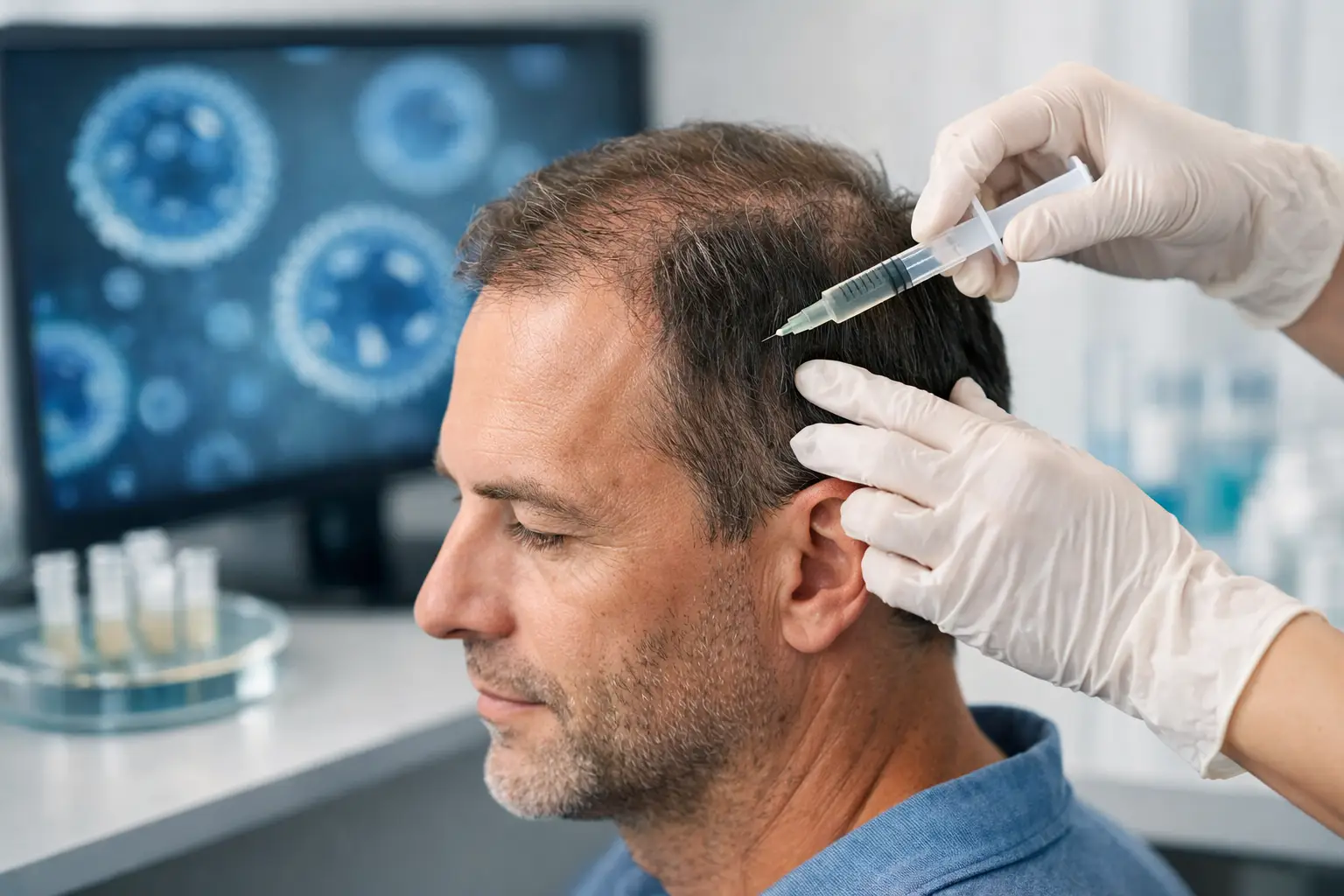
One reason patients ask about this treatment is that it is minimally invasive. In a medical clinic, the scalp is first evaluated, and the treatment area is mapped based on the pattern of loss. After cleansing the scalp, the exosome solution is introduced through targeted injections or a similar physician-directed delivery technique.
Most patients tolerate the procedure well. There may be mild sensitivity, temporary redness, or slight tenderness afterward, but downtime is generally limited. That appeals to busy professionals who want a treatment that fits into a normal schedule without the recovery associated with surgery.
The treatment plan varies. Some patients may benefit from a series of sessions, while others may be advised to combine exosomes with PRP, PRF, medical scalp care, or transplant planning depending on their goals. This is where individualized treatment matters most. A generic protocol may sound convenient, but hair loss is too personal and too variable for a one-size-fits-all approach.
Benefits Patients Commonly Seek
The main reason patients consider exosome therapy is simple: they want stronger, healthier-looking hair without waiting until a transplant becomes the only option. In appropriate cases, exosomes may help improve hair caliber, support better scalp condition, and reduce the appearance of ongoing thinning.
Another advantage is versatility. Exosomes treatment may fit into different stages of hair restoration. It can be explored as an early intervention, as a supportive therapy alongside PRP, or as part of post-transplant aftercare where medically appropriate. For patients who value natural-looking results, that supportive role is important. The goal is often to preserve and improve what you already have.
There is also a comfort factor. Many patients are more willing to begin with a minimally invasive treatment because it feels manageable. Starting early with the right therapy can make a real difference, especially when hair loss is progressive.
Limits and Trade-Offs to Know
This is where expectations need to stay realistic. Exosomes treatment is promising, but it is not magic. It does not guarantee regrowth in every patient, and it should not be marketed as a replacement for all other hair loss treatments.
Response depends on several factors, including your age, the cause of your hair loss, how advanced it is, the health of the scalp, and whether the treatment is being used alone or in combination with other therapies. Patients with early thinning may see more benefit than those with advanced baldness. Some will notice improved hair quality more than dramatic density.
Another point worth understanding is that regenerative medicine continues to evolve. Clinical interest is strong, but protocols, product quality, and treatment methods can differ across providers. That makes your choice of clinic especially important. You want a medically supervised setting that understands hair loss as a diagnosis first and a procedure second.
Is Exosomes Treatment Safe?
Safety should always be part of the conversation, especially with newer aesthetic treatments. In the right clinical environment, exosome therapy is generally approached with careful patient screening, proper handling, and physician-led treatment planning.
Even so, safety is not just about the product itself. It also depends on whether the patient is suitable, whether there are underlying scalp or medical conditions, and whether the treatment is being performed by an experienced team. That is why consultation matters. A good provider will not simply say yes because you asked for a popular treatment. They will assess whether it aligns with your pattern of hair loss and your expected outcome.
Patients should also be cautious about exaggerated claims. Any clinic promising guaranteed regrowth, instant density, or a permanent solution after one session is oversimplifying a complex biological process.
Exosomes vs PRP for Hair Loss
Patients often compare exosomes with PRP because both are used to support hair health in a non-surgical way. PRP uses components derived from your own blood, while exosome therapy relies on cell-derived signaling materials prepared for regenerative use.
The two are not identical, and one is not automatically better for every patient. PRP has become familiar to many people seeking hair restoration and may be recommended because of its established role in many clinics. Exosomes may appeal to patients looking for a more advanced regenerative option or to those considering combination therapy.
In practice, the best choice depends on your scalp condition, your degree of thinning, your treatment history, and how aggressive or conservative your plan should be. Sometimes the smarter question is not which treatment is better, but which treatment is better for you right now.
Why Expert Evaluation Matters
A thinning hairline can create urgency. Patients often want to act fast, and that is understandable. But speed should not replace diagnosis. The most effective hair restoration plans start with identifying what is causing the problem, how active it is, and whether the follicles can still be supported.
That is especially true in specialist clinics focused on hair restoration, where treatments like PRP, transplant surgery, and regenerative options can be aligned into a plan instead of offered in isolation. At A H T Aesthetic Medical Center, that kind of tailored planning is what gives patients more confidence in the process and in the result.
If you are considering Exosomes Treatment, the most useful next step is not chasing hype. It is getting a proper scalp and hair assessment, asking clear questions about expected outcomes, and choosing a medical team that treats your concerns with precision. Better decisions usually start there, and so do better results.