Hair thinning rarely starts with a dramatic change. More often, it shows up in small ways – extra hair on the pillow, a wider part line, less density at the temples, or a ponytail that feels thinner than it used to. For patients researching prp hair treatment dubai, the real question is usually not just what the treatment is, but whether it can make a visible difference before hair loss becomes harder to manage.
PRP has become a widely discussed option because it is minimally invasive, medically supervised, and designed to support your own natural hair growth cycle. For the right patient, it can be a smart early or supportive treatment. It is not a shortcut, and it is not the same as a hair transplant. But when used correctly and at the right stage, it can help strengthen weakened follicles, improve hair quality, and slow down ongoing shedding.
What PRP hair treatment in Dubai actually does
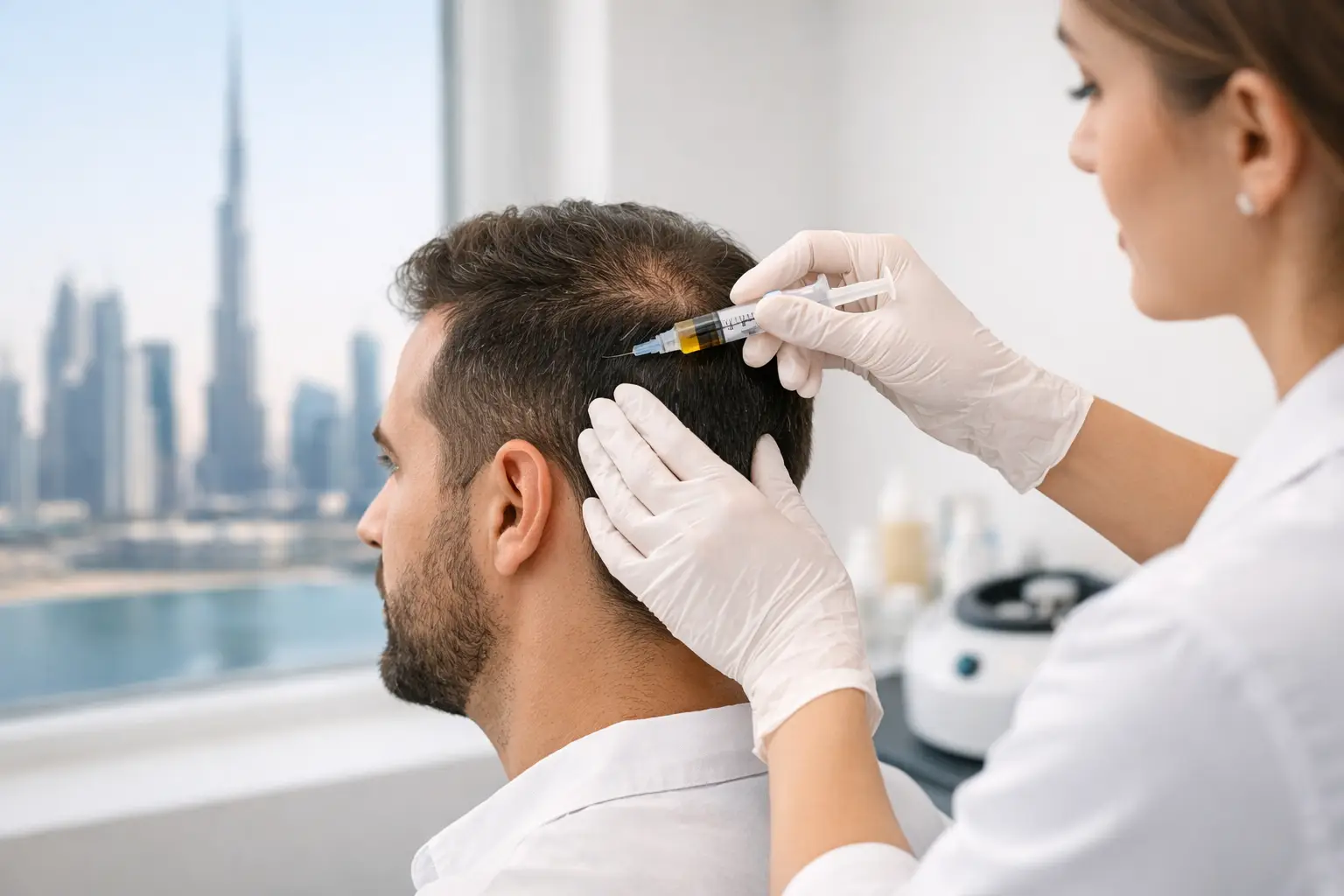
PRP stands for platelet-rich plasma. The treatment uses a small sample of your own blood, which is processed to concentrate platelets and growth factors. That concentrated plasma is then injected into areas of the scalp where hair is thinning.
The goal is to stimulate weakened follicles and improve the environment around them. In practical terms, that may mean reduced shedding, better hair thickness, and stronger growth in areas where follicles are still active but underperforming. This is why PRP is often recommended for patients in the earlier stages of thinning rather than those with long-standing bald areas where follicles may no longer be viable.
One reason patients respond well to PRP is that it fits into a conservative treatment plan. It does not involve surgery, linear scarring, or a long recovery period. That matters to professionals and busy adults who want treatment that works with their schedule while still being guided by clinical expertise.
Who is a good candidate for prp hair treatment dubai
PRP is best suited to patients with thinning hair, increased shedding, and early pattern hair loss. It can also be useful for men and women who notice a general reduction in density rather than clearly defined bald patches. If your follicles are still present, even if they are producing finer or weaker hair, there is more reason to expect a response.
It may also be recommended after a hair transplant as part of a broader restoration plan. In those cases, PRP is not replacing the transplant. It is supporting scalp health, recovery, and the strength of surrounding native hair.
The treatment is less likely to deliver meaningful improvement in completely smooth or dormant areas where hair has not grown for a long time. That is where honest consultation matters. A trustworthy clinic should not present PRP as the answer to every type of hair loss. Sometimes the better option is a transplant, a combined treatment plan, or medical investigation into the cause of sudden shedding.
What happens during the procedure
The procedure is straightforward and usually completed in a relatively short appointment. Blood is first drawn, then placed in a centrifuge to separate the platelet-rich plasma from other components. Once prepared, the PRP is injected into the scalp in targeted areas.
Most patients describe the treatment as tolerable. You may feel small pinches or pressure during the injections, especially in more sensitive areas such as the frontal scalp. Some clinics use methods to make the experience more comfortable, which can be helpful for patients who are nervous about needles.
After treatment, mild tenderness or redness can happen, but significant downtime is not usually expected. Many patients return to normal routines quickly. That said, your aftercare instructions still matter. The details may be simple, but following them helps protect the treatment area and supports the best possible response.
When results start to show
This is where expectations need to be realistic. PRP does not create overnight volume. Hair grows in cycles, and even when follicles respond well, visible improvement takes time.
Many patients begin to notice reduced shedding before they notice regrowth. That can be an encouraging early sign. Changes in thickness, density, and hair quality often become easier to appreciate after a series of sessions rather than after a single appointment.
The exact timing depends on the cause and stage of hair loss, your scalp condition, and whether PRP is being used alone or as part of a larger plan. Some patients respond faster than others. The most reliable approach is to evaluate progress through professional follow-up rather than judging the treatment too early.
How many sessions are usually needed
PRP is rarely treated as a one-time appointment. Most patients need an initial series followed by maintenance sessions. The reason is simple – hair loss is often ongoing, and supportive treatment usually works best when it is structured.
A proper treatment plan should be based on your degree of thinning, medical history, and goals. Someone with mild early shedding may need a different schedule than someone using PRP after transplant surgery or alongside other hair restoration therapies.
This is another point where personalized care matters. Standardized packages can sound convenient, but hair loss is not one-size-fits-all. A tailored plan gives you a clearer idea of what the treatment is intended to achieve and what kind of maintenance may be required to preserve results.
Benefits patients often care about most
Patients usually choose PRP because they want measurable improvement without jumping straight into surgery. That makes sense, especially if the hair loss is recent, progressive, or not yet severe.
One of the biggest advantages is that the treatment uses your own plasma. For many patients, that feels like a more reassuring option than starting with something more invasive. Another benefit is minimal interruption to daily life. If you work full time, travel frequently, or simply prefer treatments with less recovery, PRP can fit more comfortably into your routine.
There is also the value of preserving existing hair. Many people focus only on regrowth, but protecting weak native hair is often just as important. Strengthening what you still have can improve overall density and delay further visible loss.
Limitations and trade-offs to understand
PRP is promising, but it has limits. It does not replace follicles that are gone. It does not guarantee the same level of improvement for every patient. And it may not be the right primary option if your hair loss is advanced.
That is why assessment is more important than marketing language. A medically led consultation should look at the pattern of your thinning, the likely cause, your family history, and whether there may be underlying triggers such as hormonal changes, stress, or nutritional issues. Treating hair loss well means understanding it first.
There is also a commitment factor. PRP works best when patients are prepared for a treatment course, not a single event. If you want a procedure that produces dramatic density in clearly bald areas, a transplant may be the more effective path. If you want to support thinning hair early and conservatively, PRP may be the better fit.
Choosing the right clinic matters
Not all PRP treatments are equal. Technique, patient selection, treatment planning, and clinical judgment all influence the outcome. A quality clinic will explain whether you are a suitable candidate, what level of improvement is realistic, and whether PRP should be combined with another hair restoration approach.
That level of honesty builds trust. It also protects patients from wasted time and disappointment. In a specialist setting such as A H T Aesthetic Medical Center, PRP can be positioned properly – not as a miracle fix, but as part of a results-focused strategy tailored to your scalp, your goals, and your stage of hair loss.
Is PRP the right next step for you?
If you are seeing more hair fall than usual, a visible drop in density, or early signs of pattern thinning, waiting too long can reduce your options. PRP tends to offer the most value when follicles are still active and capable of responding.
The best next step is a professional evaluation that looks beyond the symptom and identifies the most suitable treatment path. Sometimes PRP is exactly the right choice. Sometimes it works better as part of a combined plan. Either way, acting early gives you more room to protect your hair and move forward with confidence.