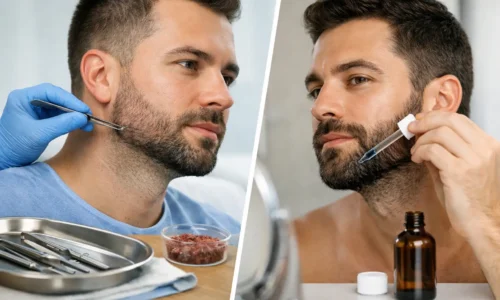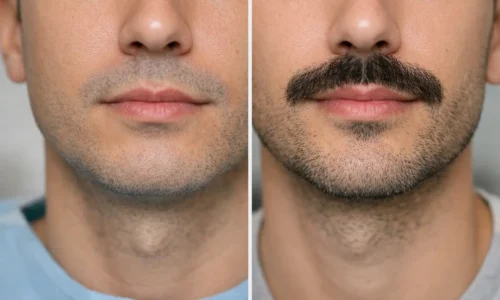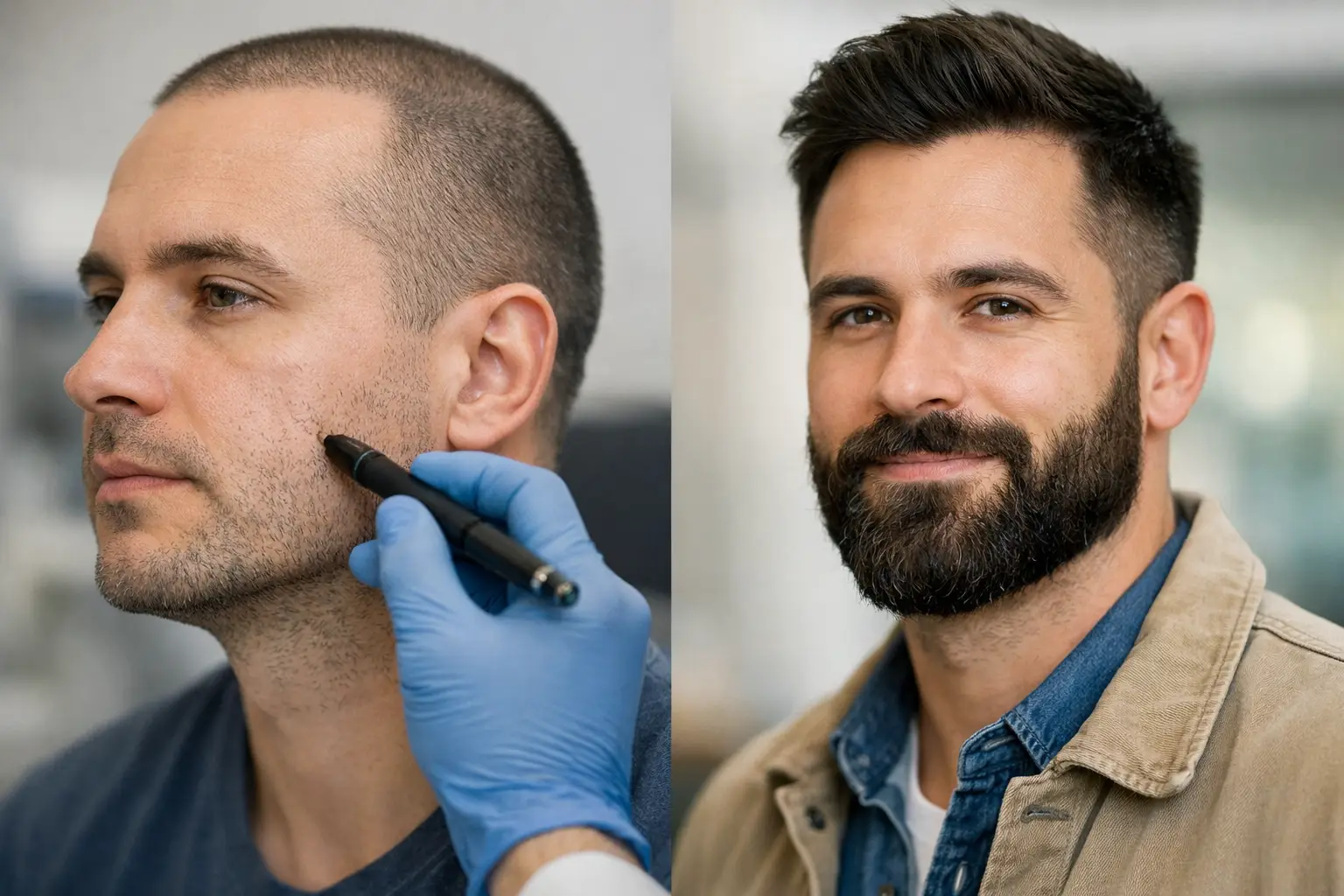
A beard transplant can fill a bare cheek, reconnect a mustache, define a jawline, or cover a visible scar. But the best beard transplant candidates are not simply people who want a fuller beard. They are patients whose hair characteristics, donor supply, skin health, and expectations support a natural result that will continue to look right as their face and style change.
For many men, patchy facial hair is not a minor grooming concern. It can affect how they feel in photographs, at work, or in social settings. A carefully planned beard transplant offers a permanent solution, but it is still a surgical procedure. The right time to consider it is after a qualified specialist has assessed why the beard is thin and whether transplantation is the most appropriate option.
What Makes Someone a Good Beard Transplant Candidate?
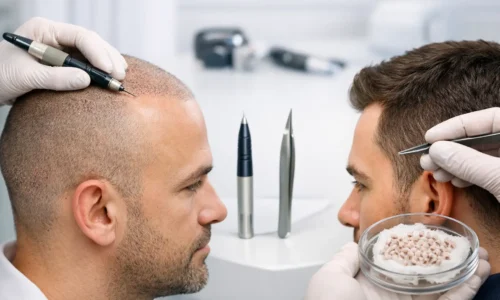
A beard transplant uses healthy hair follicles, usually taken from the back or sides of the scalp, and places them in areas of the beard, mustache, sideburns, or goatee that need more density. Because these transplanted follicles retain their growth characteristics, the available donor hair must be strong enough to support the design without noticeably thinning the scalp.
The strongest candidates generally have a stable pattern of limited facial hair growth, good overall health, and realistic goals. They understand that success is not measured by maximum density alone. It is measured by whether the beard suits their facial structure, hair texture, age, and preferred grooming style.
You Have Adequate Donor Hair
Donor availability is one of the first factors evaluated during a consultation. Thick, healthy hair at the back and sides of the scalp can provide a reliable source of grafts. A specialist will assess density, hair shaft thickness, curl pattern, and contrast between your hair and skin.
Coarser hair can create the impression of fullness with fewer grafts, while finer hair may require a more strategic approach. Curly or wavy hair can also appear denser than straight hair. None of these traits automatically make someone a better or worse candidate. They simply influence the treatment plan and the number of grafts needed.
A patient with early scalp hair thinning may still be eligible for a beard transplant, but donor planning becomes more important. Preserving enough donor hair for potential future scalp restoration may be the wiser long-term decision. This is one reason a customized assessment matters more than a standard graft package.
Your Facial Hair Loss Is Stable or Clearly Understood
Some patchiness is genetic and has been present since puberty. Others notice sparse areas after an injury, burn, surgery, or previous scar. These situations can often respond well to transplantation once the skin has healed and is healthy enough to receive grafts.
However, active hair loss conditions require more caution. Alopecia areata, active scarring alopecia, uncontrolled skin inflammation, and certain autoimmune conditions can affect the survival of transplanted follicles. A transplant may be postponed while the underlying condition is diagnosed and stabilized. This is not a setback. It is the safer path toward protecting both your health and the result.
For younger patients, patience can also be part of good planning. Facial hair may continue developing into the mid-20s and sometimes later. If beard growth is still changing noticeably, a specialist may recommend waiting before committing to a permanent design.
Your Skin Is Healthy Enough for Treatment
The recipient area must be free from active infection, severe acne, untreated dermatitis, or ongoing irritation. Healthy skin supports graft placement and healing. If you are prone to ingrown hairs, a history of keloid scarring, or persistent facial skin conditions, mention this during the consultation.
These factors do not always rule out treatment. They may change the timing, aftercare plan, or recommended density. A medical team should examine the beard area closely rather than assuming every patchy beard can be treated in the same way.
You Are in Good General Health
Most healthy adults can be considered for beard transplantation. Still, conditions such as poorly controlled diabetes, bleeding disorders, significant heart disease, or immune suppression should be discussed honestly. Smoking and nicotine use can also affect circulation and healing, so patients may be advised to stop before and after the procedure.
Your medical history, current medications, and previous surgeries matter. A reputable provider reviews these details to reduce avoidable risks, not to make the process feel complicated.
Best Beard Transplant Candidates Have Realistic Goals
A natural beard is not created by placing grafts in straight lines or by copying a celebrity photo exactly. Facial proportions, existing growth direction, and the area being restored all influence the design.
The best beard transplant candidates are open to professional guidance about shape and density. A person who wants subtle cheek coverage may need far fewer grafts than someone seeking a full beard reconstruction. A mustache transplant requires particular precision because even small changes in angle or placement can be noticeable at close range.
During planning, it helps to describe how you intend to wear your beard. Do you prefer short stubble, a shaped goatee, a connected beard, or fuller growth? A beard designed for close trimming can be planned differently from one intended to grow longer. The goal is to build a result that looks believable at every stage of grooming.
It is also important to understand the timeline. Transplanted hairs usually shed in the early weeks after treatment, which is a normal part of the process. New growth develops gradually over the following months. Final density and maturity take time, so patients should be comfortable with a measured recovery rather than expecting an overnight change.
When a Beard Transplant May Not Be the First Step
Not every sparse beard needs surgery right away. If thinning is recent, sudden, or accompanied by scalp hair loss, skin changes, fatigue, or other symptoms, medical evaluation should come first. Hormonal changes, nutritional deficiencies, medications, and inflammatory skin conditions can affect hair growth.
A transplant is also not a substitute for an unlimited donor supply. Patients with very limited scalp donor density, extensive scalp hair loss, or an expectation of extremely dense facial coverage may need a more conservative plan. In some cases, prioritizing scalp restoration or choosing a lighter beard design produces the better overall aesthetic outcome.
People who cannot follow aftercare instructions or take time away from strenuous exercise, direct sun exposure, and shaving during the initial healing period should consider their timing carefully. The procedure itself is only one part of achieving a strong result. Healing habits protect the grafts when they are most vulnerable.
What Happens During a Beard Transplant Consultation?
A detailed consultation should feel specific to you, not like a sales conversation. The provider will examine the scalp donor area and beard region, discuss your medical history, and ask about your desired look. Photographs and a facial assessment can help create a design that respects your natural beard pattern and facial balance.
You should also receive clear information about graft estimates, the recommended technique, recovery expectations, and the possibility of staged treatment if a large area requires restoration. In many cases, FUE hair transplantation is used because individual follicles can be harvested and placed with detailed control over direction and distribution.
At A H T Aesthetic Medical Center in Dubai, beard restoration planning is approached as a personalized medical and aesthetic decision. The focus is not on creating the same beard for every patient, but on matching the procedure to the individual behind it.
A Good Candidate Is Ready for a Thoughtful Plan
The right candidate for a beard transplant has more than patchy facial hair. They have a stable concern, appropriate donor hair, healthy skin, and a realistic vision of what a natural improvement looks like. A consultation can clarify whether now is the right time, how much coverage is achievable, and what design will look like it has always belonged on your face.
If your beard has been a source of frustration for years, a professional evaluation can replace guesswork with a plan built around your features, your health, and the confidence you want to see in the mirror.