If you have looked at hair transplant before-and-after photos and wondered how many grafts needed for results like that, you are asking the right question. Graft count is one of the biggest factors in planning a natural-looking transplant, but it is not a number that should be guessed from photos alone. The right estimate depends on your pattern of hair loss, the size of the area being treated, your donor supply, your hair characteristics, and the result you want to achieve.
How many grafts needed depends on more than bald spots
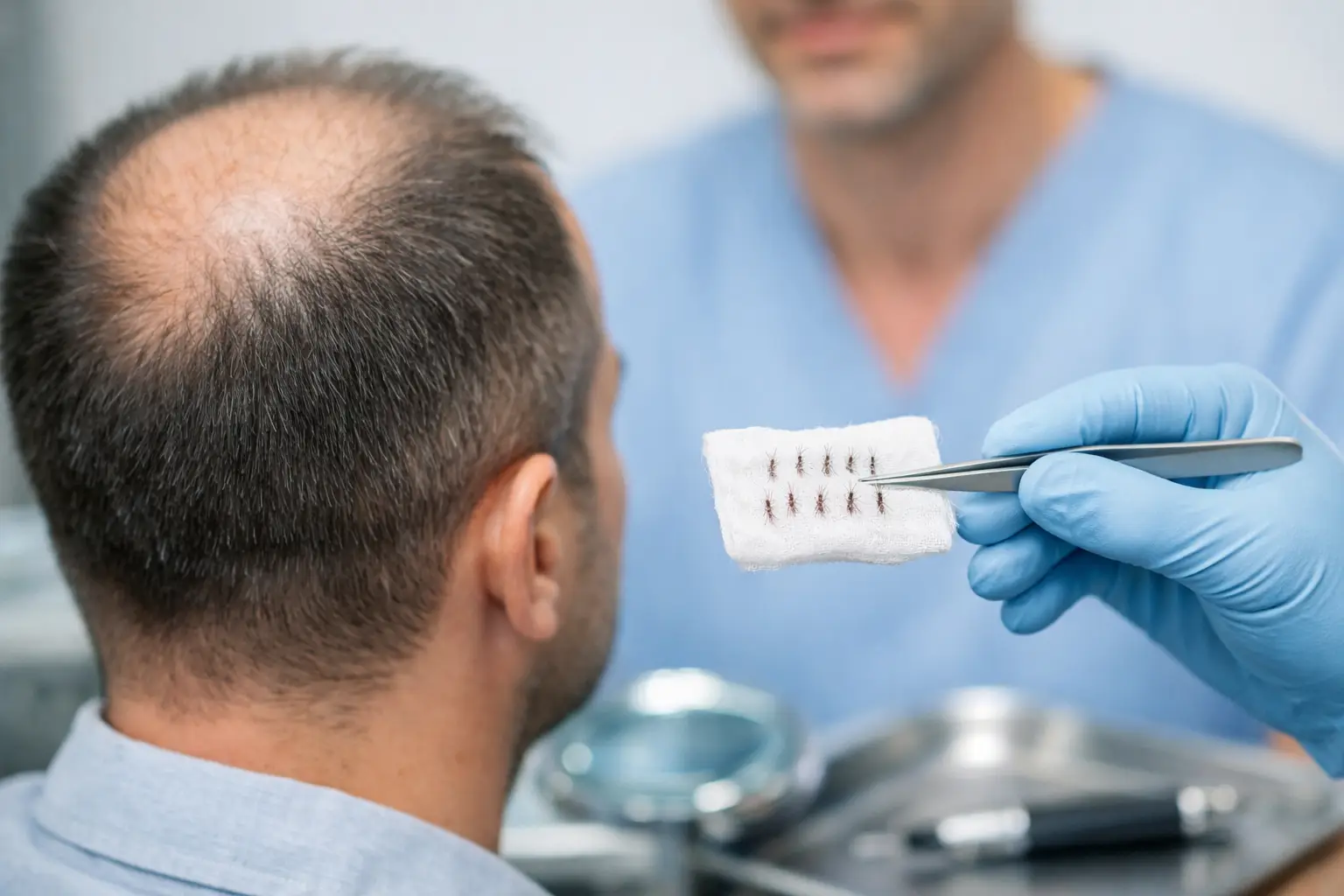
A graft is a naturally occurring group of hair follicles taken from the donor area, usually the back or sides of the scalp. One graft may contain one, two, three, or sometimes four hairs. That matters because 2,000 grafts in one patient may create a different visual result than 2,000 grafts in another.
This is why experienced surgeons look beyond the bald area itself. They assess scalp contrast, hair thickness, curl, color, donor density, and whether your hair loss is stable or still progressing. A patient with thick, wavy, dark blond hair may achieve strong coverage with fewer grafts than someone with very fine, straight black hair against a light scalp – or the opposite, depending on contrast and density.
In other words, the answer to how many grafts needed is personal. Two people with similar recession can receive different treatment plans and both be correct.
Typical graft ranges by area
There are some common planning ranges that help patients understand what to expect. These are not fixed promises, but they are useful starting points during consultation.
For a mildly receding hairline, many patients need around 1,000 to 1,500 grafts. If the temples are also being rebuilt, the number may move closer to 1,500 to 2,000 grafts. For larger frontal area restoration, including the hairline and front third of the scalp, 2,000 to 3,000 grafts is common.
When thinning extends into the mid-scalp, the plan often increases to 3,000 to 4,000 grafts. Crown restoration can vary widely, but many cases fall between 1,500 and 2,500 grafts. A more advanced pattern involving the front, mid-scalp, and crown may require 4,000 grafts or more, sometimes staged over more than one session.
These ranges are helpful, but the real issue is not just how many grafts can be placed. It is how to place them strategically so the result looks balanced and sustainable.
Hairline restoration is usually detail-heavy
Patients often focus on the front because it frames the face and creates the biggest cosmetic change. Hairline work can be graft-intensive in a small area because natural design requires careful angling, irregularity, and softer single-hair placement at the front edge.
A lower hairline may sound appealing, but it usually requires more grafts and can look unnatural if it does not fit your age, facial proportions, and future hair loss pattern. A well-designed mature hairline often gives a stronger long-term result than an overly aggressive one.
Crown restoration uses grafts differently
The crown can absorb a large number of grafts because of its circular shape and natural swirl pattern. It also tends to need more coverage to appear full under direct light. That is why many surgeons are conservative with crown work, especially in younger patients whose hair loss may continue.
If donor supply is limited, prioritizing the hairline and frontal scalp often gives the most visible improvement first. The crown can be treated later if needed.
What affects how many grafts needed most?
The size of the thinning or bald area is only one part of the equation. Density goals matter just as much. Some patients want soft coverage that improves framing and styling options. Others want denser packing in a smaller area. Both are reasonable, but they require different planning.
Donor availability is another key factor. The donor area is not unlimited, and good surgical planning protects it carefully. A responsible clinic does not simply aim for the highest possible graft count. It looks at what can be harvested safely while preserving the donor zone and leaving options for the future.
Hair caliber also changes the graft requirement. Thick hair creates more visual bulk. Curly or wavy hair can cover more scalp than very straight hair. Gray hair may reduce scalp contrast and make thinning less noticeable. Fine hair usually needs more thoughtful placement to create the same appearance of fullness.
Scalp laxity and skin characteristics can also influence the procedure, although this matters more in some methods than others. Medical history, scalp health, prior procedures, and scarring are important too.
Why online graft calculators are only rough estimates
Many patients try online calculators before booking a consultation. These tools can be useful for broad education, but they often simplify the process too much. They usually ask about the Norwood scale or the area of thinning, then generate a number. That number may be directionally helpful, but it cannot evaluate donor density, hair shaft diameter, miniaturization, or long-term planning.
This is where a proper in-person assessment makes a difference. A surgeon can map the area, examine the donor region, identify whether medical treatment should be part of the plan, and explain whether one session or a staged approach is more realistic.
At A H T Aesthetic Medical Center, this kind of personalized assessment is what helps move patients away from guesswork and toward a treatment plan that fits their actual hair loss pattern.
More grafts is not always better
It is understandable to think a larger graft number means a better outcome. In reality, quality planning matters more than chasing the biggest count. Overharvesting the donor area can create visible thinning in the back or sides of the scalp. An overly dense first session can also affect blood supply if not handled properly in certain cases.
There is also the issue of expectation. A transplant redistributes existing hair. It does not create unlimited new density. If someone has extensive hair loss and average donor supply, the goal is usually improvement and framing, not the same density they had at age 18.
That does not mean results cannot be impressive. It means the best results come from realistic design, proper graft allocation, and a strategy that respects your long-term pattern of hair loss.
How surgeons decide your graft number
A consultation usually begins with scalp analysis and a discussion of your goals. The surgeon will look at the frontal hairline, temporal recession, mid-scalp thinning, crown involvement, and donor strength. They may discuss whether medication, PRP, PRF, or other supportive treatments could help stabilize ongoing loss and strengthen native hair.
Then comes design. This is where medical judgment really matters. Should the plan focus only on the frontal third? Is the crown worth treating now, or should grafts be preserved? Would a softer, age-appropriate hairline give a better long-term result than lowering it? These are the decisions that shape the final graft estimate.
A patient may arrive expecting 4,000 grafts and be better served with 2,500 placed strategically. Another may hope 1,500 grafts will cover advanced loss and need to hear that a staged plan is more realistic. Good consultation is not about selling a number. It is about building a result that looks natural and lasts well.
Common patient expectations to keep realistic
One of the most common misunderstandings is assuming every graft grows as a thick multi-hair unit that creates instant fullness. Hair growth after transplant is gradual. Shedding in the early phase is normal, and visible growth takes time. Most patients start seeing meaningful change after several months, with fuller maturation continuing over the course of a year.
Another issue is lighting. Results can look excellent in normal daily settings and still appear thinner under harsh overhead lighting or when the hair is wet. That is normal, even after a well-executed transplant.
If you are asking how many grafts needed, the better question may be: what result is realistic with my donor hair, my pattern of loss, and my future needs? That is the question that leads to a plan worth doing.
When fewer grafts can still create a strong result
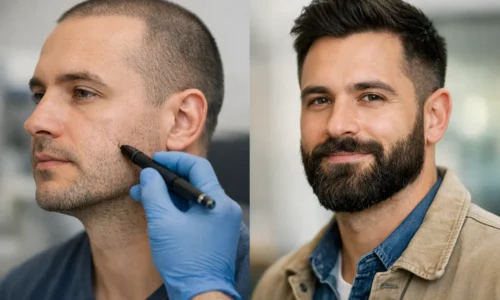
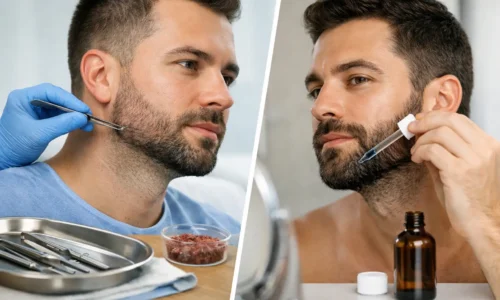
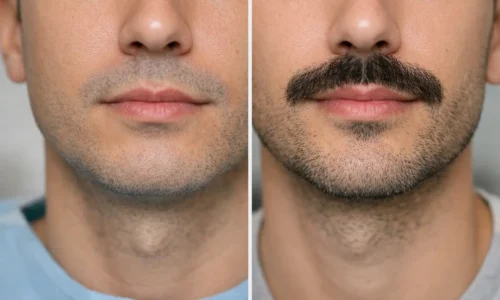
Not every successful transplant involves a large session. Patients with early temple recession, a widening part, minor hairline irregularities, eyebrow gaps, or patchy beard growth may need a relatively modest graft count. In these cases, precision matters more than volume.
Small-area restoration can produce a major improvement in facial balance and confidence when the design is accurate. This is especially true for patients who still have strong native hair and want refinement rather than full-area reconstruction.
The best graft number is the one that suits your anatomy, your goals, and your long-term hair plan. If you are considering treatment, a detailed consultation will tell you far more than any chart or online estimate ever can – and that clarity is often the first real step toward feeling like yourself again.