If your hairline looks a little wider in photos or your part keeps showing more scalp than it used to, you are not imagining it. For many adults, early thinning starts quietly, then suddenly feels hard to ignore. That is why interest in prp hair treatment benefits has grown so quickly among people who want a medically guided option before hair loss becomes more advanced.
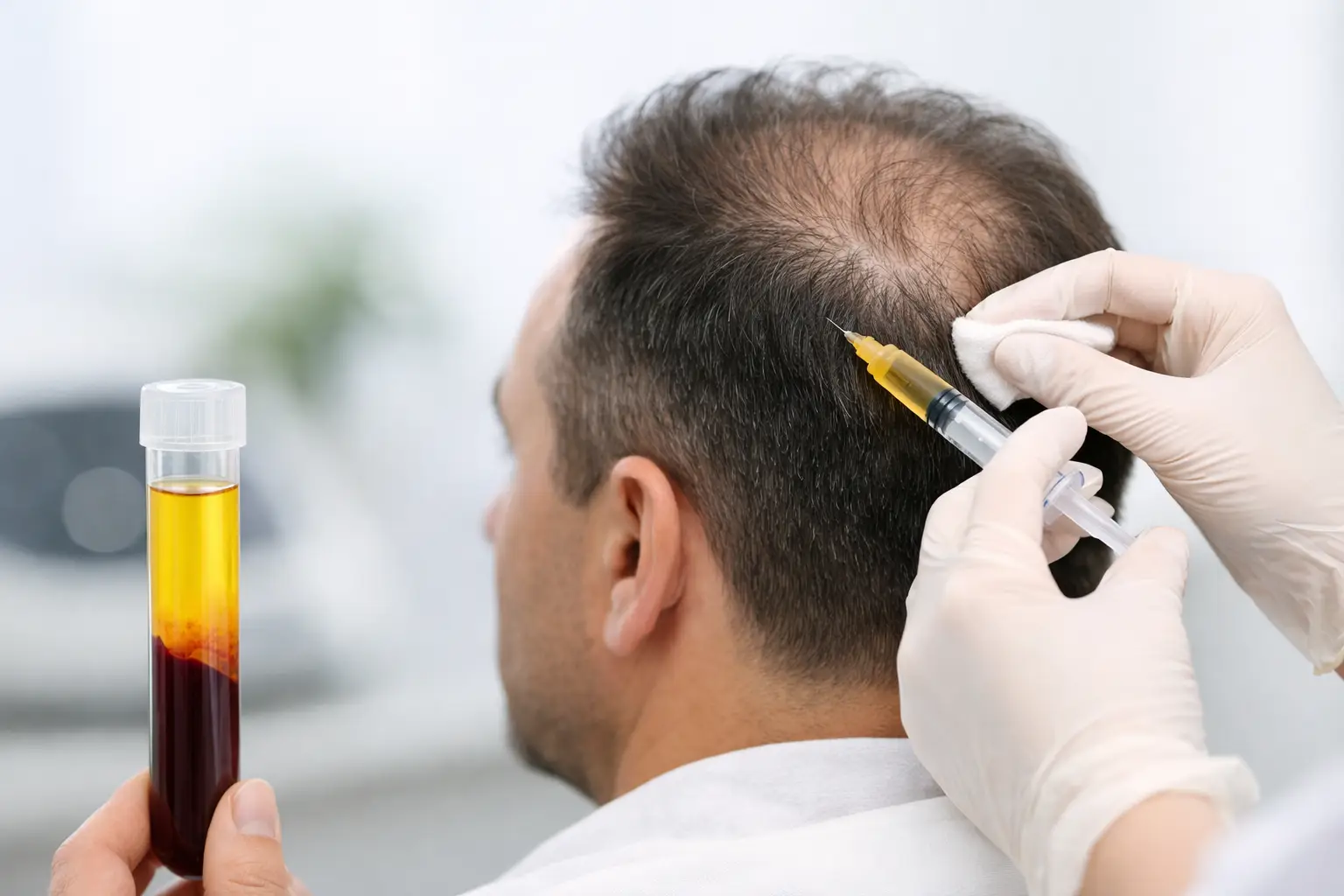
PRP stands for platelet-rich plasma. In simple terms, it uses a concentrated portion of your own blood that contains growth factors, then places it into areas of thinning hair. The goal is not to create instant dramatic density overnight. The real value is more specific than that. PRP can help support weakened follicles, improve the quality of existing hair, and encourage stronger growth in the right candidate.
What PRP actually does for thinning hair
Hair loss treatments often get talked about as if they all do the same thing. They do not. Some treatments try to slow shedding. Some aim to improve scalp health. Some are best for replacing hair that is already gone. PRP sits in a different category. It is designed to stimulate and support hair follicles that are still alive but underperforming.
That distinction matters. If a follicle has become dormant but not permanently lost, PRP may help create a better environment for it to function. Patients often notice less shedding first, then thicker strands, improved texture, and better overall coverage over time. In many cases, the hair is not brand new hair from nowhere. It is your existing hair starting to behave more like healthy hair again.
One of the biggest PRP hair treatment benefits is that it is minimally invasive. There is no surgery, no long recovery, and no need to remove a strip of hair or scalp. For patients who are not ready for a hair transplant, or who simply do not need one yet, that makes PRP a very attractive option.
The most meaningful PRP hair treatment benefits
The best way to understand PRP is to look at what patients usually care about most: visible improvement, safety, convenience, and natural results.
It can reduce excessive shedding
Many patients seek treatment because they are seeing more hair on the pillow, in the shower, or in the brush. PRP may help calm that cycle by supporting the follicle and improving the growth phase of the hair. This does not always happen instantly, and it is not the same for every patient, but reduced shedding is often one of the earliest positive changes.
It may improve hair thickness and quality
Thin hair is not always a matter of how many follicles you have. Sometimes the strand itself becomes finer, weaker, and less able to create coverage. PRP can help improve the thickness of miniaturized hairs, which often makes the scalp look less visible. Patients usually describe this as hair feeling healthier, stronger, or fuller rather than suddenly looking dense.
Results can look very natural
Because PRP works with your own follicles, the outcome usually blends naturally with your existing hair pattern. There is no abrupt cosmetic change. That appeals to patients who want improvement without the obvious signs of having had a major procedure.
It works well as an early intervention
PRP is often most helpful when thinning is still in progress and follicles remain active. That makes it a strong option for men and women who have started noticing recession, widening parts, or diffuse thinning but are not yet dealing with complete baldness in a given area.
It can complement other hair restoration plans
PRP is not always a stand-alone answer, and that is not a weakness. In the right treatment plan, it can work alongside medical therapies or support recovery and growth after a hair transplant. When used strategically, it often becomes part of a broader effort to protect and improve hair rather than a one-time fix.
Who tends to see the best results
PRP is promising, but it is not universal. The patients who usually respond best are those with early to moderate thinning, pattern hair loss, or hair that has become noticeably weaker over time. It can also be useful when stress, hormonal shifts, or age-related changes have affected density, though the underlying cause still needs proper evaluation.
If an area has been completely bald for a long time, PRP is less likely to create meaningful regrowth there. That is one of the most important trade-offs to understand. PRP can support struggling follicles, but it cannot reliably revive follicles that are no longer viable. In that situation, a transplant or another treatment strategy may be more appropriate.
This is why an assessment matters. A personalized plan should look at the pattern of loss, scalp condition, medical history, and treatment goals before deciding whether PRP is the right move.
What the treatment experience is like
A lot of hesitation comes from not knowing what actually happens during the appointment. The process is straightforward. A small blood sample is taken, then processed to isolate the platelet-rich plasma. That concentrated plasma is then injected into the targeted scalp areas.
Most patients tolerate the procedure well. Discomfort is usually manageable, and the session itself is relatively quick. Because it is minimally invasive, downtime is limited. You may have some tenderness, redness, or mild sensitivity at the injection sites, but most people return to normal activities soon after treatment.
For busy professionals, this is one of the practical PRP hair treatment benefits that often gets overlooked. It can fit into real life without the recovery demands that come with surgery.
When to expect results
PRP requires patience. Hair growth follows a biological cycle, and that cycle does not speed up just because you are eager to see changes. Many patients need a series of sessions rather than a single visit, followed by maintenance at intervals recommended by their provider.
It is common to notice early changes in shedding before you see visible density improvements. More noticeable changes in thickness and texture often develop gradually over several months. The timeline depends on the individual, the extent of thinning, and whether PRP is being combined with other treatments.
The right expectation is improvement, not instant transformation. For the right candidate, that improvement can be meaningful enough to delay more invasive procedures or make the hair look healthier and fuller in everyday life.
Safety and why many patients feel comfortable with PRP
One reason PRP has gained trust is that it uses your own plasma. That lowers the risk of allergic reaction compared with treatments that rely on synthetic or foreign substances. It is still a medical procedure and should be performed by qualified professionals, but many patients appreciate the simplicity of the concept.
Safety also depends on proper technique, sterile handling, and accurate patient selection. A reputable clinic should be honest about whether PRP is likely to help you or whether another treatment would deliver better value. That kind of transparency matters just as much as the procedure itself.
PRP versus hair transplant – which is better?
This is where it really depends. PRP and hair transplant surgery are not direct substitutes in every case. If you have active follicles and want to strengthen thinning hair, PRP may be a smart first step. If you have significant hair loss in areas where follicles are no longer producing hair, a transplant may be the more effective route.
In many cases, the question is not PRP or transplant. It is whether PRP should come before, after, or alongside a broader hair restoration plan. At a specialist clinic such as A H T Aesthetic Medical Center, that distinction is important because treatment should match the stage of hair loss rather than forcing every patient into the same solution.
Why a customized plan matters more than the trend
PRP is popular for a reason, but popularity should not be the basis for your decision. The real advantage comes when the treatment is selected for the right person at the right time. Hair loss is personal. It can be driven by genetics, hormones, age, stress, scalp health, or a combination of factors. A treatment that works well for one patient may be underwhelming for another.
The strongest results usually come from a plan that looks beyond the injection itself. That means evaluating the cause of thinning, setting realistic expectations, and deciding how to maintain progress. Good hair restoration is rarely about chasing a trend. It is about protecting what you have, improving what is still viable, and choosing the least invasive option that can realistically move you forward.
If your hair is thinning and you want a treatment that is medically supervised, minimally invasive, and aligned with natural-looking results, PRP is worth considering. The next best step is not guessing from photos or forums. It is getting a professional assessment and finding out whether your follicles are in the stage where support can still make a visible difference.