A patchy moustache can change the way your whole face reads. For some men, it creates a softer look than they want. For others, it simply never grows evenly, no matter how long they wait. When people search moustache transplant before after results, they are usually asking a bigger question: Will this actually look natural on my face, and is the change worth it?
The honest answer is yes for the right candidate, but the transformation is rarely instant. A moustache transplant is a detailed medical procedure that depends on planning, graft placement, healing, and patience. The best before-and-after outcomes are not just fuller. They are balanced, age-appropriate, and designed to match your facial structure.
What moustache transplant before after really shows
Before-and-after photos can be helpful, but they only tell part of the story. A strong result is not just about adding more hair to the upper lip. It is about improving shape, symmetry, coverage, and definition while keeping the finished moustache believable.
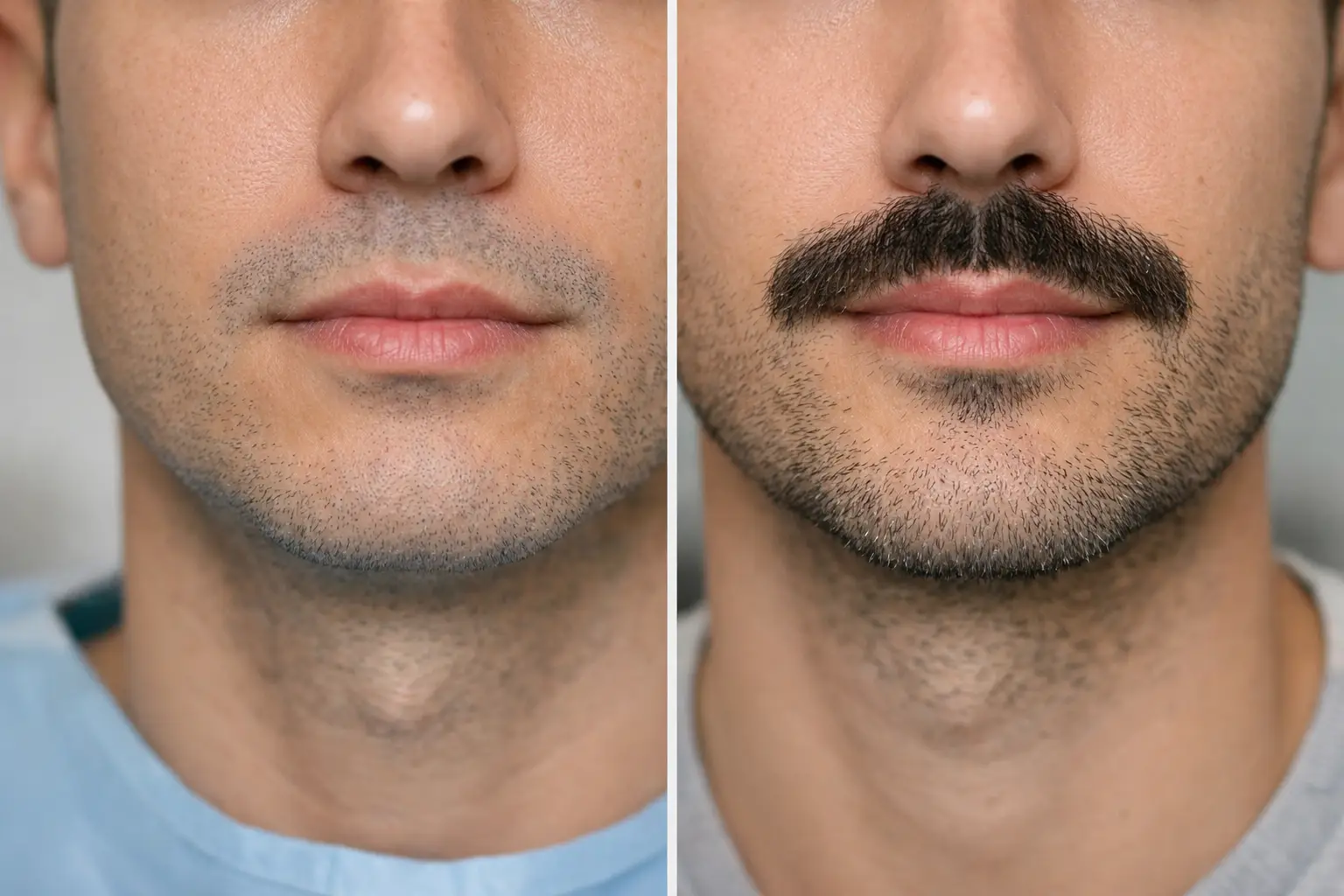
Before treatment, patients often have one of several concerns. Some have naturally sparse growth across the entire moustache area. Others have bald spots from genetics, acne scarring, trauma, burns, or previous overgrooming. Some can grow hair at the corners but not in the center. In many cases, the issue is not total absence of hair. It is uneven distribution that makes the moustache look incomplete.
After treatment, the goal is not to make the area look artificially dense overnight. It is to create a pattern of growth that blends with existing hair and supports the style you want to wear. A subtle increase in density can make a major difference in photos, at work, and in daily grooming.
How the procedure creates before-and-after change
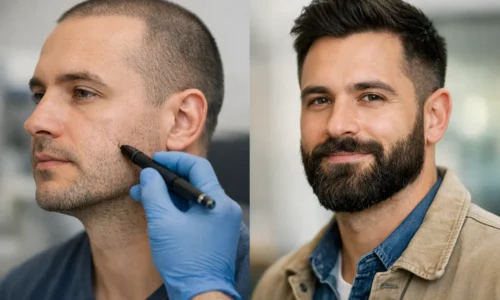
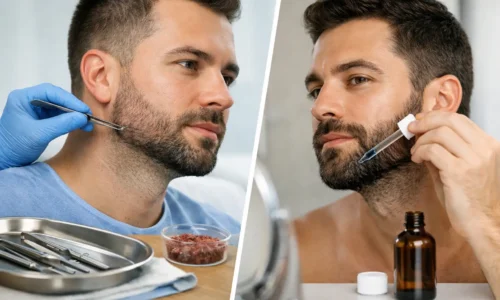
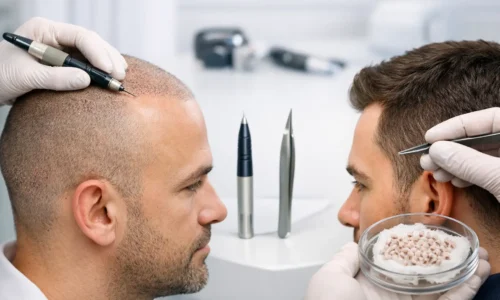
A moustache transplant usually involves harvesting healthy hair follicles from a donor area, most often the back or sides of the scalp, and implanting them into the moustache region. In modern practice, FUE is commonly used because it allows precise graft extraction with minimal visible scarring.
What makes the before-and-after result convincing is technique. Moustache hairs sit at a very specific angle and direction. If grafts are placed too upright, too dense in the wrong area, or without attention to natural flow, the final look can seem obvious. This is why facial hair transplantation requires a different level of design than scalp work alone.
Each graft must be positioned to follow the natural lay of moustache hair. The central philtrum area, the edges of the upper lip, and the transition into beard hair all need separate planning. Some patients want a fuller Chevron-style moustache. Others want soft definition that still looks understated. The procedure should match the face, not a trend.
The moustache transplant before after timeline
One reason patients feel uncertain is that the healing process does not look impressive at first. The early stage can actually be discouraging if you are expecting immediate fullness.
In the first few days, mild redness, tiny crusts, and slight swelling are normal. The implanted hairs are visible, but this is not your final outcome. Over the next couple of weeks, many of those transplanted hairs shed. This can alarm patients, but it is part of the expected cycle. The follicles remain in place under the skin and enter a resting phase before new growth begins.
By around three to four months, early regrowth often starts to show. At this point, the moustache may still look irregular or thin. Around six months, patients usually see a clearer improvement in coverage and shape. Final maturation often takes closer to nine to twelve months, sometimes longer depending on hair characteristics and the individual healing response.
That timeline matters when evaluating moustache transplant before after photos. A picture taken at one month is showing healing. A picture taken at one year is showing the real result.
What makes a good candidate
The best candidates are people with realistic expectations, enough healthy donor hair, and a clear reason for wanting more facial hair. Genetics, scarring, hormonal patterns, and previous procedures can all affect suitability.
If you already grow some moustache hair, that does not rule you out. In fact, many excellent outcomes come from filling weak areas rather than building a moustache from nothing. If you have no facial hair growth at all, your provider may need to assess whether there is an underlying medical reason. Skin condition, scarring pattern, and hair texture also affect planning.
There is no single ideal age, but most candidates benefit from waiting until their natural facial hair pattern has matured. For younger patients especially, the question is not just can we do it, but should we do it now or allow more time for natural growth to declare itself.
Natural-looking results depend on design, not just density
Many people assume more grafts automatically mean a better outcome. That is not always true. In moustache work, too much density too quickly can create a harsh or unnatural appearance, especially if the surrounding beard and facial features are lighter.
A strong result often comes from careful restraint. The border should not look stamped on. The center should not look heavy if the rest of the face carries finer hair. Curl pattern, shaft thickness, and skin tone all influence how dense a result appears visually.
This is also where patient goals matter. A man who shaves closely but wants visible five o’clock shadow needs a different approach than someone planning to wear a thick, styled moustache. The same procedure can be customized for subtle definition or a more pronounced transformation.
Recovery and grooming after the procedure
The aftercare period affects both comfort and final growth. Patients are usually advised to protect the area, avoid rubbing or shaving too soon, and follow cleaning instructions closely. The upper lip is a high-movement area, so eating, smiling, and talking can make you more aware of the healing process in the first several days.
Once growth begins, transplanted hairs often need regular trimming. That is because donor hairs taken from the scalp may keep some of their original growth behavior. They can grow longer and sometimes faster than native moustache hairs. This does not mean the transplant failed. It simply means grooming becomes part of the maintenance.
Texture can also evolve over time. Early regrowth may seem wiry or uneven before softening and blending better as the follicles mature. Patients who understand this usually feel more confident during the in-between stages.
Common concerns when comparing before and after images
A lot of online before-and-after galleries are taken under different lighting, at different angles, or after styling. That does not make them useless, but it does mean you should read them carefully.
Look for photos that show the same facial position, similar facial expression, and close-up detail of the upper lip. Good images reveal hair direction, not just overall darkness. Ask whether the after photo is freshly trimmed, brushed, or filled with cosmetic product. A natural clinical result should still look convincing without heavy styling.
It is also worth noticing whether the improvement fits the person. The best moustache transplant before after examples do not make you think about the surgery. They simply make the moustache look like it always belonged there.
Trade-offs patients should know
A moustache transplant can produce excellent results, but it is still a procedure with trade-offs. You need donor hair. You need healing time. You need patience during the shedding phase. And you need to accept that transplanted hair may require ongoing trimming.
There is also the question of style changes. A transplant adds hair in a defined pattern, so planning should account for how you may want to wear your facial hair in the future. A very aggressive design can be harder to soften later than a conservative one is to build on.
This is why a personalized consultation matters. At A H T Aesthetic Medical Center, treatment planning focuses on natural facial balance, not just filling every empty space. That approach generally leads to results patients are more comfortable wearing year after year.
Is the before-and-after difference worth it?
For the right patient, yes. The value is not only in seeing more hair on the upper lip. It is in how the face looks more defined, how grooming options expand, and how much less attention you give to patchy areas every morning.
A moustache transplant is rarely about vanity alone. It is often about correcting a feature that has never matched the image a patient has of himself. When the design is thoughtful and the technique is precise, the change can feel surprisingly natural.
If you are studying moustache transplant before after results, look beyond the headline image. Focus on shape, realism, healing timeline, and whether the final moustache fits the person wearing it. That is usually where the best decisions begin.