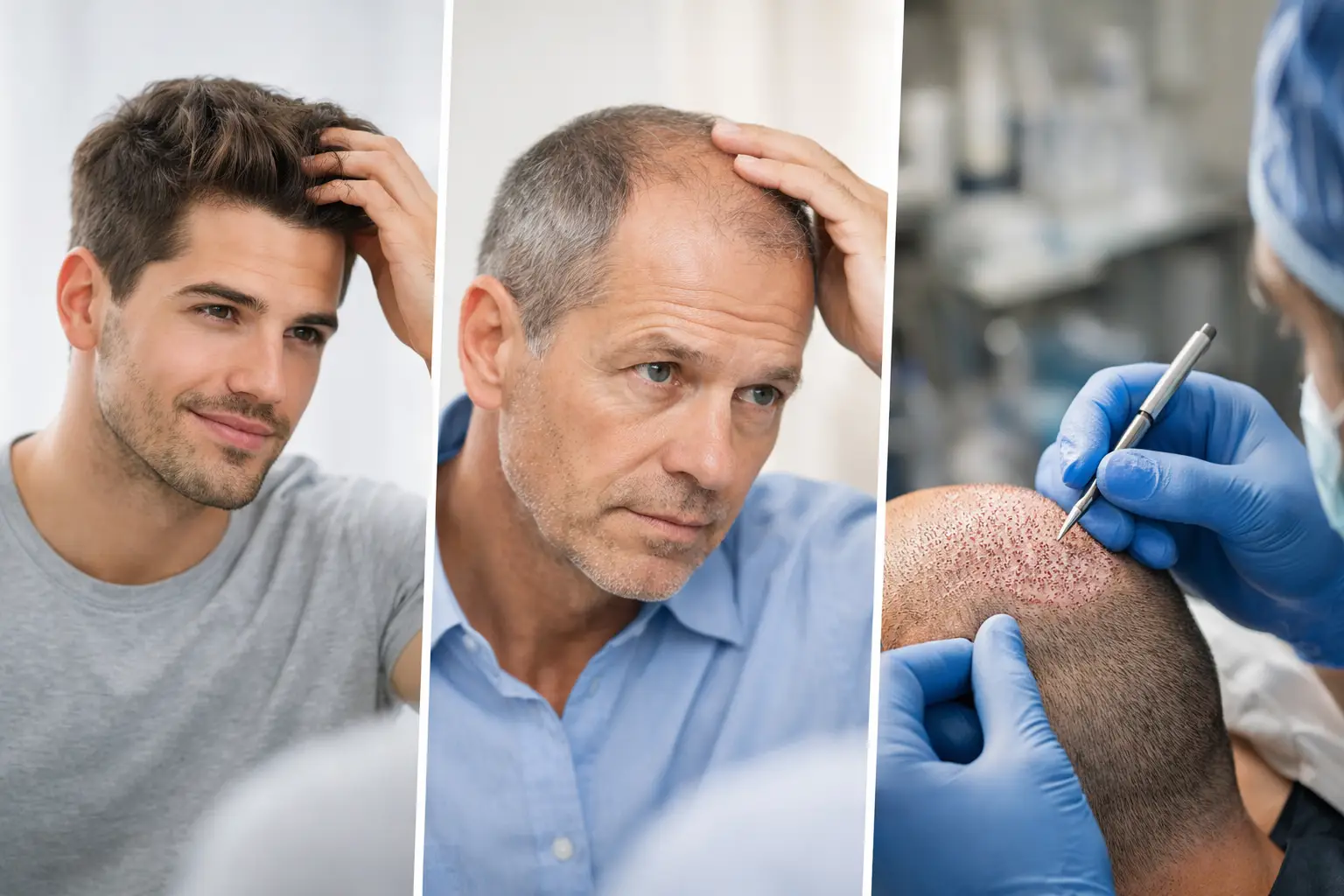
If you are asking about the best age for hair transplant, you are usually asking something more personal: Is it too early for me, or have I already waited too long? That is the right question to ask, because hair restoration is not only about replacing lost hair. It is about choosing the right time to create results that still look natural years from now.
What is the best age for hair transplant?
For many patients, the best age for hair transplant is somewhere between the late 20s and early 40s. This range is often ideal because the pattern of hair loss is easier to assess, the donor area is usually still strong, and long-term planning becomes more predictable.
That said, there is no single perfect age that applies to everyone. A healthy 26-year-old with stable hair loss may be a better candidate than a 35-year-old whose shedding is still progressing quickly. In the same way, someone in their 50s may still be an excellent candidate if their donor hair is healthy and their expectations are realistic.
Age matters, but stability matters more.
Why timing matters more than a number
A hair transplant is a medical procedure with aesthetic consequences that last for years. If it is done too early, before your hair loss pattern has settled, you may restore one area only to lose more surrounding hair later. This can create an uneven look and may lead to the need for additional procedures.
If it is done at the right time, your surgeon can design a hairline and coverage plan that fits both your current appearance and your future hair loss pattern. This is one of the biggest differences between a rushed transplant and a well-planned one.
Good timing protects three things: your donor supply, your natural look, and your long-term satisfaction.
Hair transplants in your early 20s
Patients in their early 20s often feel the emotional impact of hair loss very strongly. A receding hairline or visible thinning at this stage can affect confidence, social comfort, and even career presence. Wanting a fast solution is understandable.
This is also the age group where caution matters most. Hair loss is often still active and changing. If a transplant is performed before the pattern is clear, the newly implanted hair may stay in place while natural hair behind it continues to thin. The result can look unnatural unless future sessions are planned carefully.
That does not mean a transplant is always off the table in your early 20s. Some younger patients are appropriate candidates, especially when hair loss has stabilized or when the issue is more localized. But in many cases, doctors will first recommend medical management, such as therapies that help slow progression, before moving to surgery.
Late 20s to 30s: often the sweet spot
This is the age range where many of the strongest candidates appear. By the late 20s or 30s, hair loss patterns are often easier to read. The surgeon can usually make a more accurate judgment about how much loss is likely to continue and how to design a result that ages well.
Patients in this group also tend to benefit from a better balance between need and donor quality. They have usually lost enough hair to justify the procedure, but still have a healthy donor area available for strong graft harvesting.
This is why many specialists consider this period the practical sweet spot. Not because every patient in this age group should proceed, but because planning becomes more reliable.
Is there an upper age limit?
There is no strict upper age limit for hair transplant surgery. The better question is whether you are medically suitable and whether your donor area can support the result you want.
Patients in their 40s, 50s, and even beyond can achieve excellent outcomes. In fact, some older patients are easier to plan for because their pattern of hair loss is already well established. If overall health is good and expectations match what the donor area can realistically provide, age alone should not disqualify you.
What matters is not whether you are older. It is whether the procedure can be done safely and whether the final density and design will look believable on your face and at your stage of life.
The real factors doctors look at
Hair loss stability
This is one of the biggest decision points. If hair loss is continuing rapidly, surgery may need to be delayed or combined with treatment to slow further thinning. Stable hair loss allows for better planning and fewer surprises later.
Donor area quality
A transplant moves hair from the donor zone, usually the back or sides of the scalp, to thinning areas. The density, thickness, and overall health of that donor hair will shape what is possible. A younger age does not automatically mean a stronger donor area, and an older age does not automatically mean a weaker one.
Extent of current hair loss
Small, defined areas such as mild recession or a thinning crown may be treated differently from advanced baldness. The more extensive the loss, the more important it becomes to allocate grafts carefully.
Family history
Your family pattern can offer useful clues. If close relatives experienced aggressive hair loss progression, your surgeon may plan more conservatively, especially when designing the frontal hairline.
Medical suitability
General health, scalp condition, medications, and healing ability all matter. A transplant is minimally invasive, but it is still a medical procedure that requires proper assessment.
Expectations
This point is often underestimated. The best candidates understand that a transplant improves coverage and density, but it does not usually recreate the exact fullness of teenage hair. Realistic expectations lead to better decisions and greater satisfaction.
Why younger patients need conservative hairline design
One of the most common mistakes in hair restoration is chasing a very low, youthful hairline too early. It may look attractive in the short term, but it can become difficult to maintain as native hair continues to recede.
A good surgeon plans for maturity, not just immediacy. That means designing a hairline that suits your facial structure now and still looks appropriate years later. Conservative does not mean disappointing. It means natural, sustainable, and easier to support if additional loss occurs.
This is where expert judgment matters more than age alone.
Men and women are assessed differently
When discussing the best age for hair transplant, it also helps to recognize that men and women often experience hair loss differently.
Men are more likely to develop patterned recession and crown thinning, which can often be mapped using established progression scales. Women may experience more diffuse thinning, where the donor area itself needs closer evaluation. Because of this, candidacy in women depends less on age and more on diagnosis, hair density, and the cause of loss.
A thorough consultation should identify whether the issue is pattern hair loss, hormonal change, traction damage, scarring, or another condition. The right age only matters after the right diagnosis is clear.
Signs you may be ready for a transplant
A patient may be ready when hair loss has become relatively stable, non-surgical treatments alone are no longer giving enough improvement, the donor area is healthy, and the goal is clear and realistic. Emotional readiness also counts. Surgery should feel like a considered decision, not a panic response to recent shedding.
This is why consultation matters so much. An experienced team looks beyond your birthday and evaluates your full picture.
Signs it may be better to wait
Sometimes waiting is the smarter move. If you have rapid ongoing shedding, are very young with an unclear pattern, have poor donor density, or want a result that your available grafts cannot realistically deliver, delaying surgery can protect you from disappointment.
In some cases, combining medical therapy with future transplant planning gives the best result. That approach can preserve existing hair, improve scalp conditions, and make surgery more effective when the time is right.
Making the decision with a long-term plan
A successful hair transplant is rarely about a single day in the clinic. It is about building a strategy that respects your age, your genetics, your donor supply, and your future appearance.
At a specialist clinic such as A H T Aesthetic Medical Center, that planning process should include detailed assessment, honest guidance, and a treatment plan built around natural-looking outcomes rather than rushed promises. The strongest results come from careful timing and experienced hands.
If you are wondering whether now is the right time, the most useful next step is not to compare yourself to someone else online. It is to get a personalized evaluation. The right age is the age when your hair loss pattern, donor strength, and long-term goals all align well enough to create a result you will still feel confident wearing years from now.