A receding hairline tends to change your appearance in small ways before it changes it in obvious ones. You notice more forehead in photos, styling gets harder, and certain angles in the mirror start to bother you. For many patients, a hair transplant for receding hairline concerns becomes the point where temporary fixes no longer feel worth the effort.
The good news is that modern hair restoration can rebuild the front hairline in a way that looks soft, natural, and age-appropriate. The less exciting truth is that not everyone should move straight to surgery, and not every receding hairline should be treated the same way. The best results come from careful planning, not rushed decisions.
What a hair transplant for receding hairline actually does
A hair transplant moves healthy hair follicles from a donor area, usually the back or sides of the scalp, into areas where the hairline has thinned or moved back. Those transplanted follicles are chosen because they are typically more resistant to the hormonal pattern that causes common hair loss.
When performed well, the goal is not to create a perfectly straight, teenage hairline. That usually looks unnatural on an adult face. A strong result restores frame and density while respecting your facial proportions, age, hair characteristics, and likely future hair loss.
This is where expertise matters most. The front hairline is the most visible part of any transplant. Placement, angle, density, and graft selection all affect whether the result blends naturally or draws attention for the wrong reasons.
Who is a good candidate?
The right candidate usually has a stable donor area, enough healthy follicles for transfer, and realistic expectations about what can be achieved. Men with male pattern hair loss and women with localized thinning near the frontal hairline may both be suitable, but the treatment plan often differs.
Age matters, but not in a rigid way. Someone in their late 20s may be a great candidate if their pattern is clear and their hair loss is being managed. Someone older may still need a conservative design if loss is continuing across the mid-scalp or crown. A transplant should fit into the long-term picture, not just fix what is visible today.
A consultation should also rule out causes of hairline recession that may need medical treatment first, such as traction-related loss, hormonal changes, inflammatory scalp conditions, or active shedding. Surgery works best when the underlying situation is properly understood.
Why timing matters more than many patients expect
One of the biggest mistakes in hair restoration is treating the hairline too aggressively, too early. If the front is restored but surrounding native hair continues to thin quickly, the result can become uneven over time.
That does not mean you need to wait for severe hair loss. It means the timing should be guided by pattern, stability, family history, and donor supply. In many cases, combining a transplant with medical support such as PRP or other physician-guided hair loss treatments can help protect existing hair and improve the overall result.
This balance is especially important for patients who want a lower hairline than is medically wise. A lower design uses more grafts. That can reduce what remains available for future needs. A natural-looking hairline is not just about where it starts. It is also about whether it will still make sense years from now.
How the procedure is planned
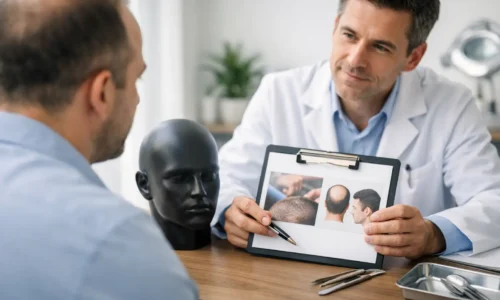
A successful hairline transplant starts long before the procedure day. The planning phase includes assessing facial structure, hair caliber, curl pattern, donor density, and how the hairline should age with you.
Single-hair grafts are typically used at the front edge to create a soft transition. Behind that, denser graft placement can add fullness. The direction of each graft matters because front hair grows at very specific angles. If those angles are off, even technically successful graft survival may not look natural.
This is also where conservative design protects you. A mature hairline with the right contour often looks better than a very low one. Patients are sometimes surprised by this during consultation, but once healing is complete, the more natural choice usually proves to be the more flattering one.
FUE, FUT, and technique choice
For many patients focused on the hairline, FUE is a popular option because it allows individual follicle extraction with minimal visible scarring and a relatively comfortable recovery. It is especially attractive for those who prefer shorter hairstyles.
FUT can still be appropriate in selected cases, particularly when a larger number of grafts is needed and donor management is a priority. The best choice depends on your scalp characteristics, hairstyle preferences, degree of loss, and long-term restoration plan.
Technique matters, but technique alone does not guarantee a good outcome. Hairline artistry, donor preservation, and realistic treatment planning matter just as much as the extraction method itself.
What results look like month by month
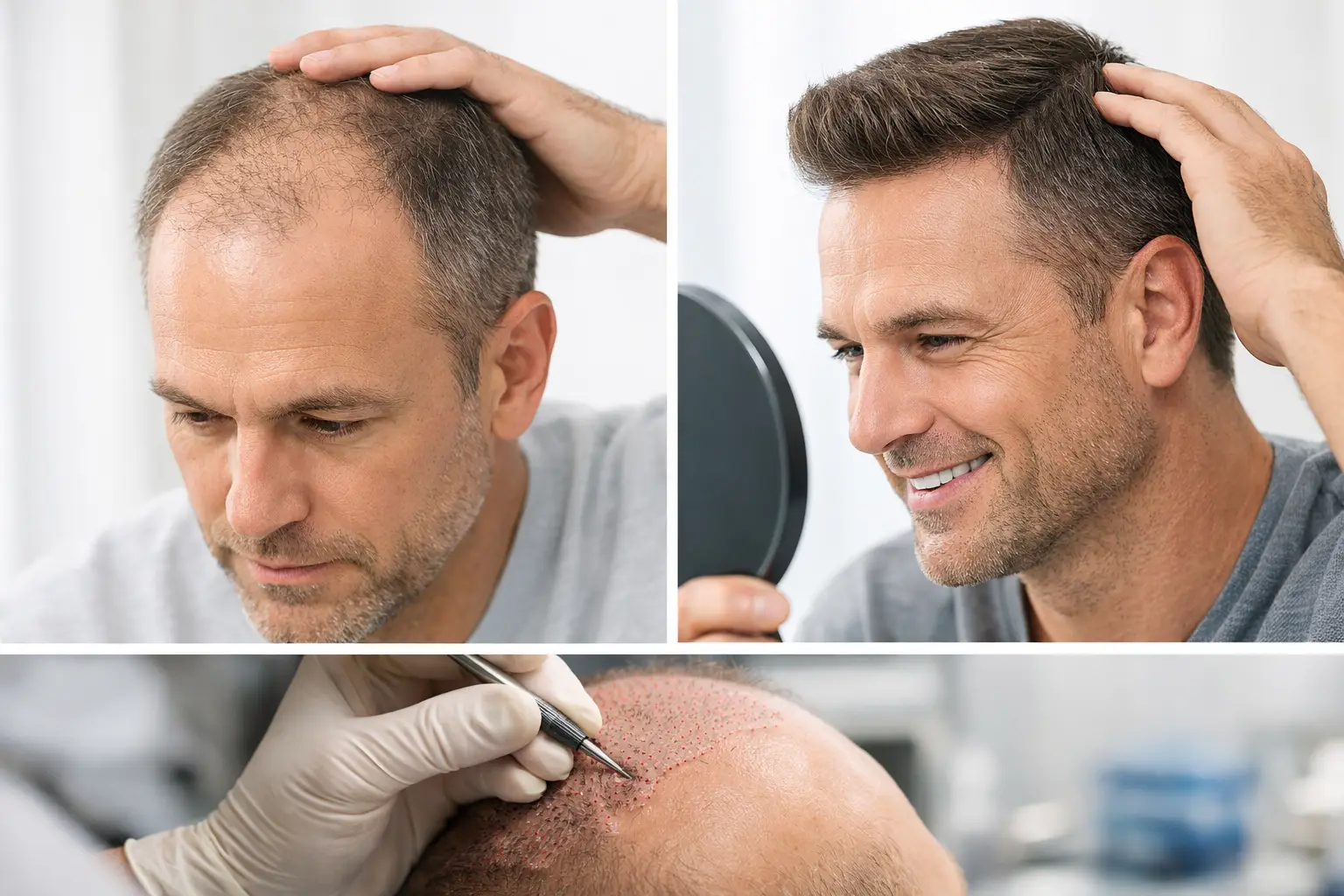
Hair transplant results do not appear immediately. In the first couple of weeks, the grafts settle in and the scalp begins to heal. Many transplanted hairs shed early on, which is normal and expected.
From around the third or fourth month, new growth usually starts to become visible. By six months, many patients see meaningful improvement, though the texture may still be immature. Final maturation often continues through 12 months, sometimes a little longer.
The hairline is worth waiting for because subtle growth changes make a big difference to the face. What patients usually notice first is not dramatic density. It is that their face looks more balanced, hairstyles feel easier again, and photos become less frustrating.
Recovery and downtime
Recovery is generally manageable, especially when patients know what to expect. Mild swelling, redness, and tiny scabs in the recipient area are common in the early stage. Most people can return to non-strenuous work within a few days, depending on comfort and visibility concerns.
You will need to follow aftercare closely. That includes washing instructions, avoiding friction, protecting the scalp, and pausing intense exercise for a short period. Good aftercare supports healing and helps protect newly placed grafts during the most delicate phase.
It is also normal for the transplanted area to look uneven before it looks better. Patients who understand the growth timeline tend to feel much more comfortable during recovery than those expecting instant density.
What determines whether the result looks natural
Natural results depend on several factors working together. The first is design. The second is graft handling and placement. The third is restraint.
An effective hairline should fit your face when someone is standing close to you in daylight, not just look good in a before-and-after photo. That means avoiding an overly sharp outline, placing irregularities where natural hairlines would have them, and matching density in a believable way.
Hair characteristics matter too. Thick, dark, straight hair creates stronger visual coverage than fine or lighter hair. That does not mean finer hair cannot produce an excellent outcome. It means expectations and graft strategy should reflect your actual hair type.
Questions to ask before booking
If you are considering a hair transplant for receding hairline treatment, ask how your donor area is being evaluated, whether your hair loss appears stable, how the proposed hairline was chosen, and what long-term planning is recommended. You should also ask who performs the key parts of the procedure and what kind of aftercare is included.
A good consultation should feel clear, not pressured. You should come away understanding not only what can be improved, but also what should be approached conservatively. Confidence in the plan matters just as much as confidence in the clinic.
At A H T Aesthetic Medical Center, this patient-first approach is central to treatment planning because the best cosmetic result is one that still looks right years later, not just in the first months after surgery.
Is it worth it?
For the right patient, yes. Restoring a receding hairline can have an outsized effect on appearance because the front of the scalp frames the entire face. Even a relatively focused procedure can make you look more refreshed, more balanced, and more like yourself again.
Still, the real value comes from doing it well. A rushed procedure, an overly low design, or poor donor planning can create problems that are harder to fix than the original recession. A thoughtful plan may be more conservative than you expected, but it is also more likely to give you a result you will still feel good about over time.
If your hairline has started to change how you see yourself, the next step is not guessing. It is getting a professional assessment that looks at your hair loss pattern, donor strength, and long-term options with honesty and care.