Acne scars can be more frustrating than acne itself. Long after breakouts settle, the marks they leave behind can affect how your skin looks, how makeup sits, and how confident you feel in professional and social settings. If you are researching Acne Scar treatment in Dubai, the most important thing to know is this: effective treatment is rarely one-size-fits-all. The best results come from matching the right technology and technique to your scar type, skin condition, and recovery goals.
For many patients, the biggest mistake is choosing a treatment based on trends rather than diagnosis. Some scars respond well to resurfacing. Others need collagen stimulation, subcision, targeted injections, or a combination approach. That is why a medical assessment matters before any plan begins.
Why acne scars need a customized approach
Not all acne scars are the same, even when they appear similar at first glance. Rolling scars create uneven texture with soft depressions under the skin. Boxcar scars have more defined edges and can look like shallow or deep pits. Ice pick scars are narrow and deeper, which often makes them harder to treat with surface-level procedures alone. Post-acne marks can also include redness or pigmentation, but those are different from true scars and may require a different plan entirely.
Skin tone also plays a role. In patients with medium to deeper skin tones, treatment has to be selected carefully to reduce the risk of post-inflammatory hyperpigmentation. Aggressive resurfacing may not be the best first step for everyone. A skilled provider will balance visible improvement with skin safety, comfort, and healing time.
This is where a medically supervised clinic has an advantage. Rather than offering a generic package, the goal should be to build a treatment plan around the actual structure of your scarring and the condition of your skin barrier.
The most effective options for Acne Scar treatment in Dubai
A successful plan usually involves one treatment or a combination of treatments over time. The right choice depends on scar depth, skin sensitivity, and how quickly you want to return to normal activities.
Microneedling and RF microneedling
Microneedling is often recommended for mild to moderate acne scarring because it encourages the skin to produce new collagen. As collagen rebuilds, shallow depressed scars can gradually look smoother and less visible. Standard microneedling works well for overall texture improvement, while RF microneedling adds radiofrequency energy to reach deeper layers and tighten the skin more effectively.
This option is popular because downtime is usually manageable. Most patients experience redness for a short period, and improvement appears progressively over several sessions. It is not usually the best standalone treatment for deep ice pick scars, but it can be very effective as part of a broader plan.
Fractional laser resurfacing
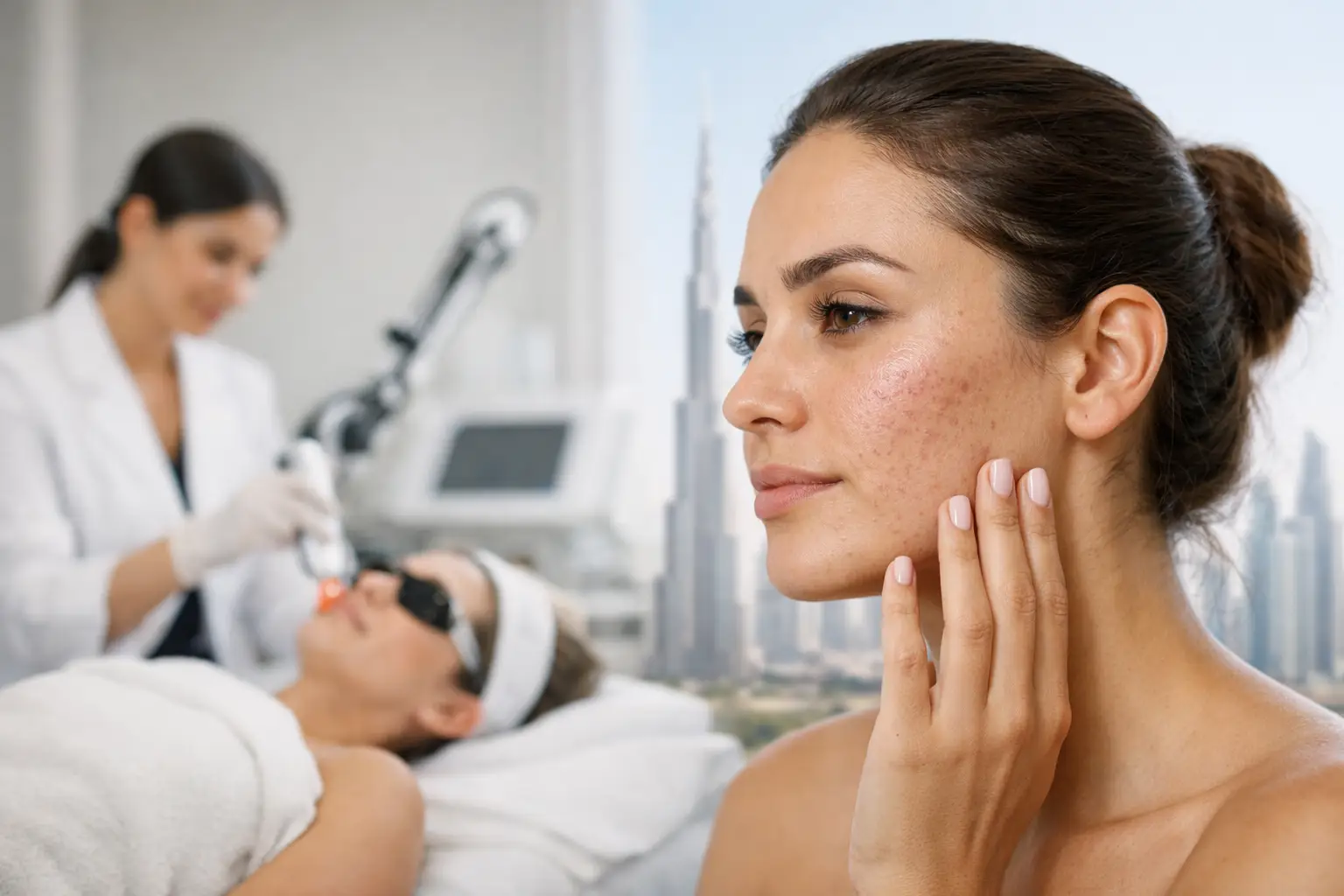
Laser treatment can improve texture, refine pores, and reduce visible acne scarring by creating controlled injury in the skin and triggering regeneration. Fractional lasers are often used because they treat a portion of the skin at a time, which supports healing while still delivering meaningful resurfacing.
Laser can be highly effective, but it is not automatically the right first choice for every patient. Skin type, recent sun exposure, and pigmentation risk all have to be considered carefully. In the right hands, it can produce impressive improvement, especially for boxcar scars and texture irregularities.
Chemical peels
Chemical peels are more useful for superficial marks, uneven tone, and mild textural concerns than for deep structural scars. They can help brighten the skin, reduce post-acne pigmentation, and improve the overall finish of the complexion. For some patients, peels are used before or between more advanced procedures to support clearer, more even-looking skin.
The trade-off is that peels alone usually will not correct deeper atrophic scars. They are best viewed as part of maintenance or combination care rather than a complete answer for significant scarring.
Subcision
Subcision is one of the most important treatments for rolling acne scars. These scars are often tethered down by fibrous bands beneath the surface of the skin. During subcision, a specialized instrument is used to release those bands so the skin can lift and heal more evenly.
Patients are sometimes surprised by how much difference this can make when rolling scars are the real issue. Surface treatments may improve the skin, but if the scar is pulled down from underneath, release is often necessary to get a better result. Some bruising and swelling can happen afterward, so this should be discussed clearly during consultation.
Dermal fillers for selected scars
In some cases, fillers can be used to lift depressed scars and improve contour immediately. This can work especially well for wider atrophic scars or when volume loss contributes to an uneven appearance. Fillers do not treat every type of scar, and they are not always permanent, but for the right candidate they can be a useful part of a comprehensive approach.
This is also why an aesthetic clinic with broader injectable expertise can offer more tailored planning. When scar depth, skin quality, and volume changes overlap, a more complete treatment strategy becomes possible.
What results can you realistically expect?
The goal of acne scar treatment is improvement, not perfection. That matters because many patients come in after trying creams, facials, or online remedies that promised complete removal. True acne scars change the architecture of the skin, so treatment focuses on making them noticeably softer, smoother, and less visible.
How much improvement you can expect depends on the type and severity of your scarring. Mild scars may respond well within a few sessions. Moderate to severe scars usually need staged treatment over several months. Combination therapy often delivers the best outcome because each method targets a different part of the problem.
A good consultation should set expectations honestly. If a provider promises instant, total correction, that is a red flag. The more credible approach is a structured plan with measurable progress and regular review.
How to choose the right clinic
When comparing options for Acne Scar treatment in Dubai, look beyond the treatment menu. What matters most is whether the clinic assesses your scar type carefully, explains why a certain treatment is recommended, and discusses downtime, risks, and likely outcomes in plain language.
You should feel that the plan is built for you, not sold to you. Experienced providers will usually talk through your skin history, acne activity, previous treatments, and any tendency toward pigmentation or sensitivity. They should also explain whether your skin needs preparation before advanced procedures begin.
This is especially important if you have active acne. Treating scars while new breakouts continue may limit your progress. In some cases, acne control should come first, followed by scar revision once the skin is more stable.
Recovery and downtime: what patients should know
Downtime varies by treatment. Microneedling may cause short-term redness and mild sensitivity. RF microneedling can involve a little more swelling. Laser resurfacing may require a longer recovery window, depending on intensity. Subcision can lead to temporary bruising, especially in the first several days.
What matters is planning around your schedule and comfort level. Many working professionals want visible improvement but cannot afford extended time away from meetings or social commitments. That is why treatment selection should always include a realistic conversation about recovery.
Aftercare also affects results. Sun protection, gentle skincare, and following post-procedure instructions are essential. Even the best treatment can be undermined by poor aftercare or returning too quickly to products that irritate the skin.
Is one session enough?
Usually, no. Acne scars develop over time, and meaningful correction usually happens over time as well. Most patients need a course of treatment rather than a single appointment. The exact number depends on scar type, severity, and the procedures selected.
That said, seeing gradual improvement does not mean the treatment is weak. Collagen remodeling takes time. A more realistic and medically sound plan often produces stronger long-term results than a single aggressive session that causes avoidable irritation or pigmentation problems.
For patients who want a more polished, confident appearance, the right scar treatment plan can make a real difference. Smoother skin texture often changes how people feel without makeup, on camera, and in face-to-face interactions. At a patient-focused clinic such as A H T Aesthetic Medical Center, that confidence is the outcome that matters most. If acne scars have been holding your skin back, the next step is not guessing which treatment is trendy. It is getting a proper assessment and choosing a plan designed for your skin.