If you have been comparing clinics, reading about graft counts, and wondering why one method sounds less invasive than another, you are asking the right questions. Hair transplant procedures explained in plain language can make the difference between feeling uncertain and feeling ready to book a consultation with confidence.
Hair restoration is not one single treatment. It is a category of procedures designed to move healthy hair follicles from a donor area, usually the back or sides of the scalp, into areas affected by thinning or permanent loss. The goal is not simply to add hair. The goal is to rebuild a natural hairline, restore density where it matters most, and create a result that looks like your own hair because it is your own hair.
Hair transplant procedures explained: what actually happens
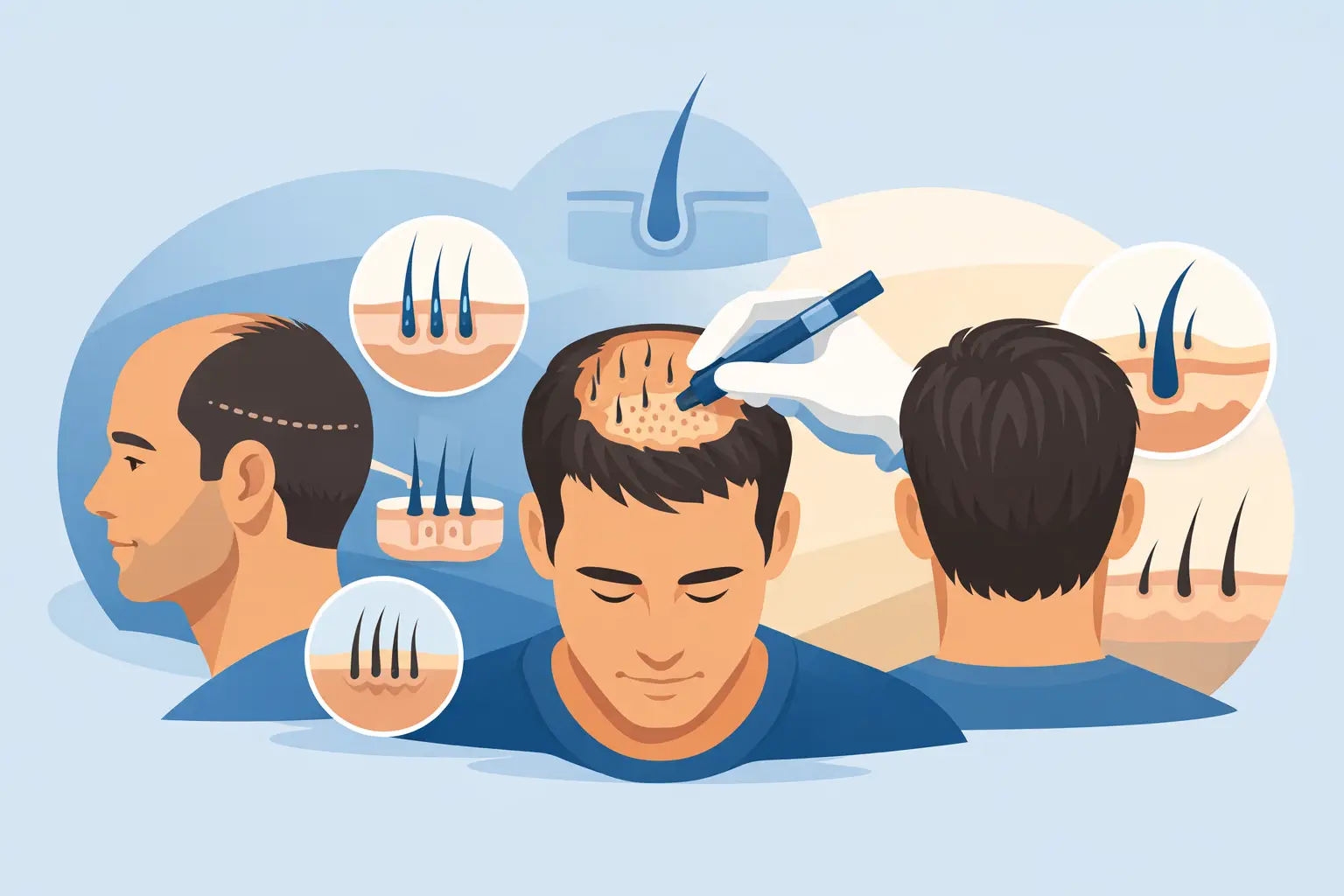
A hair transplant works by harvesting follicular units, which are naturally occurring groups of one to four hairs, from a donor zone that is genetically more resistant to shedding. Those follicles are then carefully implanted into the recipient area. Once healed, the transplanted follicles continue to grow in their new location.
That sounds simple, but the artistry and planning matter just as much as the technical steps. Hair direction, angle, density, facial proportions, and future hair loss patterns all affect the final outcome. A strong transplant result should not look sharp, pluggy, or obvious. It should look balanced, soft at the front, and age-appropriate over time.
The two main scalp transplant methods patients usually compare are FUE and FUT. Both can produce natural-looking results when performed properly, but they differ in how follicles are collected.
FUE: individual follicle extraction
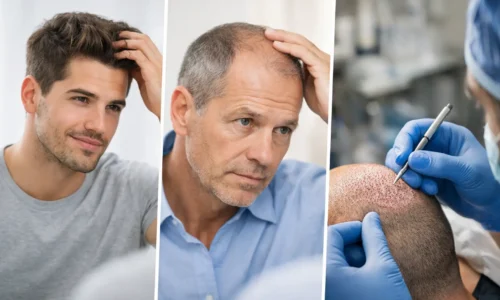
Follicular Unit Extraction, or FUE, involves removing individual follicular units directly from the donor area using a small punch tool. Because the follicles are taken one by one, there is no long linear incision. This is one reason many patients prefer FUE, especially if they like shorter hairstyles or want a less noticeable donor pattern.
FUE is often described as minimally invasive, and for many patients the recovery feels manageable. There can still be tenderness, redness, and scabbing in both the donor and recipient areas, but downtime is usually straightforward. FUE also allows precise harvesting across the donor zone, which can be helpful when planning natural density while preserving the look of the back of the scalp.
The trade-off is that FUE can be time-intensive and highly technique-dependent. Overharvesting can thin the donor area if it is not managed carefully. This is why donor assessment is so important.
FUT: strip harvesting
Follicular Unit Transplantation, or FUT, involves removing a narrow strip of scalp from the donor area, then dissecting it into individual grafts under magnification. The donor area is then closed with sutures, leaving a linear scar that is typically concealed by longer surrounding hair.
FUT can be a strong option for patients who need a larger number of grafts in one session or who have donor characteristics that make strip harvesting practical. It may preserve surrounding donor hair differently than FUE and can be efficient in experienced hands.
The main concern for many patients is the linear scar. If you prefer very short haircuts, this may be a deciding factor. Recovery can also feel tighter in the donor area compared with FUE. Neither method is universally better. The right choice depends on your hair loss pattern, donor supply, hairstyle preferences, and long-term plan.
Which hair transplant procedure is right for you?
This is where a real consultation matters more than online averages and before-and-after photos alone. The best procedure depends on several factors working together, not just on what is trending.
Your age matters because hair loss can continue. If your pattern is still evolving, your treatment plan should account for future thinning so the result continues to look natural years from now. Your donor density matters because every graft is a limited resource. Hair caliber, curl, scalp contrast, and the size of the treatment area also affect how much visible coverage a transplant can create.
Men and women may also need different planning. Male pattern hair loss often centers on the hairline, temples, and crown. Female hair loss can be more diffuse, which makes candidacy more selective in some cases. Facial hair and eyebrow restoration follow their own rules as well. Beard, moustache, and eyebrow transplants require even more attention to angulation and design because small details are easy to notice.
What the procedure day usually looks like
Most modern hair transplant sessions are performed under local anesthesia. Patients are awake, but the treated areas are numbed so the procedure is comfortable and controlled. Depending on the number of grafts and the method used, treatment may take several hours.
The day typically begins with planning and marking the design. That includes the hairline position, temple shape, or target areas for added density. The donor hair is then prepared and harvested, followed by graft sorting and recipient site creation. Finally, the follicles are implanted according to the agreed design.
The process is meticulous because every graft placement influences the final result. A natural hairline, for example, is not built with a straight edge or the same density across the front. It requires softness, irregularity in the right places, and a distribution pattern that mimics natural growth.
Recovery and when you will see results
Recovery is often easier than patients expect, but it still requires patience. In the first few days, mild swelling, redness, and scabbing are common. You will usually receive detailed aftercare instructions covering washing, sleeping position, activity limits, and how to protect the grafts while they settle.
The transplanted hairs often shed within the first few weeks. This can be alarming if you are not prepared for it, but it is a normal part of the process. The follicles remain in place beneath the skin and then begin producing new hair over time.
Visible regrowth usually starts gradually around three to four months, with more noticeable improvement by six months. Final maturation often takes nine to twelve months, and sometimes longer depending on the area treated. Crown results, in particular, can be slower.
A transplant is not instant gratification. It is a staged result that rewards careful planning and realistic expectations.
Risks, limits, and common misunderstandings
Good candidates often focus on what a transplant can do. A responsible clinic should also explain what it cannot do.
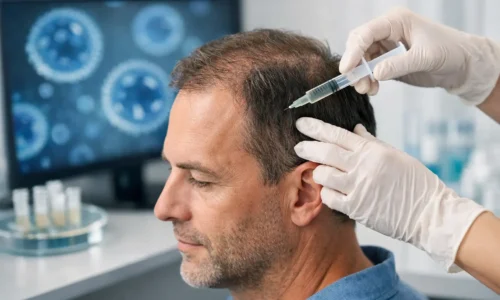
A transplant does not create unlimited density. It redistributes available donor hair. If the treatment area is large and the donor supply is modest, the strategy may involve prioritizing the frontal zone where framing the face has the greatest cosmetic impact. Some patients benefit from combining transplantation with medical or regenerative support such as PRP-based treatments to strengthen existing hair and improve overall appearance.
There are also standard surgical considerations, including temporary discomfort, shock loss, uneven early growth, or less-than-ideal yield if aftercare is not followed. Very curly hair, very light donor reserves, scalp conditions, and previous procedures can all affect planning. That does not mean treatment is off the table. It means personalization is essential.
Why clinic expertise matters as much as the method
Patients often compare FUE versus FUT as if the method alone determines the result. In reality, surgical judgment, graft handling, donor preservation, design skill, and aftercare support have just as much impact.
The most advanced technique still depends on experienced execution. A carefully designed transplant should fit your face, respect your donor capacity, and anticipate future hair loss rather than chasing a low hairline that may not age well. This is where specialist clinics stand apart. At A H T Aesthetic Medical Center, the emphasis is on tailored treatment planning, natural-looking outcomes, and support that helps patients feel informed from consultation through recovery.
Questions worth asking before you book
Before moving forward, ask how your candidacy is evaluated, how many grafts are realistically recommended, and what the long-term strategy is if hair loss continues. Ask who designs the hairline, what recovery involves, and what results are reasonable for your hair type and pattern of loss.
If you are considering facial hair or eyebrow restoration, ask specifically about experience in those areas. The design principles are different, and subtle mistakes are harder to hide. A strong provider should welcome these questions and answer them clearly, not rush past them.
Hair restoration should feel like a medical decision with cosmetic benefits, not a sales pitch. When the plan is built around your features, your goals, and the biology of your hair loss, the procedure becomes much easier to understand and much easier to trust.
The best next step is not choosing the trendiest technique. It is choosing a specialist who can assess your donor area honestly, explain your options clearly, and recommend the approach that gives you the most natural result for the long term.