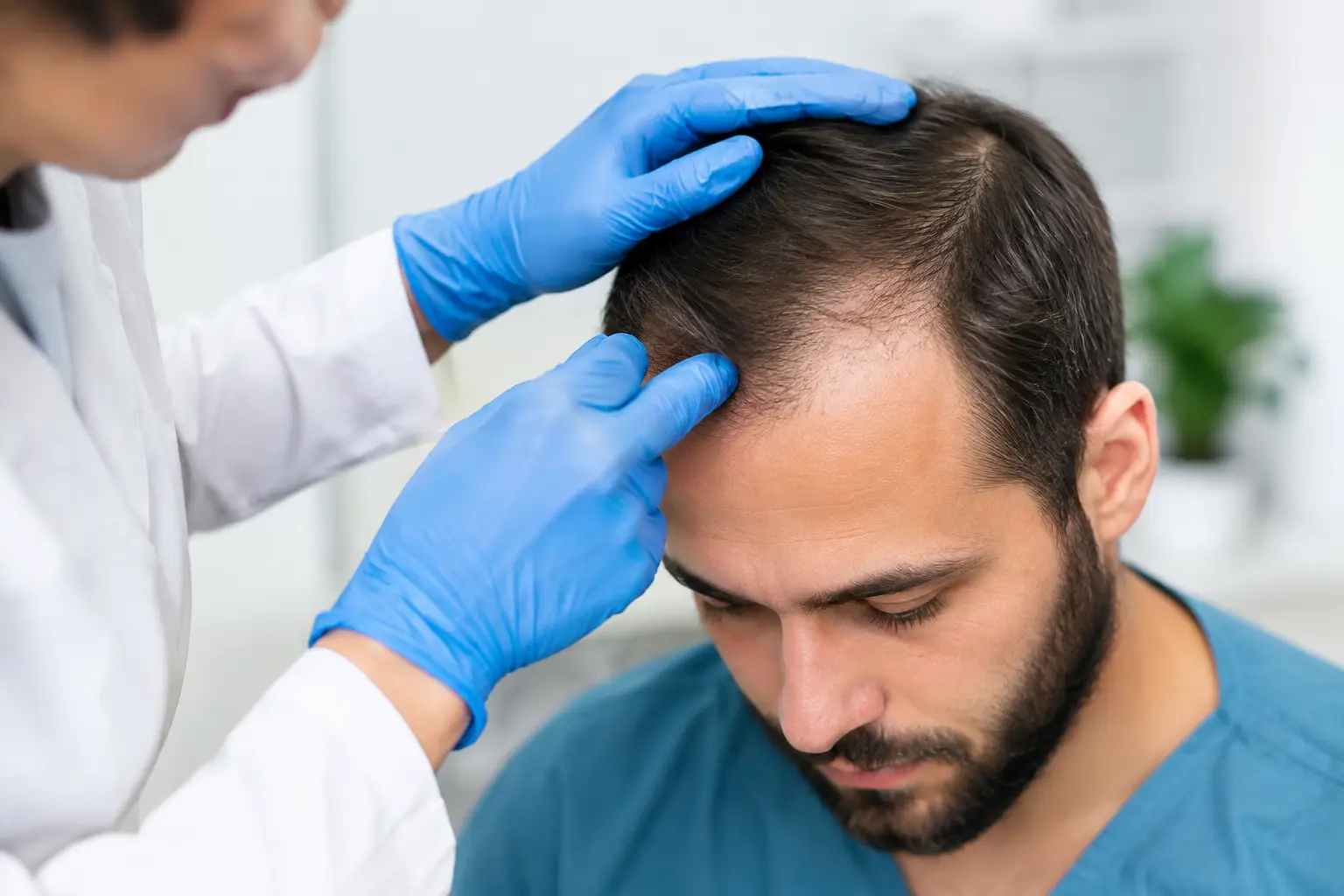
A transplanted follicle is living tissue, not simply a hair moved from one area to another. That is why patients researching what causes hair graft failure need clear, medically grounded answers rather than alarming stories online. Most well-planned hair transplants heal successfully, but graft survival depends on careful extraction, precise placement, appropriate aftercare, and an honest assessment of the patient’s hair-loss pattern and health.
At AHT Aesthetic Medical Center, we explain these factors before treatment so patients can make confident decisions and know what to expect throughout recovery.
First, Understand What Is Not Graft Failure
The most common source of worry is shock shedding. In the first two to eight weeks after a hair transplant, the transplanted hairs often fall out. This can look concerning, especially when scabs have cleared and the recipient area appears less full than expected. In many cases, however, the follicle remains safely beneath the skin and enters a resting phase before beginning new growth.
Visible regrowth commonly starts around three to four months after surgery. Hair then matures gradually, with a clearer cosmetic result typically seen between nine and 12 months. Crown areas can take longer. A temporary shed is therefore not proof that the grafts have failed.
True graft failure means a transplanted follicle does not survive, does not establish an adequate blood supply, or does not produce sustainable growth. It is less common than patients may assume, particularly when the procedure is performed by an experienced medical team and aftercare instructions are followed closely.
What Causes Hair Graft Failure?
Hair graft survival can be affected at several points: during donor harvesting, while grafts are outside the body, at implantation, and during early healing. A high-quality result relies on every stage being managed with discipline.
Excessive trauma during extraction or implantation
Follicular units are delicate. During FUE extraction, poor instrument handling, incorrect punch selection, or an unsuitable extraction angle can injure the follicle. This is sometimes called transection. A damaged graft may not grow normally, even if it is implanted afterward.
Implantation also requires precision. If recipient channels are too small, too deep, too shallow, or created at an inappropriate angle, grafts can be compressed, poorly positioned, or unable to receive the support they need. This affects not only survival but also the natural direction and density of the final result.
Sapphire FUE can support refined channel creation because sapphire blades are manufactured with a smooth, precise edge. Still, the instrument alone does not determine the outcome. The clinician’s planning, technical skill, and respect for the grafts remain the central factors.
Poor graft handling and prolonged time outside the body
Once removed from the donor area, grafts must be protected from drying, temperature changes, and unnecessary handling. They need to be counted, sorted, and stored in an appropriate solution until placement. If grafts are left outside the body too long or handled roughly, their viability may decline.
This is one reason procedure quality should never be judged by graft numbers alone. A clinic promising very large sessions without discussing donor capacity, staffing, graft storage, or surgical planning may not be focusing on the details that protect follicular units.
Compromised blood supply in the recipient area
Newly placed grafts rely on the recipient scalp to provide oxygen and nutrients during healing. Overpacking too many grafts into a small area can strain that blood supply. Heavy smoking, certain medical conditions, uncontrolled diabetes, and significant scalp inflammation can also interfere with healing.
Previous hair transplant surgery may add complexity as well. Scar tissue can have reduced circulation, so repair work requires a conservative, individualized approach. More grafts are not automatically better. A natural-looking plan that respects tissue health is often safer and more effective than pursuing maximum density in one session.
Infection, inflammation, or scalp conditions
A mild amount of redness, swelling, or tenderness shortly after surgery can be normal. Increasing pain, heat, pus, persistent swelling, fever, or a worsening rash are not normal recovery signs and require prompt medical attention. An infection can threaten healing and, in serious cases, affect graft survival.
Active dandruff, folliculitis, dermatitis, psoriasis, or other scalp conditions should also be assessed before surgery. These conditions do not always prevent a transplant, but they may need treatment first. A calm, healthy scalp provides a better environment for graft placement and recovery.
Damage during the early recovery period
The first 10 to 14 days matter greatly. Newly implanted grafts can be disturbed by scratching, rubbing, picking scabs, forceful washing, or pressure from tight headwear. A direct impact to the scalp can also dislodge grafts before they become secure.
Patients should follow the clinic’s washing instructions exactly, sleep in the advised position, and avoid exposing the scalp to dust, friction, and unnecessary contact. Strenuous exercise, swimming, sauna use, and heavy sun exposure may need to be paused for the period recommended by the medical team. The exact timeline varies according to the procedure and each patient’s healing progress.
Medication instructions matter too. Do not stop prescribed medication or begin supplements, blood thinners, anti-inflammatory medicines, or topical scalp products without checking with the treating clinician. Some products can irritate the skin or affect bleeding and healing.
Patient Factors That Can Affect Growth
Not every disappointing outcome is caused by a problem in the operating room. Ongoing androgenetic hair loss can continue behind or around transplanted hairs, making the overall appearance look thinner with time. This is particularly relevant when hair loss is active or when a patient has limited donor hair.
A thorough consultation should assess donor density, scalp laxity where relevant, family history, current hair-loss rate, medications, and medical history. Women with diffuse thinning may need additional evaluation before transplant because the donor area can also be affected by thinning. Similarly, patients with autoimmune hair loss or scarring alopecia need specialist assessment to determine whether the condition is stable enough for surgery.
Smoking and nicotine use deserve special attention. Nicotine can constrict blood vessels, which may reduce circulation to healing tissue. If you smoke, vape, or use nicotine products, be direct with your provider. The team can give you a realistic plan for stopping before and after surgery.
Nutrition and general health also contribute to recovery. Severe iron deficiency, low protein intake, untreated thyroid disease, and poorly controlled chronic illness may affect hair growth or wound healing. Testing is not necessary for every patient, but it can be valuable when symptoms or medical history suggest an underlying issue.
Warning Signs to Discuss With Your Surgeon
It is normal to study the scalp closely after a transplant, but avoid judging the result day by day. Contact your clinic promptly if you experience severe or escalating pain, spreading redness, discharge, fever, sudden bleeding, darkened skin, or signs that a large number of grafts have been physically removed.
If growth seems limited after the expected recovery timeline, schedule a follow-up rather than assuming failure. Your surgeon can examine the scalp, compare progress with photographs, and determine whether the issue is delayed growth, ongoing native hair loss, inflammation, or a genuine concern with graft survival. Depending on the assessment, supportive hair restoration options such as PRP hair therapy may be considered as part of a personalized plan.
Reducing the Risk Before You Commit
The best protection against graft failure begins before procedure day. Choose a clinic that evaluates your donor area carefully, explains the limitations of your hair characteristics, and gives you a realistic density plan. Be cautious of promises of guaranteed results, unusually low prices without a clear medical explanation, or one-size-fits-all graft packages.
Ask who will perform the key parts of the procedure, how grafts are stored and handled, what aftercare is included, and when follow-up appointments take place. Then follow every recovery instruction, even when the scalp starts to feel normal. Early healing is when careful habits have the greatest value.
A hair transplant should be approached as a long-term medical and aesthetic plan, not a single-day transaction. With skilled technique, honest planning, and attentive aftercare, you give each graft the strongest possible chance to grow naturally and help restore the confidence you came for.
Ready to explore your hair restoration options?
Complete a free Hair Analysis or book a consultation with AHT Aesthetic Medical Center in Dubai.
Ready to explore your hair restoration options?
Complete a free Hair Analysis or book a consultation with AHT in Dubai.