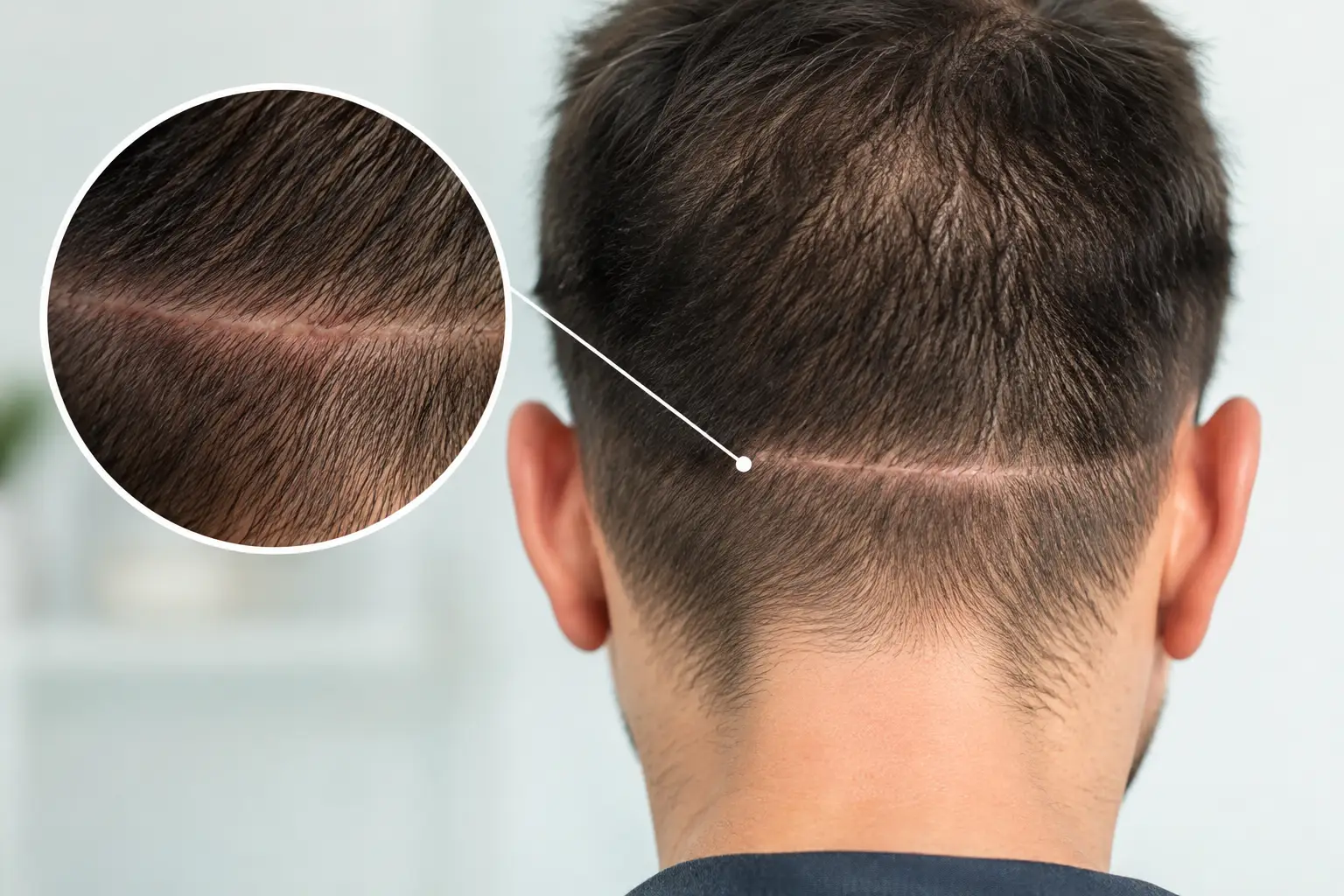
FUE scar visibility is one of the most common concerns for people considering a hair transplant, especially if they prefer short hairstyles or a closely shaved fade. It is a sensible question to ask before treatment. Follicular Unit Extraction is designed to leave tiny, dispersed extraction marks rather than a single linear scar, but every surgical procedure that removes grafts creates some degree of scarring.
For most suitable candidates, well-planned FUE treatment can make donor-area marks difficult to notice once healing is complete and surrounding hair has grown. The key is not a promise of “scar-free” surgery. It is careful graft harvesting, realistic donor-area planning, precise aftercare, and a medical team that prioritizes the long-term appearance of your hair as much as the initial result.
What FUE Scars Actually Look Like
During an FUE hair transplant, individual follicular units are removed from the donor area, usually at the back and sides of the scalp. Each extraction creates a very small circular wound. As these sites heal, they may leave tiny dot-like scars that are typically distributed across the donor zone rather than concentrated in one line.
In the early days after surgery, the donor area can look more noticeable than it will long term. Small scabs, redness, and temporary sensitivity are expected parts of healing. Once the scabs shed and the skin settles, the extraction sites generally become much less apparent.
The final appearance varies from person to person. Some patients heal with pale dots that are barely visible beneath short hair. Others may have slightly lighter or darker marks depending on their skin tone, healing response, and how closely they cut their hair. A very short buzz cut can reveal even well-healed extraction points, particularly under bright overhead light.
What Influences FUE Scar Visibility?
The visibility of FUE scars is not determined by one factor alone. It is the combined effect of surgical planning, your natural characteristics, and how well the scalp heals.
Donor Area Management
A responsible hair transplant plan protects the donor area. Taking too many grafts from a small section can reduce the natural density of the remaining hair, making both extraction marks and scalp show-through more noticeable. This is known as overharvesting, and it can be difficult to correct.
An experienced medical team evaluates donor density, hair caliber, scalp laxity, and the number of grafts needed before recommending treatment. Grafts should be spread strategically across the safe donor zone so the area retains a natural appearance after it is trimmed or grows out.
Hair and Skin Characteristics
Thicker, wavy, or curly hair often provides more coverage in the donor area than very fine, straight hair. A strong contrast between hair color and scalp color can also make any reduction in density more visible. For example, dark hair against a light scalp may reveal the donor area more easily when clipped short.
Skin type matters as well. Some people are more prone to prolonged redness, changes in pigmentation, or raised scar formation. A history of keloid or hypertrophic scarring should be discussed during your consultation. It does not automatically rule out FUE, but it requires a more cautious assessment.
Extraction Technique and Team Experience
The diameter of the extraction punch, the angle of the hair follicles, and the care used during harvesting all influence healing. Excessive trauma to the scalp can increase the chance of visible marks or patchy donor density.
FUE is highly technique-sensitive. The goal is to remove grafts efficiently while preserving the surrounding follicles and minimizing unnecessary disruption to the skin. A clinic should assess your donor reserve rather than treating graft numbers as a sales target.
Aftercare and Healing
Your aftercare has a direct role in how the donor area recovers. Picking scabs, scratching the scalp, exposing it to excessive sun, or returning to strenuous activity before you have been cleared can interfere with healing. Smoking may also affect circulation and wound recovery.
Follow the washing instructions provided by your medical team, use prescribed products as directed, and attend follow-up appointments. If you notice increasing pain, warmth, swelling, pus, or spreading redness, contact the clinic promptly. Early attention to a possible infection helps protect the result.
How Long Does It Take for FUE Scars to Heal?
Most donor-area scabs form and begin to shed within roughly one to two weeks. Redness can last longer, particularly for patients with sensitive skin or a fair complexion. The small extraction sites continue to mature beneath the surface over the following months.
Many patients feel comfortable returning to work and social routines relatively quickly, but appearance timelines depend on hairstyle and personal comfort. Keeping the donor hair slightly longer during the early healing period can provide extra coverage. Your surgeon can advise when it is appropriate to trim, shave, color, or style the area.
Final scar maturation is gradual. It is reasonable to judge the donor area over several months rather than a few weeks after surgery. Patience is part of the process, just as it is with the growth of transplanted hair.
Can Sapphire FUE Reduce Scar Visibility?
Sapphire FUE refers to the use of sapphire blades to create recipient-site channels where transplanted follicles are placed. These blades may support precise channel creation in the recipient area, helping the surgeon control the angle, direction, and distribution of implanted hair.
However, sapphire blades do not eliminate FUE extraction scars in the donor area. The donor sites are created during graft extraction, not channel creation. The best protection against noticeable donor marks remains appropriate candidate selection, conservative harvesting, skilled technique, and proper healing care.
This distinction matters because patients deserve clear information. Advanced tools can support excellent outcomes, but no device replaces thoughtful surgical planning.
Reducing the Appearance of FUE Donor Scars
Most patients do not need additional treatment for well-healed FUE scars. If the marks remain more visible than expected, the right approach depends on the cause. Reduced donor density, pigment contrast, and scar texture are different concerns and should not be treated as though they are the same issue.
In selected cases, options may include letting the hair grow longer, adjusting the haircut, scalp micropigmentation to reduce contrast, or carefully planned additional grafting. Additional harvesting is not always appropriate, especially when the donor area has limited reserve. A proper evaluation should come before any corrective procedure.
PRP hair therapy may be recommended in some hair restoration plans to support overall hair quality, but it should not be presented as a guaranteed treatment for established scars. Your clinician should explain what is realistic for your scalp and donor capacity.
Questions to Ask Before Choosing FUE
Before committing to a procedure, ask to see healed donor-area results from patients with similar hair texture, skin tone, and preferred haircut length. Ask how many grafts are being recommended, how the donor area will be distributed, and what plan is in place if your available donor hair is limited.
You should also understand who will perform each stage of the procedure and what postoperative support is available. A clear answer is a positive sign. Hair transplantation is not only about building a new hairline. It is also about preserving the areas that supply the grafts.
At AHT Aesthetic Medical Center, the consultation process focuses on individualized donor assessment and natural-looking planning, so patients can make decisions with confidence rather than pressure.
A successful FUE procedure should leave you feeling comfortable with both the transplanted area and the donor area. If scar visibility is a priority for you, bring photos of your usual haircut to your consultation and be candid about how short you want to wear your hair. That conversation helps your medical team build a treatment plan that respects your goals today and protects your options for the future.
Ready to explore your hair restoration options?
Complete a free Hair Analysis or book a consultation with AHT Aesthetic Medical Center in Dubai.
Ready to explore your hair restoration options?
Complete a free Hair Analysis or book a consultation with AHT in Dubai.