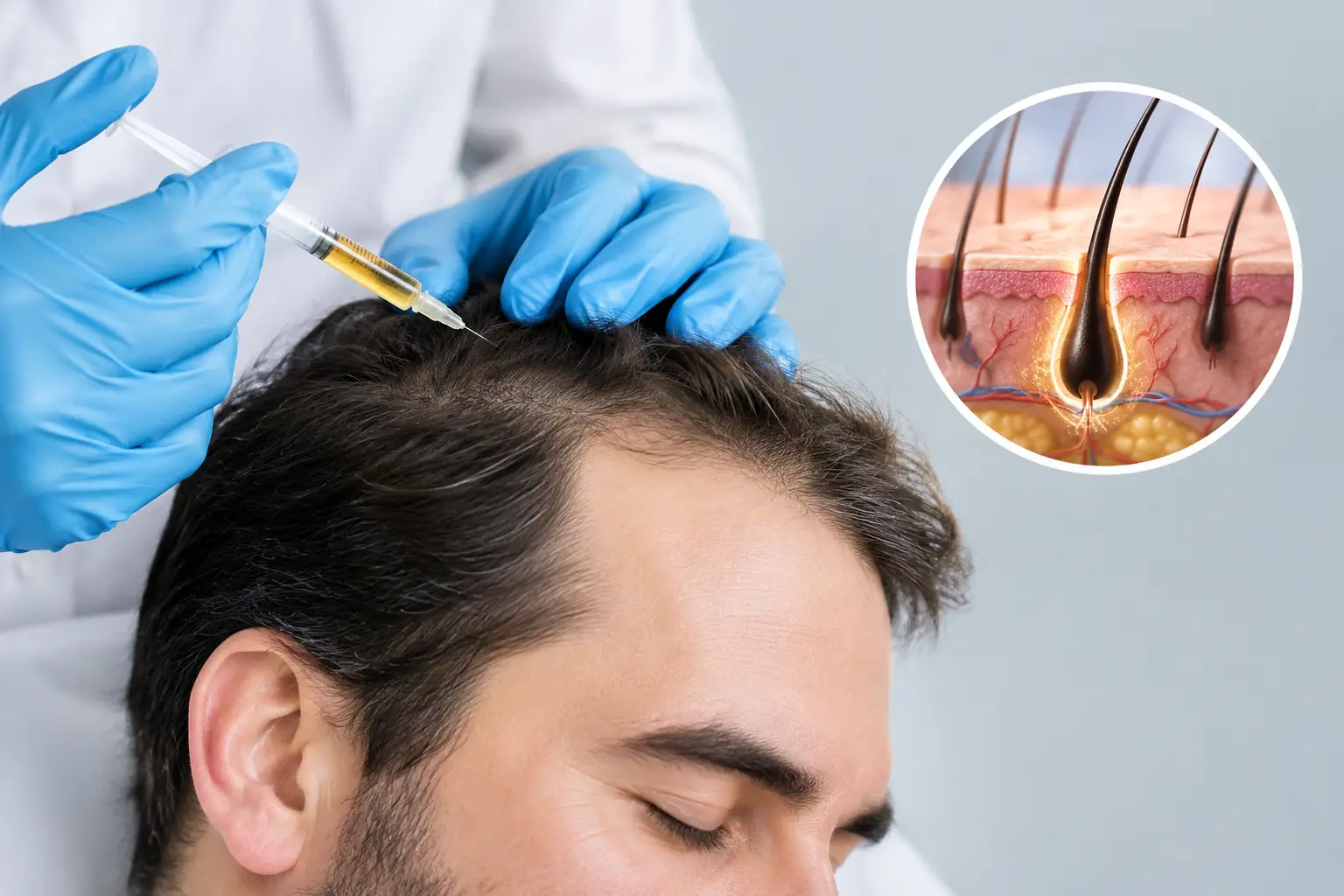
A thinning hairline, a wider part, or more scalp showing under bright light can make people search for a treatment that will “wake up” inactive hair. So, does PRP regrow dormant follicles? The honest answer is: sometimes it can support weakened follicles, but it cannot revive follicles that have been permanently destroyed or replaced by scar tissue.
PRP hair therapy may improve the quality, thickness, and growth cycle of existing miniaturized follicles in appropriate candidates. It is not a guaranteed cure for hair loss, and it is not a substitute for a proper diagnosis. The best results begin with understanding what is happening beneath the scalp.
What “dormant follicles” usually means
The term “dormant follicle” is widely used, but it is not always medically precise. Hair follicles naturally move through growth, transition, and resting phases. A follicle in the resting phase has not necessarily stopped functioning. It may still be capable of producing a new hair shaft when it returns to the growth phase.
In hereditary pattern hair loss, follicles often become miniaturized over time. They produce hairs that are progressively finer, shorter, and less pigmented. These follicles may still be alive, which is why early treatment can be meaningful. In this situation, PRP may help create a healthier environment for hair growth and support follicles that remain viable.
A follicle that has been inactive for many years is a different situation. If the follicle has fully atrophied or the area has developed scarring, there may be no functioning structure left to stimulate. No injectable treatment, including PRP, can reliably create a brand-new follicle where one no longer exists.
How PRP hair therapy works
PRP stands for platelet-rich plasma. During treatment, a small sample of your blood is collected and processed to concentrate platelets and plasma. The prepared PRP is then injected into targeted areas of the scalp by a qualified medical professional.
Platelets contain signaling proteins and growth factors involved in tissue repair and cellular communication. In hair restoration, PRP is intended to support the follicle environment, improve circulation around the follicle, and encourage follicles in a weakened or resting state to remain in, or return to, a productive growth phase.
This is why PRP is generally considered a supportive regenerative treatment rather than a follicle replacement treatment. It works with the follicles you still have. The earlier thinning is assessed, the more opportunity there may be to preserve and strengthen existing hair.
Can PRP improve thinning from pattern hair loss?
For many men and women with early to moderate androgenetic alopecia, commonly called pattern hair loss, PRP can be a valuable part of a personalized plan. Studies and clinical experience suggest that selected patients may see improvements in hair shedding, hair shaft thickness, and visible density over a series of treatments.
Results vary because hair loss is not one condition with one cause. Genetics, hormones, age, stress, nutritional status, recent illness, medication use, scalp inflammation, and styling practices can all affect the outcome. A person with recent thinning and active miniaturized follicles is usually in a stronger position than someone with a smooth, long-bald area.
PRP can also be useful for women experiencing diffuse thinning, particularly when the scalp still contains many fine hairs. Women often notice changes in part width and overall volume rather than a receding hairline, so treatment planning should account for that pattern.
When PRP is less likely to regrow hair
PRP has limits, and a responsible consultation should discuss them clearly. It is less likely to produce meaningful regrowth when an area has been bald for a long time and there are few visible miniaturized hairs. It also cannot reverse scarring hair loss once follicles have been destroyed.
In some cases, ongoing shedding is caused by an underlying issue that needs separate medical attention. Sudden diffuse shedding after illness, rapid weight loss, childbirth, major stress, or a change in medication may require investigation before deciding whether PRP is appropriate. Iron deficiency, thyroid concerns, and certain inflammatory scalp conditions can also affect hair growth.
A scalp examination helps distinguish between follicles that are weakened and follicles that are no longer present. This distinction matters because it prevents false expectations and directs you toward the most suitable next step.
What results can you realistically expect?
PRP is not an overnight treatment. Hair grows slowly, and the visible response to therapy usually develops over several months. Some patients first notice reduced shedding or less breakage. Others see improved texture, thicker existing hairs, or better coverage in areas where follicles were still active.
A common treatment approach begins with a series of sessions spaced several weeks apart, followed by maintenance sessions based on the individual response and hair-loss pattern. The exact schedule should be determined after medical assessment rather than copied from a standard package.
The goal is usually to preserve hair, improve caliber, and increase the appearance of density. For patients with extensive loss, PRP alone may not create enough coverage to meet their cosmetic goals. In those situations, PRP may still have a role in supporting native hair, while a hair transplant may be considered for areas that need more substantial restoration.
PRP versus hair transplant: which restores dormant areas?
PRP and hair transplantation address different needs. PRP aims to support existing follicles. A hair transplant redistributes healthy, genetically resistant follicles from a donor area to thinning or bald areas of the scalp.
If an area has viable but weakened follicles, PRP may be a sensible non-surgical option or an addition to a broader medical plan. If the area has no viable follicles left, transplantation may offer a more predictable way to restore visible hair coverage, provided donor hair and candidacy are suitable.
For many patients, the right answer is not one treatment versus the other. A staged plan may use PRP to support native hair while addressing established hair loss with a carefully designed Sapphire FUE hair transplant. The decision should be based on your scalp condition, donor supply, future hair-loss risk, and desired hairline design.
Who should consider a PRP consultation?
PRP may be worth discussing if you have noticed gradual thinning, increased shedding, reduced volume, or finer hair in areas that previously looked fuller. It can be particularly relevant when there are still hairs present in the affected area, even if those hairs are noticeably weaker than before.
A medical consultation is also essential if hair loss is sudden, patchy, painful, itchy, or accompanied by redness and scaling. These signs may point to a condition that should be diagnosed before regenerative treatment is considered.
PRP may not be suitable for everyone. Your provider should review your health history, medications, blood-related conditions, scalp health, and current hair-loss treatment. Active scalp infection and certain platelet or bleeding disorders may require treatment to be postponed or avoided.
Why an individualized plan matters
The question is not simply whether PRP can regrow hair. It is whether your follicles are still capable of responding, what is causing their decline, and how to protect the progress you make. A generic treatment schedule cannot answer those questions.
At AHT Aesthetic Medical Center, a hair restoration assessment focuses on the pattern and stage of loss, the condition of the scalp, and realistic goals for density and coverage. That approach helps patients avoid overpromising and choose treatment with confidence.
If you are concerned that follicles are becoming inactive, do not wait for the area to become completely bare before seeking an evaluation. The most helpful next step is a professional scalp assessment that can identify viable hair, rule out contributing concerns, and build a plan around the hair you can still preserve.
Ready to explore your hair restoration options?
Complete a free Hair Analysis or book a consultation with AHT Aesthetic Medical Center in Dubai.
Ready to explore your hair restoration options?
Complete a free Hair Analysis or book a consultation with AHT in Dubai.