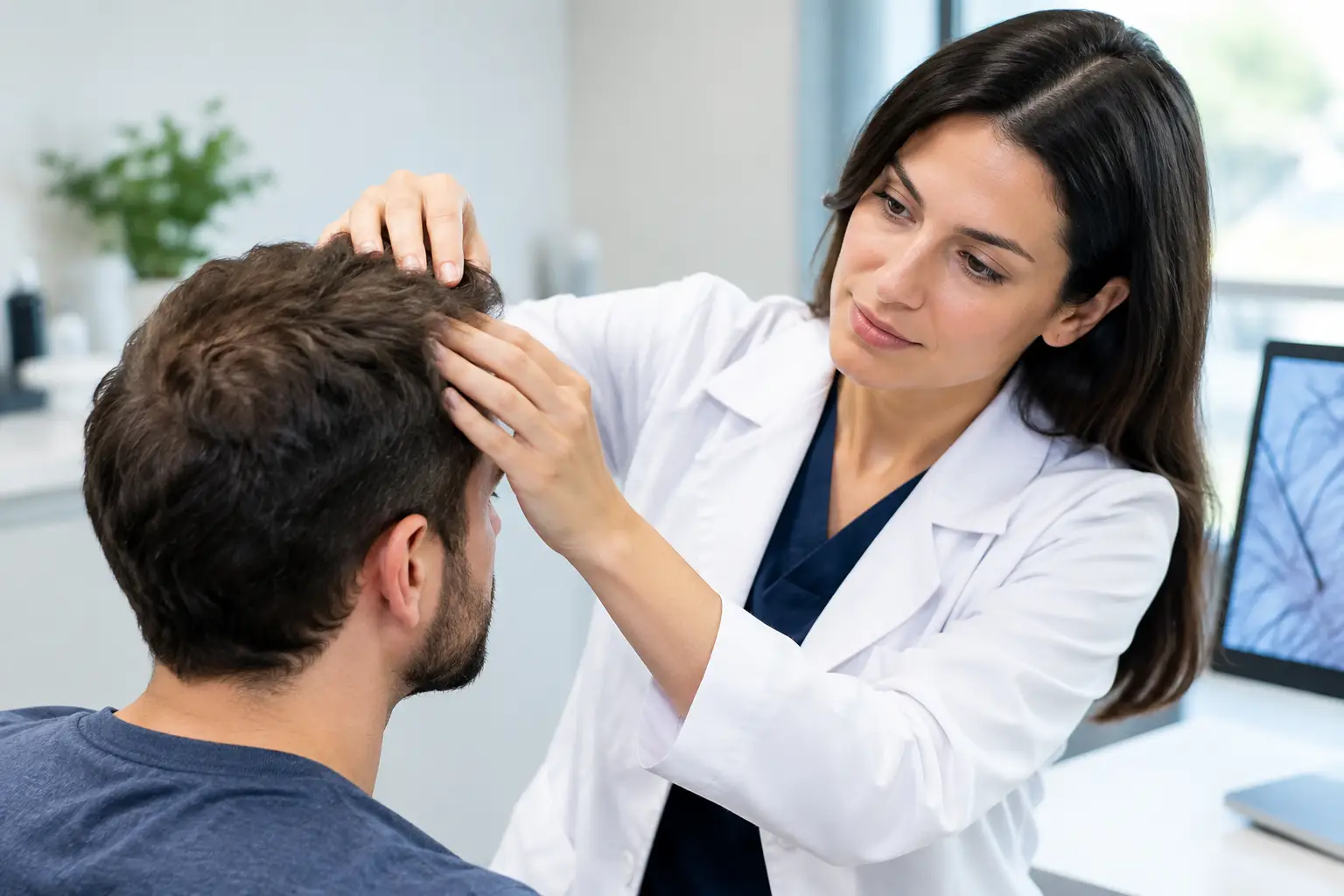
A receding hairline, a widening part, or more hair in the shower can create a lot of uncertainty. A professional hair loss consultation replaces guesswork with a clear medical assessment of what is happening, why it may be happening, and which treatment options are realistic for you.
At AHT Aesthetic Medical Center, the goal is not to recommend a procedure before understanding your hair loss. Your specialist begins by listening, examining your scalp and donor area, and building a plan around your pattern of loss, hair characteristics, health history, and expectations. Whether you are considering PRP hair therapy, medical hair restoration, or a transplant, the consultation is where a confident decision begins.
Why a Hair Loss Consultation Is Worth Your Time
Hair loss is not one condition with one solution. Male and female pattern hair loss are common, but thinning can also be connected to stress, hormonal shifts, nutritional deficiencies, recent illness, traction from hairstyles, scalp inflammation, or medications. The right approach depends on identifying the most likely cause and checking whether it is stable, progressing, or temporary.
This matters because the treatment that works well for one patient may not be the best choice for another. A young man with early temple recession may need a conservative strategy that protects future options. A woman experiencing diffuse thinning may benefit from therapies designed to improve the quality and density of existing hair before considering any surgical procedure. Someone with clearly established hair loss and a strong donor area may be a candidate for hair transplantation.
A detailed consultation also helps prevent unrealistic expectations. Hair restoration can create meaningful, natural-looking improvement, but density, coverage, hair caliber, scalp visibility, and future loss all influence the final result. A responsible specialist explains these variables openly rather than promising a result that your available donor hair cannot support.
What Happens During a Hair Loss Consultation
Your appointment should feel structured, private, and focused on your individual concerns. You will have time to explain when you first noticed changes, whether hair loss runs in your family, and what outcome would make you feel more confident.
Your Hair and Health History
The consultation usually starts with questions about the pattern and timeline of your hair loss. Your specialist may ask whether shedding was sudden or gradual, whether you have noticed itching or scaling, and whether your hairline, crown, or part line has changed over time.
Your medical history matters as well. Recent health events, medications, hormone-related changes, supplements, prior procedures, and past hair treatments can all affect the assessment. Be candid about these details, even if they seem unrelated. They help your provider distinguish a long-term pattern from a concern that may need further medical investigation.
It is useful to bring photos from previous years if you have them. They can show how quickly your hairline or density has changed, which is often more informative than trying to recall it from memory.
Scalp, Hairline, and Donor Area Assessment
Next, the specialist examines your scalp and hair. They assess the distribution of thinning, the health of the skin, the thickness of individual hairs, and the contrast between your hair and scalp. These details affect how visible hair loss appears and how much visual improvement is achievable.
For patients considering hair transplantation, the donor area is especially important. This is usually the permanent hair at the back and sides of the scalp. The team evaluates donor density, hair caliber, scalp characteristics, and the number of grafts that may be harvested responsibly. A good donor area can support strong results, but it is a limited resource that needs careful long-term planning.
Your facial proportions are also considered when designing a hairline. The aim is not simply to place the hairline as low as possible. It is to create a shape and position that looks natural now and continues to look appropriate as you age.
A Discussion About the Right Treatment Path
Once the assessment is complete, your specialist discusses options based on your needs. In earlier stages of thinning, non-surgical hair restoration may be recommended to support existing follicles and help slow visible progression. PRP hair therapy may be considered for appropriate candidates as part of a broader plan to improve hair quality and density.
If you have stable pattern loss and sufficient donor hair, a transplant may offer a more permanent solution for areas that have already lost significant density. Sapphire FUE is one approach that uses sapphire blades to create recipient channels with precision, helping the medical team control the angle, direction, and placement of each graft. This level of planning is central to a natural result.
The same principles apply to beard and eyebrow transplantation. Graft selection, placement angle, and design matter as much as the number of grafts. A consultation clarifies whether surgery is appropriate and how the treatment can complement your natural facial features.
Questions You Should Ask at Your Consultation
A hair loss consultation should be a two-way conversation. You should leave knowing what your provider sees, why a specific treatment is being recommended, and what the recovery or treatment schedule involves.
Ask what type of hair loss you are experiencing and whether it is likely to continue. Ask whether non-surgical therapy is recommended before or after a transplant, and how your plan may change if you lose more native hair in the future. If surgery is discussed, ask how many grafts may be needed, where they will be placed, and how the donor area will be protected.
It is also reasonable to ask about the recovery period. Most patients want to know when they can return to work, exercise, travel, wear hats, or resume their usual grooming routine. The answers depend on the treatment, but clear aftercare instructions should be part of the conversation.
Finally, ask about the timeline for visible change. Transplanted hair follows a growth cycle, and results develop gradually. In many cases, patients see initial growth after several months, with more noticeable maturation over the following months. PRP and other non-surgical plans also require consistency and patience. Honest timing prevents unnecessary worry during the early stages.
How to Prepare for Your Appointment
You do not need to do anything complicated before a consultation. Arrive with clean hair if possible and avoid using heavy fibers, sprays, or camouflage products that could make scalp assessment more difficult. If you use medications or supplements, bring a list. If you have had previous hair restoration treatment, share those details as well.
Write down what concerns you most. Some patients are focused on a receding hairline, while others want improved crown coverage or a fuller part line. Being specific helps your specialist prioritize the areas that will make the greatest difference to your appearance.
Try not to make your decision based on graft numbers alone. More grafts are not automatically better. A well-designed plan balances coverage, density, donor preservation, and the likelihood of future hair loss. Precision and long-term judgment matter more than a headline figure.
Choosing a Plan You Can Trust
The best hair restoration plan is individualized, medically considered, and realistic about both benefits and limitations. It should account for your current hair loss, your future risk of progression, your donor supply, and the level of maintenance you are comfortable with.
For patients in Dubai and across the GCC, a consultation also offers the reassurance of meeting the clinical team before committing to treatment. You can understand the process, raise concerns privately, and decide at your own pace. There should be no pressure to choose a procedure that does not fit your goals.
If hair loss has started to affect how you see yourself, a consultation is a practical next step. The right assessment can turn uncertainty into a treatment plan built around natural results, responsible care, and the confidence to move forward.
Ready to explore your hair restoration options?
Complete a free Hair Analysis or book a consultation with AHT Aesthetic Medical Center in Dubai.
Ready to explore your hair restoration options?
Complete a free Hair Analysis or book a consultation with AHT in Dubai.