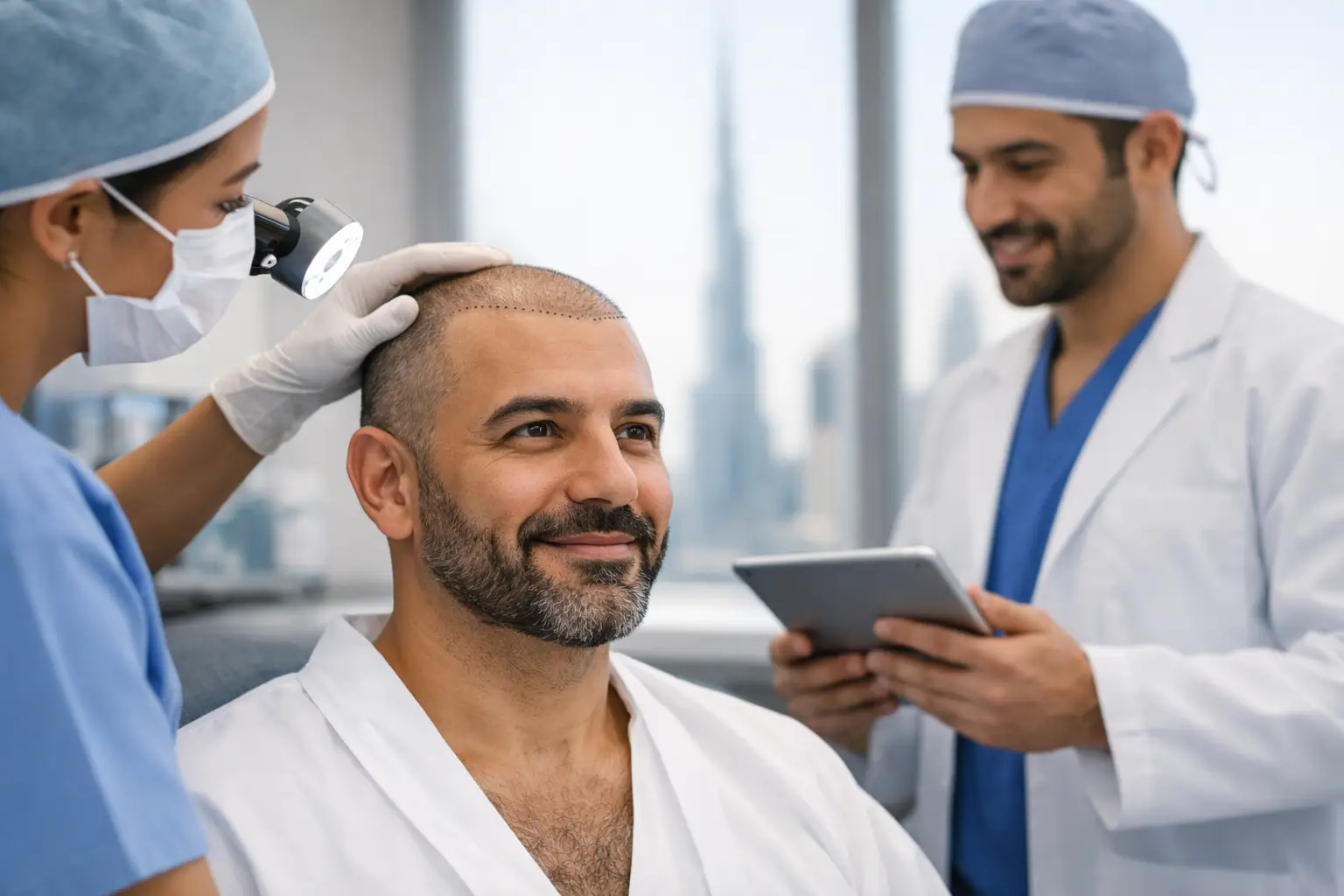
A hair transplant should never be chosen because of a promotional price or a promising before-and-after photo. The right UAE hair transplant specialists combine medical judgment, refined technique, and a plan designed around how you want to look years from now – not just immediately after the procedure.
For men and women dealing with thinning hair, a receding hairline, patchy beard growth, or sparse eyebrows, the decision can feel highly personal. A well-planned treatment restores more than hair density. It can help restore confidence while keeping your appearance natural and recognizably yours.
What separates experienced UAE hair transplant specialists
The best outcomes begin well before graft extraction. An experienced specialist assesses the pattern and cause of hair loss, evaluates donor hair quality, reviews your medical history, and considers your age, family history, and future hair-loss risk. This prevents a common mistake: designing an overly low hairline or using too many grafts too early.
Natural results depend on restraint as much as technical skill. Your available donor area is limited, so every graft needs to be used strategically. A thoughtful plan prioritizes the areas that will make the greatest visual difference, often the hairline, frontal zone, or crown, depending on your individual pattern of loss.
At AHT Aesthetic Medical Center, this personalized approach guides treatment recommendations. Some patients are suitable for a hair transplant now. Others may benefit from PRP hair therapy, medical hair restoration, or a combination plan before considering surgery.
Technique matters, but planning matters more
FUE hair transplant techniques are popular because they remove individual follicular units from the donor area without a linear scar. Sapphire FUE uses sapphire blades to create recipient channels with precision, which can support close placement and controlled graft direction when performed by an experienced team.
However, no technique automatically guarantees a better result. The quality of graft handling, channel angle, density planning, and hairline design determines whether transplanted hair grows in a way that looks soft and natural. This is particularly important around the temples and hairline, where poorly angled grafts can be noticeable.
The same principle applies to beard and eyebrow transplants. Facial hair restoration requires careful attention to direction, curl pattern, and density. Eyebrow grafts, for example, must be placed at a very shallow angle to follow the natural lay of the brow hair.
Questions to ask during your consultation
A consultation should give you clarity, not pressure. You should leave understanding what is possible with your donor supply, how many grafts may be needed, what your expected density could be, and whether further treatment may be needed as natural hair loss progresses.
Ask who will be involved in each stage of the procedure and how your hairline will be designed. Request an honest assessment of limitations, especially if you have advanced hair loss, a weak donor area, very fine hair, or an underlying condition contributing to shedding. A trustworthy specialist will not promise unrealistic density or guarantee an outcome that cannot be medically predicted.
It is also reasonable to ask about post-procedure support. The recovery period affects both comfort and graft protection. You should receive clear instructions on washing, sleeping position, exercise, sun exposure, medications, and when to return for follow-up checks.
Understanding the recovery timeline
Transplanted grafts require patience. In the first days, mild swelling, redness, and scabbing can occur. Most patients can return to everyday routines relatively quickly, but strenuous exercise and activities that increase sweating may need to wait for the period advised by the medical team.
It is normal for transplanted hairs to shed in the weeks after treatment. This is often called shock shedding and does not mean the follicles have failed. New growth typically begins gradually over the following months, with the most meaningful change developing over six to 12 months. Crown areas may take longer to show full visual improvement.
Your natural hair can continue to thin even after a successful transplant. That is why PRP therapy or a broader hair restoration plan may be recommended to support existing hair and protect the overall result.
Choose care that protects your long-term result
The right clinic will focus on your safety, your donor supply, and a result that suits your facial features rather than chasing an unrealistic transformation. Bring photos of the hairstyle or hairline you prefer, but remain open to a design that is appropriate for your hair characteristics and long-term needs.
A careful consultation with qualified UAE hair transplant specialists is the best first step toward a result that looks natural in the mirror, in photos, and as your style evolves over time.
Ready to explore your hair restoration options?
Complete a free Hair Analysis or book a consultation with AHT Aesthetic Medical Center in Dubai.
Ready to explore your hair restoration options?
Complete a free Hair Analysis or book a consultation with AHT in Dubai.