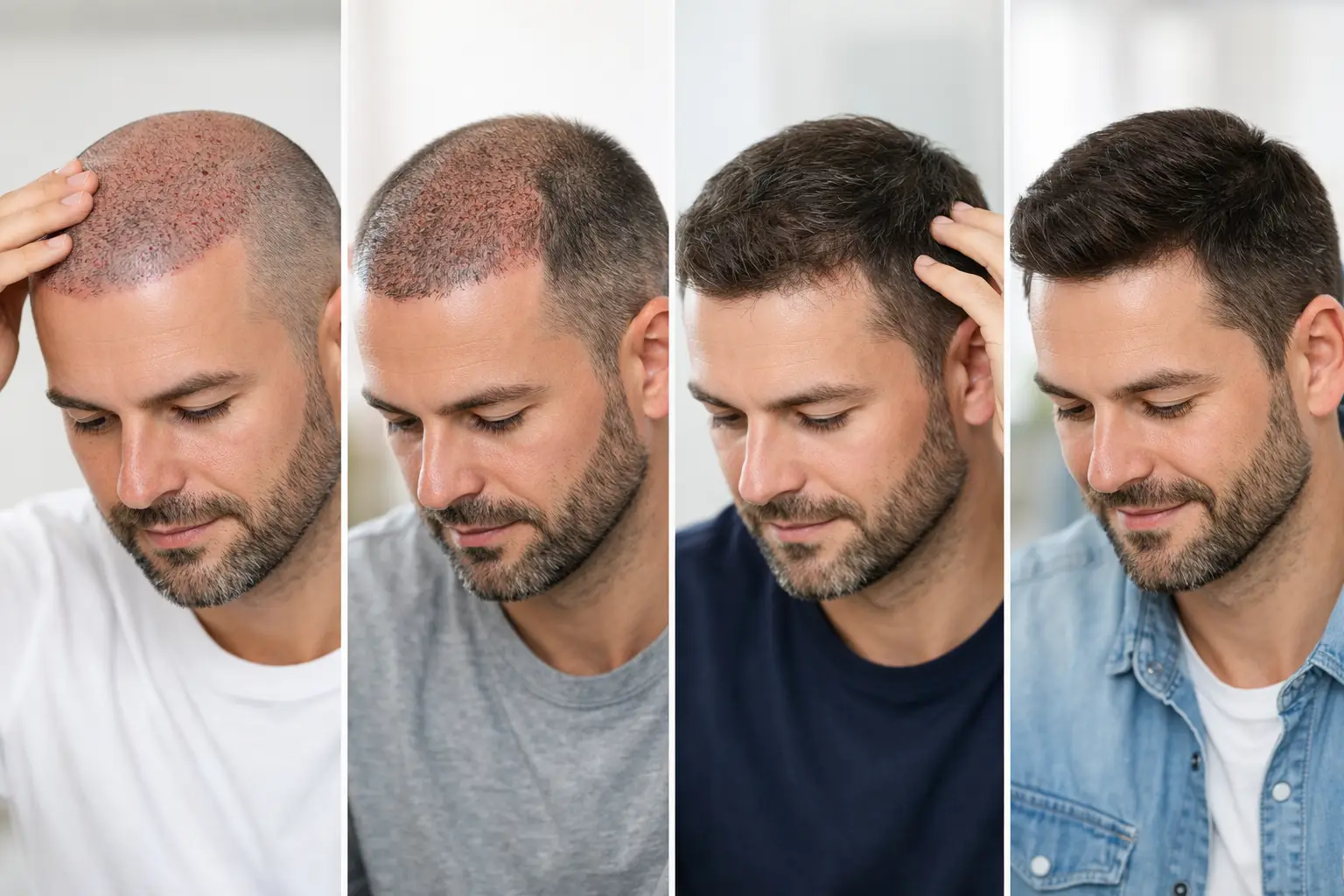
A useful hair transplant recovery review should tell you more than when scabs fall away. It should explain what healing actually feels like, why transplanted hairs may shed before growing again, and which changes deserve a call to your medical team. Recovery is a process with visible stages, but with a properly planned procedure and clear aftercare, most patients find it far more manageable than they expected.
At AHT Aesthetic Medical Center, recovery guidance is tailored to the technique used, the size of the treatment area, your hair characteristics, and your daily routine. The goal is not only to protect the transplanted grafts, but also to help you move through each stage with confidence.
Hair Transplant Recovery Review: What to Expect
Whether you have Sapphire FUE hair transplant surgery, a beard transplant, or an eyebrow transplant, the first weeks require patience. The transplanted follicles are delicate at first, while the donor area also needs time to settle. Most discomfort is mild and temporary, but the appearance of the scalp changes quickly during the early days.
A common mistake is measuring success by what the hair looks like in the first month. The true result cannot be judged that early. Transplanted follicles need time to establish their blood supply, enter a resting phase, and begin a new growth cycle. A natural-looking outcome is built gradually.
Days 1 to 3: Protecting the Grafts
The first 72 hours are the most careful part of recovery. You may see tiny crusts around each graft, along with redness and mild swelling. Swelling can sometimes move toward the forehead or around the eyes, especially after procedures involving the frontal hairline. This is usually temporary, and your care team may provide medication and specific sleeping instructions to reduce it.
Avoid touching, rubbing, or scratching the recipient area. Sleep with your head elevated, and follow the prescribed schedule for washing and medication. In Dubai’s heat, staying indoors or in cool environments is especially helpful during these first days. Heavy sun exposure, sweating, and dusty outdoor conditions can irritate a healing scalp.
Many patients can work from home quickly, provided their work is not physically demanding. If your job involves site visits, outdoor activity, helmet use, or a formal in-person setting, planning a few additional days away may make recovery more comfortable.
Days 4 to 10: Washing and Scab Shedding
Your clinic will advise when and how to begin washing. This is not regular shampooing at first. It is a gentle process designed to soften crusting without dislodging grafts. Follow the technique exactly, including the recommended water pressure, lotion or foam application, and patting method.
By the end of the first week, the donor area often looks much calmer. Small scabs in the recipient area begin to loosen and shed naturally over the following days. Do not pick at them, even if they look uneven. Pulling off a scab too early can irritate the skin and may disturb a healing graft.
You may also notice temporary numbness or tingling in the donor area. This can happen as the skin and small nerve endings recover. It generally improves over time, though the pace varies between patients.
Weeks 2 to 6: The Shedding Stage
This is the phase that worries many patients, even when they have been properly prepared for it. Newly transplanted hairs commonly shed two to six weeks after surgery. It can look as though the procedure has been reversed, but the follicle remains beneath the skin. The visible hair shaft falls out while the follicle rests and prepares for new growth.
This temporary shedding is often called shock loss. It may also affect some surrounding native hairs, particularly in areas where existing hair is already weak or thinning. In many cases, those hairs recover. Still, the risk and extent depend on your baseline hair density, the area treated, and the treatment plan.
This is why experienced planning matters. A hair transplant should account for both the grafted area and the long-term health of your existing hair. Your medical team may recommend PRP hair therapy or a medical hair-restoration plan where appropriate to support the broader result.
Months 2 to 4: Early Growth Can Be Uneven
After shedding, the scalp may look much like it did before surgery for a while. This quiet period is normal. Around the third or fourth month, fine new hairs may begin to emerge. They can initially look thin, lighter in color, or softer in texture than expected.
Early growth is rarely uniform. One side can appear ahead of the other, and the hairline may fill in at a different pace than the crown. This does not automatically indicate a problem. Hair follicles operate on individual growth cycles, so variation is expected.
It is also normal for the new hair to become thicker over successive growth cycles. Your provider will assess progress during follow-up appointments rather than relying on a single early photograph.
Months 5 to 8: Visible Change and Better Coverage
For many patients, this is when the improvement becomes easier to see. Hair starts gaining length, density, and strength, making styling simpler and coverage more noticeable. Friends or colleagues may begin to notice a change, particularly after hairline or frontal-density restoration.
The result may still be developing. Crown transplants often take longer to show meaningful density because the area is broad and natural hair growth patterns can be more complex. Patients with curly, coarse, or highly textured hair may appear to gain coverage differently than those with fine, straight hair. There is no single timeline that applies perfectly to everyone.
At this stage, it is reasonable to discuss your progress with your surgeon if you have concerns. A clinical review can distinguish between normal variation and an issue that needs attention.
Months 9 to 12: Assessing the Result
Most patients see the majority of their outcome between nine and 12 months, although some crown cases continue improving up to 15 or even 18 months. The transplanted hair should now blend more naturally with surrounding hair, and the final shape of the hairline or restored area becomes clearer.
A successful transplant is not simply about placing a high number of grafts. It depends on follicle survival, natural angles and direction, donor-area management, hairline design, and realistic density planning. The best result should look like your own hair, not like a procedure.
Activities to Pause During Recovery
Your aftercare instructions take priority, but several restrictions are common. Strenuous exercise and activities that cause heavy sweating are usually paused during the early healing period. Swimming, saunas, steam rooms, direct sun exposure, and contact sports also need to wait until your surgeon confirms the area is ready.
Smoking can impair circulation and may affect healing, while alcohol can increase swelling and interfere with prescribed medication. If you travel from elsewhere in the GCC for treatment, build enough flexibility into your schedule for the first wash and early post-procedure review when advised.
Hair coloring, close shaving in the recipient area, and strong styling products should also be delayed. These restrictions are temporary, but they protect the investment you have made in your result.
When to Contact Your Clinic
Some redness, itching, swelling, and mild tenderness are expected. However, contact your clinic promptly if you experience worsening pain, significant bleeding, fever, pus-like discharge, spreading redness, or swelling that becomes severe rather than improving. It is always better to ask than to wait when something feels unusual.
A reputable clinic will provide clear access to aftercare support. Recovery should not feel like a period you have to manage alone. Follow-up care allows your team to monitor healing, answer practical questions, and keep expectations aligned with your personal timeline.
Hair restoration is a long-term decision, and patience is part of the treatment. Give the follicles the care and time they need, attend your follow-ups, and let each new stage of growth build toward the natural, lasting result you chose the procedure for.
Ready to explore your hair restoration options?
Complete a free Hair Analysis or book a consultation with AHT Aesthetic Medical Center in Dubai.
Ready to explore your hair restoration options?
Complete a free Hair Analysis or book a consultation with AHT in Dubai.