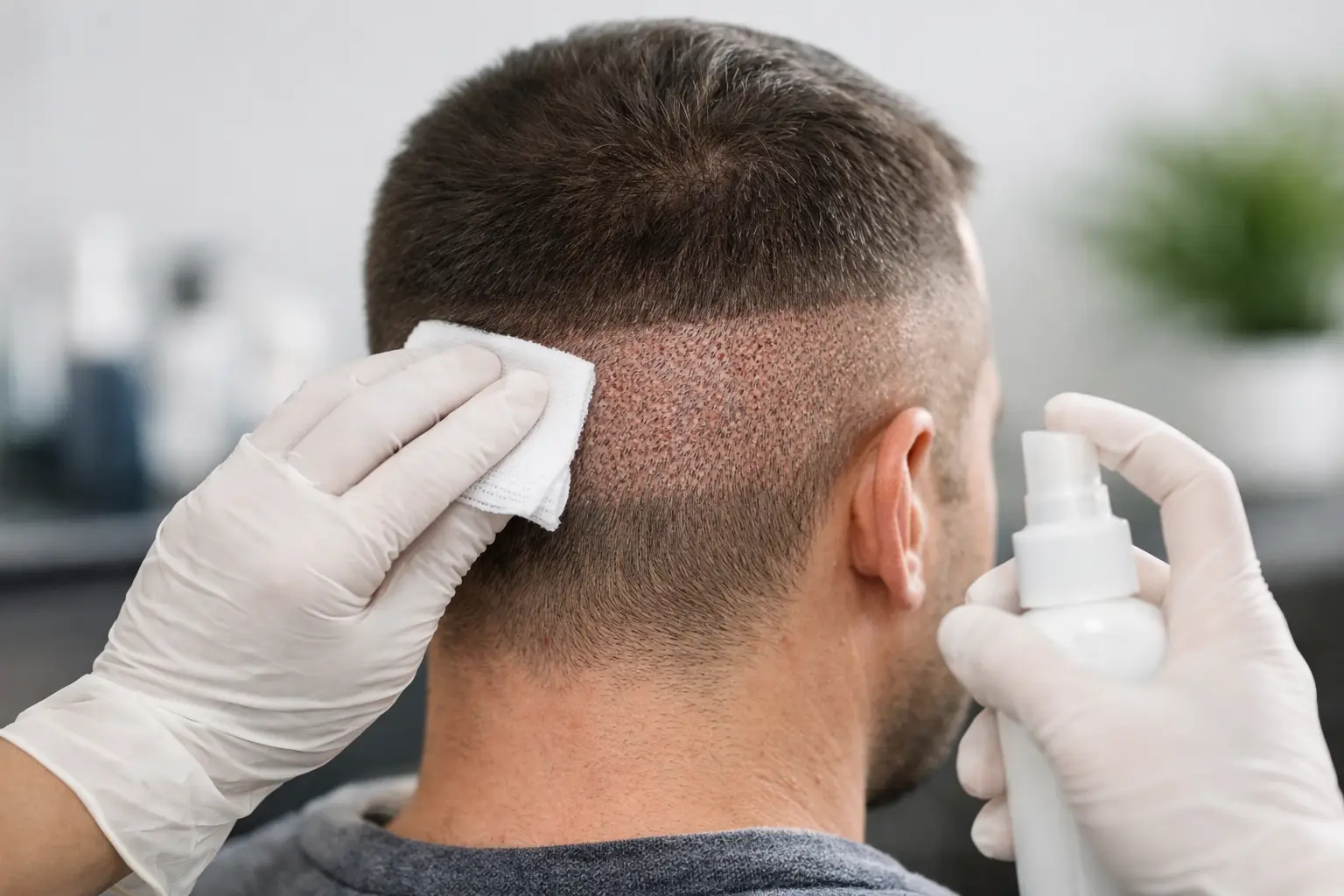
The donor area is easy to overlook when you are focused on the new hairline, but it plays a major role in the comfort and appearance of your recovery. Careful hair transplant donor area care helps the skin heal cleanly, reduces the chance of unnecessary irritation, and supports a natural-looking result as the harvested area recovers.
For FUE and Sapphire FUE procedures, individual follicular units are removed from the donor zone, usually at the back and sides of the scalp where hair is more resistant to thinning. These tiny extraction sites heal quickly in most patients, yet the first two weeks require sensible precautions. Your surgeon’s instructions should always take priority over general advice because your healing plan is tailored to your scalp, graft count, skin sensitivity, and treatment method.
What the Donor Area Looks and Feels Like After Surgery
Immediately after a hair transplant, the donor area may feel tender, tight, or mildly sore. Small red dots, pinpoint scabs, and slight swelling are expected after FUE extraction. If a larger number of grafts has been collected, the area can appear more noticeably pink for several days.
Most patients find that discomfort is manageable with the medication recommended by their medical team. The sensation usually improves steadily during the first few days. Itching can develop as the skin begins to repair itself. While this is common, scratching is not safe because fingernails can dislodge scabs, introduce bacteria, and delay healing.
The appearance of the donor area also depends on your hair length and density. Some patients choose to keep surrounding hair longer before treatment so it can provide coverage during the early recovery period. Others prefer a closely trimmed look and accept that the extraction points may be visible temporarily. Neither approach changes the quality of the transplant, but discussing your preferred style before surgery helps your team plan appropriately.
Hair Transplant Donor Area Care for the First 14 Days
The first two weeks are about protecting the extraction sites while allowing the scalp to heal without disruption. Your clinic will give you a post-procedure schedule, including when to remove dressings, start washing your hair, and return for follow-up. Follow that schedule closely rather than relying on a friend’s recovery or a general timeline online.
Keep the area clean without rubbing it
For the first wash, use only the technique and products approved by your surgeon. This usually involves gently applying a mild shampoo or foam, allowing it to sit briefly, then rinsing with low water pressure. Do not rub, scrub, or use your fingertips to lift scabs in the first days.
After washing, pat the donor area dry with a clean, soft towel or allow it to air-dry if instructed. Avoid hot water, fragranced hair products, dry shampoo, styling sprays, and heavy oils until your medical team confirms that the scalp has healed sufficiently. These products can irritate sensitive skin or leave residue around the extraction sites.
Avoid pressure, friction, and overheating
Your scalp needs protection from anything that repeatedly rubs against it. Tight caps, helmets, hard hat interiors, and close-fitting headwear can create friction over healing extraction points. If headwear is unavoidable for work or travel, ask your clinic when it is safe and which option is least likely to irritate the area.
Sleep with your head slightly elevated for the first few nights if this is recommended in your aftercare plan. A clean pillowcase is essential, and a travel pillow may help prevent you from turning onto the treated scalp. Avoid lying directly on the donor area if it causes pressure or discomfort.
Dubai’s heat makes one precaution especially practical: avoid direct sun and excessive sweating during the initial healing stage. Strong sunlight can worsen redness and make the scalp more sensitive. Skip intense workouts, sauna sessions, steam rooms, and long periods outdoors until your surgeon clears you to resume them. A short, easy walk is generally different from a high-intensity gym session, so follow the activity limits given for your case.
Leave scabs alone
Scabbing is part of normal wound healing after follicle extraction. It can look concerning, particularly when the donor area has been shaved, but it should not be picked. Scabs typically soften and come away gradually with approved washing.
Trying to remove them early can cause bleeding, inflammation, or small marks that take longer to settle. If scabs remain beyond the timeline your clinic provided, contact the team for guidance rather than attempting to treat the area yourself.
What to Avoid While the Donor Area Heals
A successful recovery is often less about adding products and more about avoiding preventable setbacks. Do not smoke or use nicotine products during the period advised by your surgeon. Nicotine can impair circulation and may slow wound healing. Alcohol should also be avoided for the time specified in your aftercare instructions, particularly if you are taking prescribed medication.
It is also wise to postpone swimming. Pool water, seawater, and hot tubs can expose healing skin to irritants and bacteria. Hair coloring, chemical treatments, scalp exfoliants, and aggressive salon services should wait until the donor skin has fully recovered and your medical team approves them.
Be cautious with supplements and over-the-counter products as well. Some medications, herbal products, and anti-inflammatory drugs can affect bleeding or healing. Your clinic should know everything you take regularly, including vitamins and topical hair-loss treatments. Do not restart a medication such as minoxidil around the donor area unless you have been given clear instructions.
When Can You Return to Normal Hair Care?
Many patients can return to a gentler version of their normal hair-care routine after roughly 10 to 14 days, but the exact timing varies. By then, donor scabs are often gone, tenderness has eased, and the extraction points are closing well. Still, the scalp may remain slightly pink or sensitive, especially in fairer skin tones or after a high graft count.
Haircuts are another common question. Scissors may be possible earlier than clippers, because clippers can pull on healing skin or create friction. Your surgeon can tell you when it is safe to use them over the donor area. If you are planning an important event, work presentation, or travel, mention it during your consultation so your treatment date and recovery expectations can be planned realistically.
The donor area usually continues to blend in over the following weeks as the short surrounding hair grows. Temporary thinning can occasionally occur near the extraction zone, particularly if the donor supply is already limited. This is why donor assessment is not a minor step. An experienced hair restoration team evaluates density, hair caliber, scalp characteristics, and the number of grafts that can be safely harvested without overusing the area.
Signs You Should Contact Your Clinic
Some redness, sensitivity, and light spotting are expected early on. However, your clinic should be contacted promptly if pain becomes stronger rather than improving, bleeding does not stop with the instructions you were given, or you notice spreading redness, warmth, pus, fever, or a foul odor. These symptoms may indicate infection or another issue that needs professional assessment.
You should also ask for advice if swelling is severe, itching becomes difficult to manage, or you are unsure whether a product, activity, or medication is safe. A quick check-in can prevent a small concern from becoming a longer recovery issue. Do not self-treat suspected infection with leftover antibiotics, harsh antiseptics, or unapproved creams.
Donor Area Care Is Part of Long-Term Results
The goal of hair transplantation is not only growth in the recipient area. It is also to preserve the donor zone so it remains balanced and discreet after healing. Advanced extraction methods and thoughtful graft distribution matter, but careful aftercare is the patient’s contribution to that result.
At AHT Aesthetic Medical Center, each hair restoration plan is built around the quality of your donor hair, the coverage you want to achieve, and the recovery support you need. Give your scalp the calm, protected healing period it deserves, and stay in contact with your medical team whenever something does not feel right. That attention in the early days helps you move forward with greater confidence in the months ahead.
Ready to explore your hair restoration options?
Complete a free Hair Analysis or book a consultation with AHT Aesthetic Medical Center in Dubai.
Ready to explore your hair restoration options?
Complete a free Hair Analysis or book a consultation with AHT in Dubai.