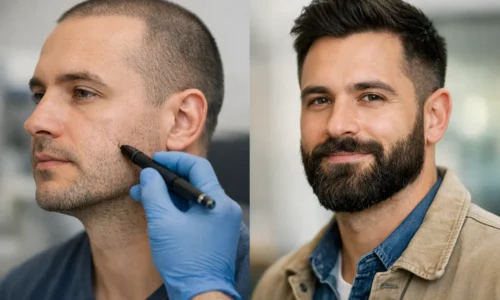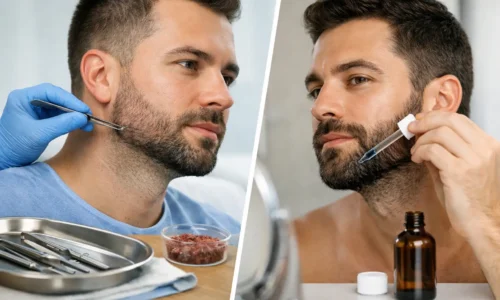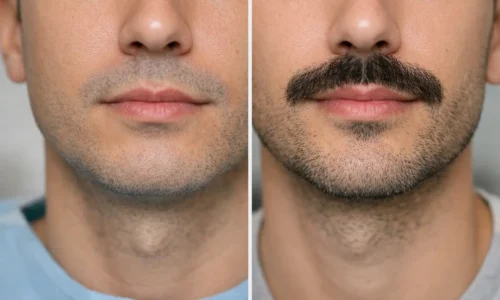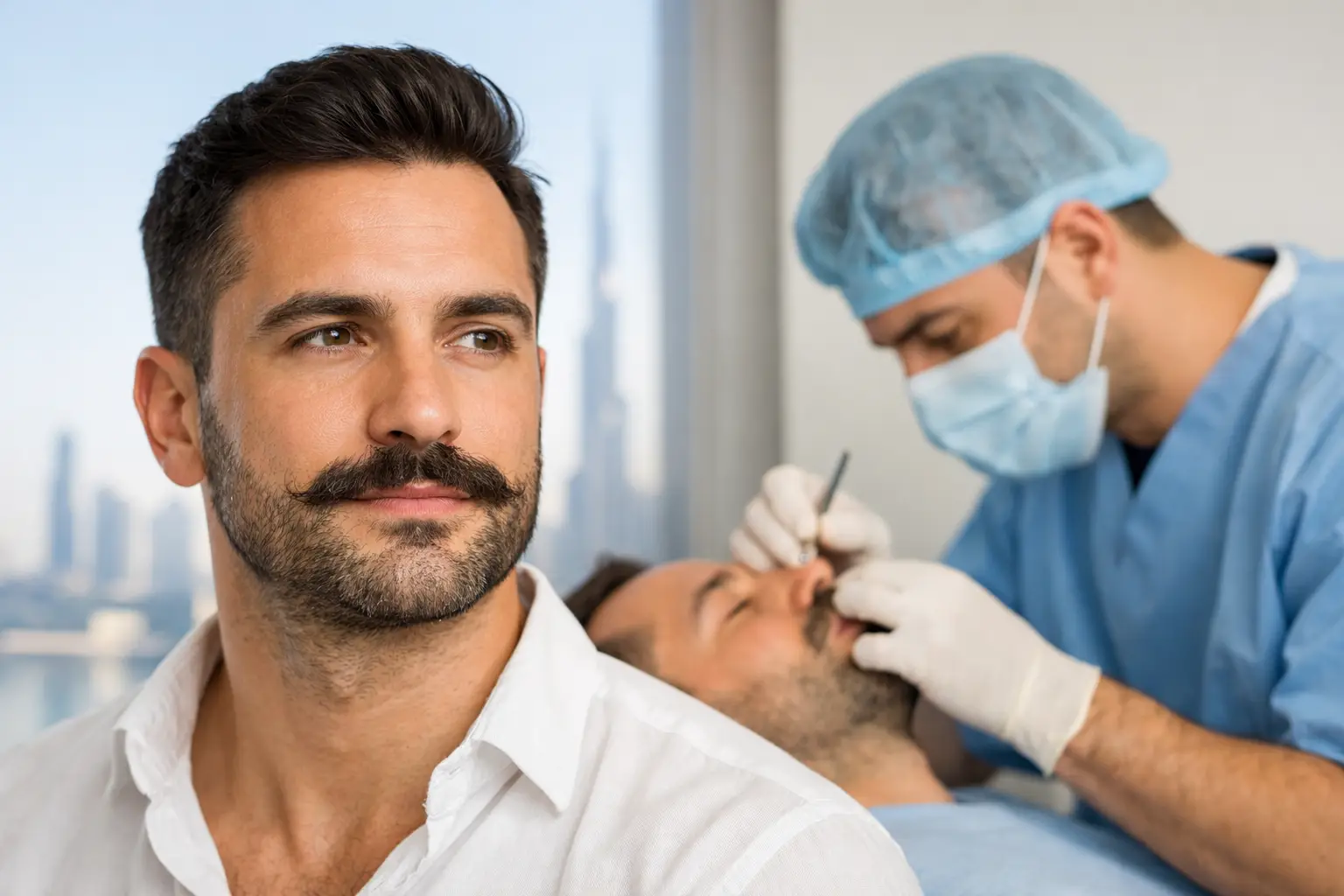
A thin or patchy mustache can change the way your whole face looks. For some men, that means feeling like their features never fully balance. For others, it is the frustration of trying to grow facial hair for years without seeing real coverage. If you are considering a moustache transplant in Dubai, the key question is not simply whether the procedure works. It is whether it can create a natural result that suits your face, hair pattern, and long-term expectations.
Why men consider a moustache transplant in Dubai
Most patients do not seek this procedure because of vanity alone. They usually have a specific concern that has stayed with them for years. It may be naturally sparse growth, visible gaps from genetics, uneven density, or scarring that disrupted the hair line in the mustache area.
A well-planned mustache transplant can improve definition in a subtle way. That matters because the mustache sits in a very visible part of the face. Even a small correction can make the upper lip look more proportionate and help facial features appear stronger and more balanced.
Dubai is also a place where appearance-conscious professionals often want results that are polished but not obvious. That makes technique especially important. A mustache transplant is not about placing as many grafts as possible. It is about controlling direction, angle, density, and shape so the result looks like natural facial hair growth rather than a cosmetic procedure.
How the procedure works
In most cases, the procedure is performed using FUE, or Follicular Unit Extraction. Hair follicles are typically taken from a donor area, most often the back of the scalp, where the hair is genetically more stable. These grafts are then prepared and implanted into the mustache region.
The design phase is one of the most important parts of treatment. Before any graft is placed, the surgeon studies the natural growth pattern of facial hair, the width of the philtrum, the symmetry of the upper lip, and the density needed to achieve the desired style. Some patients want a fuller mustache with stronger borders. Others want to fill only a few bare areas while keeping the overall look soft and understated.
This is where experience matters. Mustache hair does not grow straight out from the skin. It grows at a very acute angle and changes direction across the upper lip. If the grafts are placed too upright or too densely in the wrong areas, the result can look artificial. The best outcomes depend on precision, not volume alone.
Is scalp hair a good match for a mustache?
Usually, yes, but it depends on the individual. Scalp hair is often slightly different in texture, curl, and growth cycle than native facial hair. A skilled surgeon takes this into account when selecting donor follicles and planning placement.
For some patients, the match is excellent and blends very naturally once the transplanted hair grows in. For others, especially if the scalp hair is very fine or very straight compared with existing facial hair, expectations need to be discussed carefully. A good consultation should include that level of honesty.
Who is a good candidate?
A good candidate is not just someone who wants more facial hair. The ideal patient has realistic expectations, a healthy donor area, and a clear reason for treatment. Men with patchy growth from genetics often do very well. So do those with stable scar areas that need camouflage.
Patients should also be in good general health and free from active skin infections or inflammatory conditions in the treatment area. If there is a history of poor wound healing, keloid scarring, or uncontrolled medical conditions, that needs to be evaluated first.
Age can matter, but not in a rigid way. Younger patients sometimes seek treatment before their facial hair pattern has fully matured. In those cases, it may be better to wait, especially if natural development is still ongoing. For older patients, candidacy depends more on skin quality, donor supply, and treatment goals than on age itself.
What happens during the consultation
A proper consultation should feel specific to you. It should not be a quick promise of a thicker mustache in a few weeks. The doctor should assess your donor hair, examine the skin of the upper lip, discuss the look you want, and explain how many grafts may be appropriate.
This is also the time to talk about shape. A natural mustache is not one-size-fits-all. The right design depends on your lip shape, facial proportions, ethnicity, and the amount of surrounding facial hair. A heavy style that suits one patient may overwhelm another.
If you already shave or trim in a particular pattern, bring that up. Your grooming habits affect design decisions. The goal is not just to make the mustache fuller. It is to make daily styling easier and the final look believable.
Recovery and the growth timeline
Recovery is usually manageable, but patients should expect a short period of visible healing. Tiny crusts can form around the implanted hairs, and there may be mild redness or swelling in the first few days. The donor area also needs care, although this is generally well tolerated with modern FUE techniques.
Most patients can return to non-strenuous routines fairly quickly, but that does not mean the final result appears fast. In fact, patience is part of the process. The transplanted hairs often shed within the first few weeks, which is normal. New growth usually begins after a few months, and the result continues to improve over time.
Facial hair transplants can require more styling awareness than scalp procedures because the area is so visible. Transplanted hairs may need regular trimming, especially early on, since scalp-derived follicles can grow differently than native mustache hair. Over time, most patients adapt easily, but it is worth knowing in advance.
What makes a result look natural
Natural results come from restraint and detail. The surgeon must place each graft at the correct angle and in the right direction, especially near the central part of the mustache where irregular growth is easiest to spot.
Density is also a balancing act. Too little, and the patchiness remains obvious. Too much in one session, and the area can look harsh or crowded. Sometimes a conservative first session gives the best cosmetic outcome, with the option to refine later if needed.
Hairline artistry matters on the upper lip just as much as it does on the scalp. The border of the mustache should not look stamped on. Slight irregularity often creates the most realistic finish.
Are there risks or limitations?
Every surgical procedure has limits, and a mustache transplant is no exception. Infection, prolonged redness, ingrown hairs, and uneven growth are possible, although careful technique and aftercare reduce these risks significantly.
The bigger issue is often expectation mismatch. Some patients want extremely dense facial hair in a single session, even when their donor supply or hair characteristics make that unrealistic. Others assume the transplanted hair will behave exactly like native mustache hair from the start. A responsible clinic should explain where the procedure performs very well and where outcomes depend on individual factors.
There is also the question of future style changes. A fuller mustache can be shaped in different ways, but transplanted follicles are permanent. That is why design should be thoughtful rather than trend-driven.
Choosing the right clinic for a moustache transplant in Dubai
When comparing options for a moustache transplant in Dubai, focus less on marketing language and more on surgical judgment. Facial hair restoration is a small-area procedure with high visibility, which means technical mistakes are harder to hide.
Ask how the mustache design is planned, whether the doctor performs the extractions and placements directly, and what kind of facial hair cases the clinic commonly treats. Before-and-after photos should show close-up results, not only full-face images taken from a distance.
It also helps to choose a center that approaches hair restoration as a medical and aesthetic decision, not just a cosmetic transaction. At A H T Aesthetic Medical Center, that patient-first approach matters because the best result is not simply more hair. It is a mustache that looks right on your face and feels worth the decision months and years later.
Cost matters, of course, but value is broader than price alone. A lower quote may not reflect the level of planning, graft handling, or artistic placement needed for a natural facial result. In a procedure this precise, expertise tends to show.
A mustache transplant can be a strong option for men who are tired of patchy growth and want a permanent improvement. The best next step is a careful consultation, where your donor hair, facial proportions, and expectations are reviewed honestly. When the plan is personalized and the technique is meticulous, the change can feel subtle to others but significant to you.