Thin brows can change the entire balance of the face. For some people, the issue started with overplucking years ago. For others, it comes from genetics, scarring, thyroid changes, or simple thinning with age. If you are researching an eyebrow transplant in Dubai, you are likely looking for something more reliable than pencils, powders, or microblading that fades over time.
An eyebrow transplant is a medical procedure designed to restore real hair growth to the brow area using your own hair follicles. When done well, the result should not look stamped on or overly dense. It should look like a better version of your natural brows – fuller, more defined, and in proportion with your face.
What an eyebrow transplant actually does
This treatment moves healthy hair follicles, usually taken from the scalp, into carefully created sites within the eyebrows. The goal is not simply to add hair. It is to rebuild shape, density, and symmetry in a way that fits your facial structure and your preferred brow style.
That level of customization matters. Brows frame the eyes, influence facial expression, and affect how rested or polished you appear. A transplant can be a strong option for patients who want a long-term solution, but it only works well when the design is precise and the angle of each implanted graft is carefully controlled.
Because eyebrow hairs sit flatter and grow in a very specific direction, this procedure requires a refined approach. A technically successful transplant that ignores brow anatomy can still look unnatural. That is why the planning stage is just as important as the implantation itself.
Who is a good candidate for eyebrow transplant in Dubai?
The best candidates usually have stable eyebrow thinning or gaps and enough healthy donor hair available. You may be a good fit if your brows have become sparse from overplucking, genetics, trauma, burns, or certain medical conditions that are already under control.
A consultation is essential because not every case should go straight to surgery. If active skin disease, uncontrolled alopecia, or hormonal imbalance is causing ongoing loss, that issue needs proper evaluation first. In those cases, transplanting too early can lead to disappointing growth or an uneven result later.
Patients who tend to do best are realistic about the process. An eyebrow transplant can improve density and shape significantly, but it is not a one-day cosmetic shortcut. Hair growth takes time, healing requires care, and some trimming is often needed after the brows grow in because scalp donor hair behaves differently from native brow hair.
How the procedure is planned
The design phase is where medical judgment and aesthetics meet. Your provider will look at facial proportions, natural brow position, muscle movement, existing hair pattern, and the degree of asymmetry. Some patients want a subtle correction. Others want a fuller, more sculpted brow with a stronger arch.
There is no single ideal brow for every face. A shape that flatters one patient can look too sharp, too heavy, or too artificial on someone else. This is why a personalized plan matters more than copying a trend or a photo from social media.
Most eyebrow transplants are performed using individual follicular units, often through FUE-based harvesting. The follicles are selected carefully, with attention to texture and caliber. Finer donor hairs are often preferred because they blend better in the eyebrow area.
Local anesthesia is commonly used, which means the procedure is typically well tolerated. Patients are awake, but the treated areas are numbed for comfort.
What happens during an eyebrow transplant
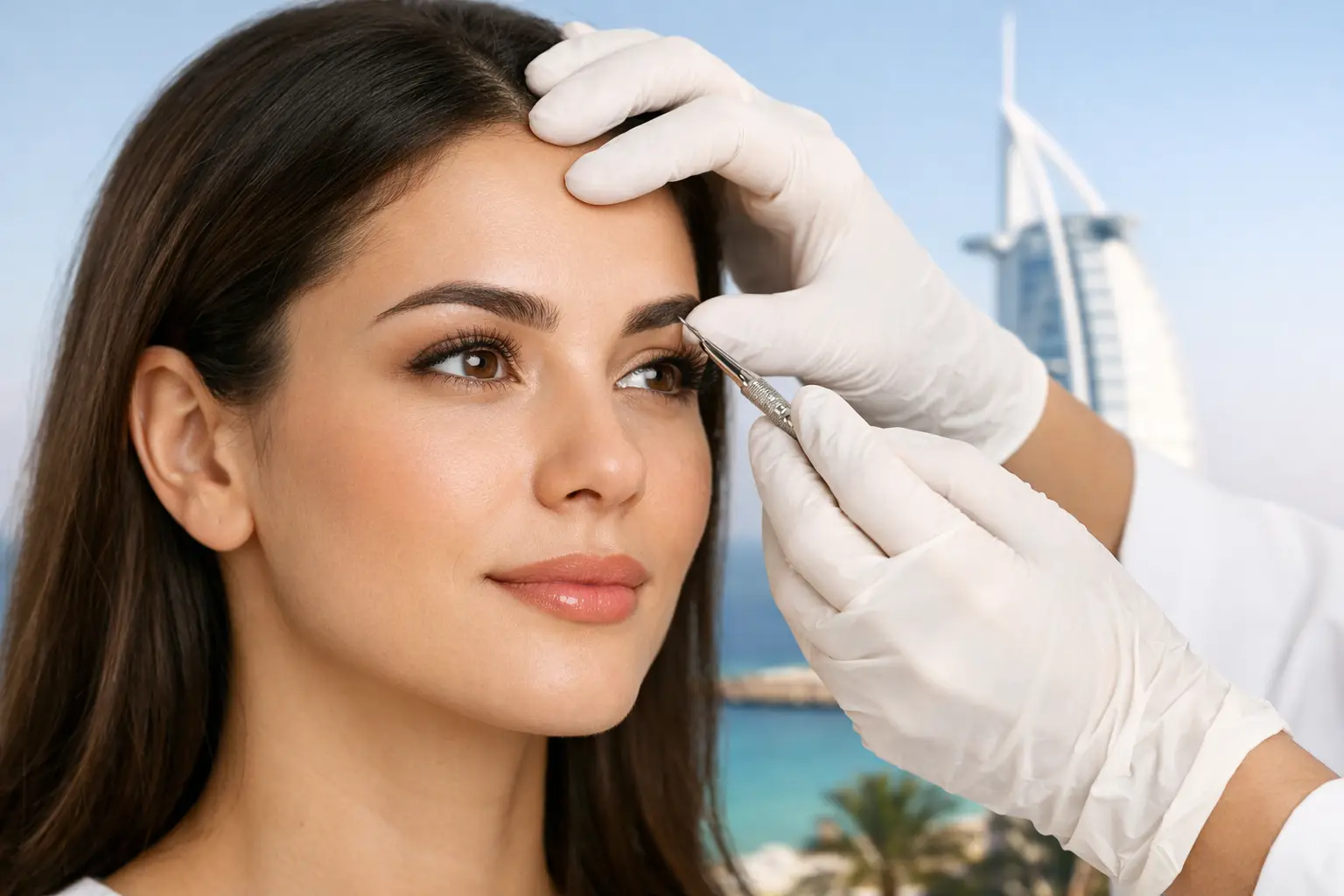
The procedure generally starts with harvesting donor follicles, usually from a discreet scalp area. Those grafts are then prepared and implanted into tiny recipient sites created within the eyebrow outline.
The angle and direction of placement are critical. Eyebrow hairs do not stand upright. They lie close to the skin and change direction across different parts of the brow. The inner brow, body, and tail each have their own pattern. Recreating that pattern is one of the biggest factors behind a natural-looking result.
Depending on the number of grafts needed, the procedure may take several hours. Some patients need only modest filling in of sparse sections, while others need more complete reconstruction.
Recovery and the growth timeline
Recovery is usually manageable, and most patients can return to non-strenuous daily activities fairly quickly. Mild redness, swelling, or small crusts around the implanted hairs are normal in the early healing phase. These temporary signs settle with time and proper aftercare.
The first thing many patients notice is that the transplanted hairs may shed before new growth begins. That can feel alarming if you are not expecting it, but it is a standard part of the cycle. The follicles remain in place under the skin and gradually begin producing new hairs.
Visible growth often starts a few months after the procedure, with improvement continuing over time. Final maturation takes patience. It is common for the brows to look better at six months and continue refining after that.
One detail worth knowing in advance is maintenance. Because donor hairs are usually taken from the scalp, they may grow longer than natural eyebrow hairs. That means regular trimming is often part of long-term upkeep. For many patients, that is a very small trade-off for fuller permanent brows.
What natural results depend on
Patients often ask whether a transplant will look obvious. The honest answer is that it depends on technique, design, and expectation.
Natural results rely on several factors working together: appropriate donor hair selection, careful graft handling, accurate density planning, and precise placement at the correct angle. Just as important is restraint. Overpacking the brow or creating a shape that does not suit the face can make the result look harsh rather than refined.
Healing also plays a role. Following aftercare instructions reduces the risk of irritation, poor graft survival, or unnecessary disruption during the early days after treatment.
A skilled team will also tell you what the procedure cannot do. For example, if the skin has significant scarring, growth may still be possible, but the take rate can vary. If there is very little donor hair or the patient wants an extremely dramatic style, the plan may need to be adjusted to protect realism.
How eyebrow transplant compares with temporary brow solutions
Makeup offers flexibility and immediate visual improvement, but it washes off and needs daily effort. Microblading can create the appearance of fuller brows, but it does not create real hair and results fade over time. Some patients love that option. Others want a solution that moves beyond drawing or tattooing the illusion of hair.
An eyebrow transplant is different because it aims to restore living follicles. That can make it appealing for patients who are tired of touching up sparse areas every morning. Still, it is not automatically the best choice for everyone. If you want frequent changes in shape or you prefer a completely non-surgical option, temporary cosmetic treatments may suit you better.
Choosing a clinic for eyebrow transplant in Dubai
If you are comparing providers, look beyond before-and-after photos alone. Ask how the brow design is planned, what technique is used for harvesting, who places the grafts, and what kind of aftercare is provided. A beautiful result depends on both surgical precision and aesthetic judgment.
It also helps to choose a clinic that treats hair restoration as a specialty rather than an occasional add-on service. Eyebrow work is a small-area procedure, but it is not a simple one. Tiny details matter more here than many patients realize.
In a market like Dubai, where patients have access to advanced aesthetic care and high expectations around natural outcomes, experience and personalization should lead the decision. At A H T Aesthetic Medical Center, that patient-centered planning is a key part of how treatment recommendations are made.
Questions worth asking at your consultation
A good consultation should leave you clearer, not more confused. Ask whether you are a suitable candidate right now, how many grafts may be needed, what the likely timeline for visible growth will be, and what maintenance the brows may require after healing.
You should also ask about limitations. If one brow sits higher than the other naturally, or if your facial muscles create asymmetry during expression, a transplant can improve the baseline shape but may not erase every difference. Honest guidance is a strong sign that the clinic is focused on outcomes rather than overselling.
For the right patient, an eyebrow transplant can do more than fill empty spaces. It can restore structure to the face, reduce daily frustration, and make you feel more like yourself each time you look in the mirror. The best next step is simple: get a personalized medical assessment and base your decision on what will look natural on your face, not just what looks good in a photo.