If you are seeing more hair in the shower drain or on your brush, the question usually comes fast: does PRP help hair shedding, or is it just another treatment that sounds promising but changes very little? The honest answer is that PRP can help reduce shedding in the right patient, but it is not a one-size-fits-all solution. Results depend on why the shedding is happening, how long it has been going on, and whether the hair follicles are still active.
PRP, or platelet-rich plasma, is often recommended for people with thinning hair because it uses growth factors from your own blood to support the scalp and hair follicles. For many patients, the goal is not just regrowth. It is to slow down active shedding, strengthen weaker hairs, and improve the overall quality of growth over time.
Does PRP help hair shedding in real cases?
In many real cases, yes. PRP may help hair shedding by improving the environment around the hair follicle and encouraging weakened follicles to stay in the growth phase longer. Patients with early-stage hair thinning often respond better than those with long-standing bald areas where follicles are no longer functioning.
This matters because shedding is a symptom, not a diagnosis. Some people shed because of androgenetic hair loss, also called pattern hair loss. Others shed because of stress, illness, hormonal shifts, nutritional deficiencies, recent surgery, medication changes, or scalp inflammation. PRP tends to be most useful when follicles are miniaturizing or under stress but still capable of producing hair.
If someone has sudden, heavy shedding caused by a temporary trigger, PRP may still be helpful, but it should not replace a proper medical evaluation. In that situation, identifying the trigger is just as important as choosing the treatment.
How PRP works for thinning hair
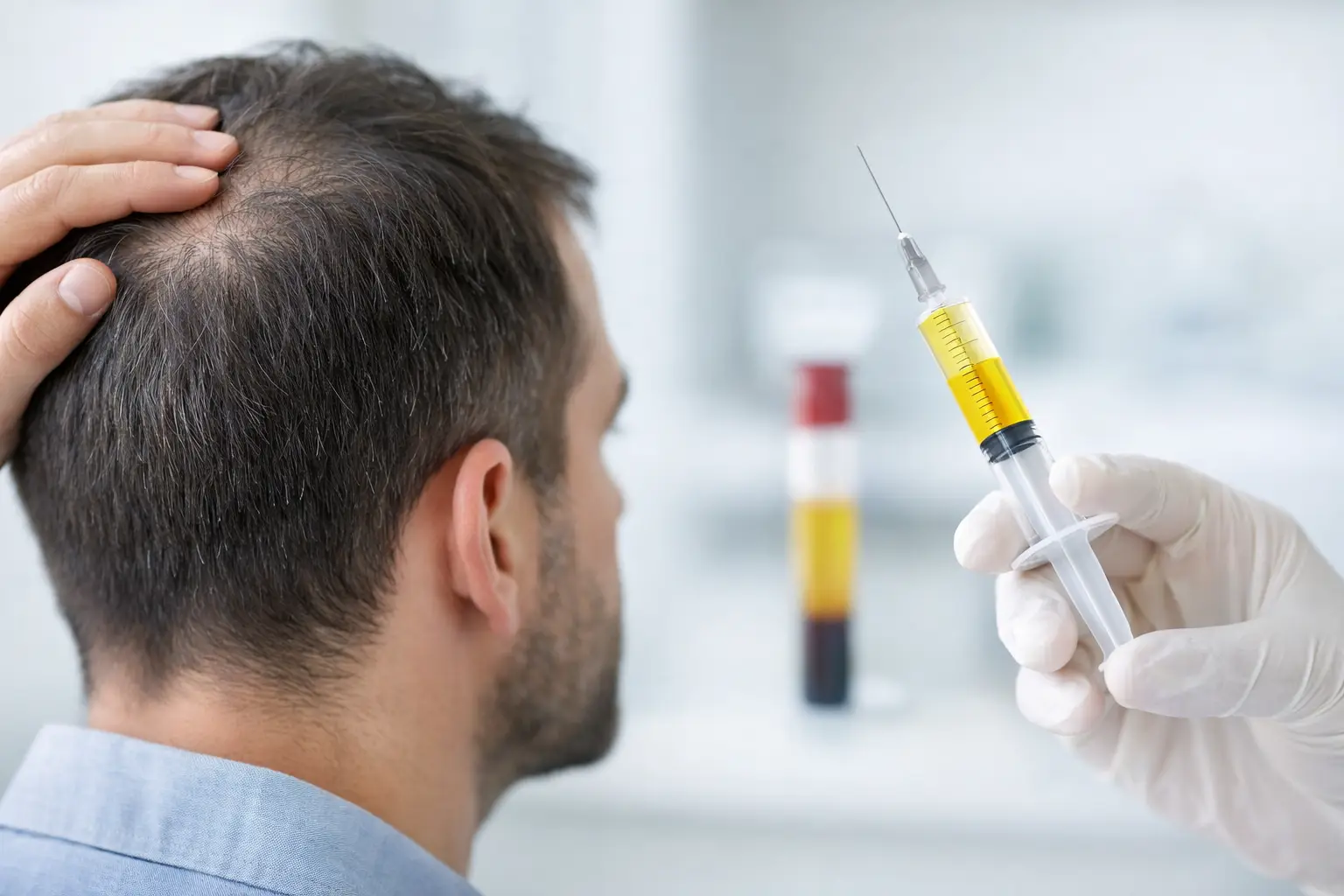
PRP starts with a simple blood draw. The blood is processed to concentrate platelets, which contain growth factors involved in tissue repair and healing. That concentrated plasma is then injected into targeted areas of the scalp.
The goal is to stimulate follicle activity, support blood supply, and improve scalp health. In practical terms, this may translate into less shedding, thicker-looking strands, and better density over a series of treatments. It is a medically supervised option that appeals to patients who want a non-surgical treatment using their own biological material.
What PRP does not do is create instant volume. Hair growth is slow, and follicles need time to respond. Patients who expect a dramatic change after one session are usually disappointed. The treatment works gradually and tends to show its value over several months.
When PRP tends to work best
PRP often performs best in patients who are still in the earlier stages of thinning. If the scalp has areas of diffuse thinning, widening of the part, increased shedding, or miniaturized hairs, there is usually more to work with. Men and women can both be good candidates.
It may also be a useful addition after a hair transplant, where the focus is on supporting healing and improving the condition of existing non-transplanted hair. In that setting, PRP is not replacing surgery. It is supporting the overall restoration plan.
When PRP may be less effective
PRP has limits. If a patient has advanced baldness with shiny, smooth areas where follicles are no longer active, PRP is less likely to produce meaningful improvement. The same is true if the main cause of shedding is untreated thyroid disease, severe iron deficiency, active scalp infection, or another medical issue that needs direct treatment first.
This is why a personalized consultation matters. A good treatment plan should match the cause of hair loss, not just the symptom.
What kind of shedding can PRP help?
The strongest candidates are usually patients with androgenetic alopecia and diffuse thinning. In these cases, PRP may reduce the rate of shedding and improve hair caliber. Some patients also see better density because more weakened hairs remain in the growth phase.
For telogen effluvium, which is shedding triggered by stressors such as illness, childbirth, major emotional stress, or rapid weight loss, PRP may help support recovery. Still, the underlying trigger has to be addressed. If the body is under ongoing stress or the deficiency remains untreated, shedding can continue despite treatment.
For inflammatory scalp conditions, PRP may offer supportive benefits in select cases, but it is not the first answer for every scalp disorder. If itching, redness, scaling, or tenderness are present, the scalp should be assessed carefully before moving ahead.
What results should you realistically expect?
Most patients notice reduced shedding before they notice visible regrowth. That is often the first encouraging sign. Fewer hairs on the pillow, in the shower, or while styling usually means the follicles are becoming more stable.
Visible changes in thickness and density take longer. Many patients begin to notice improvement after a few months, especially after a series of treatments rather than a single session. The pace varies. Age, genetics, scalp condition, and the cause of hair loss all affect the outcome.
It also helps to think in terms of improvement rather than perfection. PRP can support healthier hair and slow progression, but it may not restore the hairline or density you had years ago. In some cases, the best result is preserving what you still have and making thinning less noticeable.
Does PRP cause a temporary shed?
Some patients worry about increased shedding right after treatment. A mild, temporary shed can happen, but it is not universal. If it occurs, it is usually short-lived and part of the follicle cycling process rather than a sign that the treatment failed.
That said, ongoing or worsening shedding after several sessions deserves a closer look. It may mean the diagnosis needs to be revisited or the treatment plan needs to be adjusted. PRP should not be continued on autopilot if the response is poor.
PRP is often better as part of a plan
One of the most common reasons patients feel underwhelmed by PRP is that they view it as a standalone fix. In reality, hair loss usually responds best to a strategy. That may include PRP alongside medical therapy, scalp care, nutritional support, or hair transplant planning when appropriate.
For example, a patient with pattern hair loss may benefit from PRP to support follicle health while also using other evidence-based treatments to slow progression. A patient with post-stress shedding may need lab work, recovery time, and targeted support rather than injections alone. The details matter.
At a specialist center like A H T Aesthetic Medical Center, this is where a tailored approach becomes valuable. The right treatment is not the most popular one. It is the one that matches your scalp, your history, and your long-term goals.
Who is a good candidate for PRP?
A good candidate is someone with active shedding or visible thinning who still has functioning follicles and wants a non-surgical treatment option. Patients who prefer a natural, medically supervised approach often feel comfortable with PRP because it uses their own plasma.
You may be a stronger candidate if your shedding is recent, your thinning is mild to moderate, and your scalp has no untreated medical issues. You may need a different plan if your hair loss is advanced, scarring, or tied to a condition that has not yet been diagnosed.
This is also why scalp examination, medical history, and sometimes blood testing should come before treatment. Fast decisions are tempting when you are losing hair, but better decisions usually come from a clear diagnosis.
Questions worth asking before starting
Before committing to PRP, ask what type of hair loss you have, how many sessions are recommended, when results are expected, and how progress will be measured. Ask whether PRP is being used alone or as part of a broader restoration plan. Those answers tell you a lot about whether the treatment is being customized or simply sold.
You should also ask about maintenance. PRP is rarely a one-time event. Many patients need an initial series followed by periodic maintenance sessions to preserve results. Knowing that upfront helps set realistic expectations.
The bottom line on whether PRP helps hair shedding
So, does PRP help hair shedding? It can, especially for patients with early thinning, active follicles, and a diagnosis that fits what PRP actually does well. It is most helpful when expectations are realistic and the treatment is part of a thoughtful medical plan rather than a quick fix.
If your hair is shedding more than usual, the best next step is not guessing. It is finding out why it is happening and choosing a treatment that makes sense for your stage of hair loss. The sooner you assess it properly, the more options you usually have.