A forehead line that lingers after you stop frowning. Smile lines that seem deeper in every photo. Lips that look thinner than they used to. When patients compare botox vs dermal fillers, they are usually not asking which treatment is better overall. They are asking which one will fix the specific change they see in the mirror.
That is the right question to ask, because Botox and dermal fillers are not interchangeable. Both are injectable treatments. Both can create a fresher, more rested appearance. But they work in very different ways, and choosing the right one depends on whether the concern comes from muscle movement, volume loss, or a mix of both.
Botox vs dermal fillers: the real difference
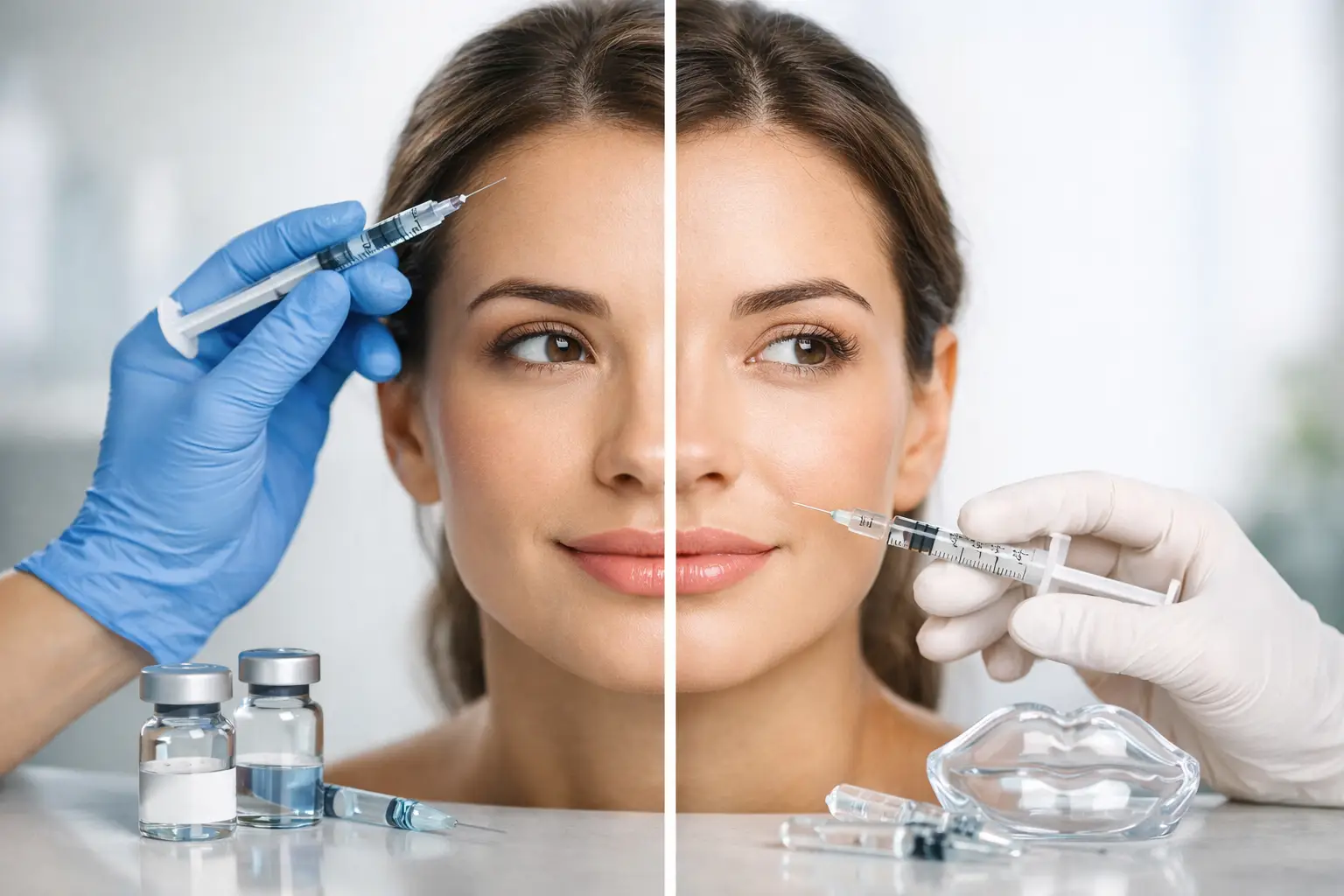
Botox is a neuromodulator. It works by relaxing selected facial muscles that create expression lines through repeated movement. Think of frown lines between the eyebrows, forehead creases, and crow’s feet. If a line becomes more visible when you raise your brows, squint, or frown, Botox may be the more effective option.
Dermal fillers do something else entirely. They add structure or restore lost volume beneath the skin. That makes them useful for concerns such as hollow cheeks, under-eye volume loss, thinning lips, deeper nasolabial folds, marionette lines, and loss of facial contour. If an area looks sunken, flattened, or less defined even when your face is at rest, filler may be the better fit.
This difference matters because treating the wrong cause rarely gives the best result. A deep fold caused by volume loss will not disappear just because the muscle nearby is relaxed. In the same way, a forehead line caused by constant muscle movement usually cannot be fully corrected with filler alone.
What Botox is best for
Botox is often chosen by patients who want to soften dynamic lines without changing the natural character of their face. Used correctly, it does not have to create a frozen look. The goal is controlled relaxation, not stiffness.
Most commonly, Botox is used in the upper face. It can smooth horizontal forehead lines, reduce the vertical lines between the eyebrows, and soften crow’s feet around the eyes. In some cases, it is also used for brow shaping, chin dimpling, jaw slimming, or excessive sweating.
The treatment itself is quick. Most appointments take only a short time, and discomfort is usually minimal. Results do not appear instantly. Patients typically begin noticing a change within a few days, with fuller results developing over about one to two weeks.
The trade-off is that Botox is temporary and maintenance matters. Results often last around three to four months, though this varies by treatment area, metabolism, muscle strength, and dose. If you stop treatment, muscle activity gradually returns and lines may become more visible again over time.
What dermal fillers are best for
Dermal fillers are designed to restore volume, refine facial proportions, and improve contour. Many fillers are made with hyaluronic acid, a substance naturally found in the body that attracts water and supports hydration and fullness.
Fillers are often used in the mid-face and lower face, where age-related volume loss tends to show more clearly. Cheek filler can create lift and support. Lip filler can improve shape, symmetry, and fullness. Fillers can also soften certain folds and shadows, improve jawline definition, and restore balance in areas that have lost structure.
One reason patients like dermal fillers is that results are visible immediately, although some swelling can temporarily affect the final look. Depending on the product used and the treatment area, results may last anywhere from six months to well over a year.
Still, filler is not simply about adding more. The best outcomes depend on restraint, facial assessment, and placement technique. Overfilling can make features look heavy or unnatural. A medically guided treatment plan is what keeps the result refined and proportionate.
Botox vs dermal fillers for common facial concerns
If your main concern is forehead lines, frown lines, or crow’s feet, Botox is usually the more direct solution because these lines are driven by repeated muscle movement.
If your concern is flatter cheeks, lip volume loss, under-eye hollowness, or facial sagging related to reduced support, dermal fillers are often more appropriate because they address missing volume and contour.
For smile lines and marionette lines, the answer is less straightforward. Some patients need filler because the fold is caused by volume loss and tissue descent. Others may benefit from a combination approach if muscle activity is also contributing. This is where a consultation becomes especially valuable. Looking at the face in motion and at rest helps determine the true cause.
Which treatment looks more natural?
Patients often worry that injectables will make them look obvious, overdone, or unlike themselves. In reality, natural-looking results depend less on whether you choose Botox or filler and more on how the treatment is planned and performed.
Well-placed Botox should leave you looking rested, not expressionless. Well-placed filler should restore balance, not create puffiness. The most natural result usually comes from treating the face conservatively and respecting anatomy, movement, and proportion.
This is one reason experienced medical assessment matters. A patient asking for filler in a fold may actually need cheek support. Someone requesting Botox everywhere may only need targeted treatment in a few strong muscle groups. Good injectable work starts with diagnosis, not just product selection.
Can you combine Botox and fillers?
Yes, and many patients do. Botox and dermal fillers are often combined because facial aging rarely has a single cause. Movement lines, volume loss, skin quality changes, and collagen decline can happen at the same time.
A combined plan may soften forehead and eye lines with Botox while restoring cheek volume or lip shape with filler. In the right patient, this can produce a more balanced result than relying on one treatment alone.
That said, more treatment is not always better treatment. Some patients only need one injectable to reach their goal. Others may benefit from spacing treatments across multiple visits rather than doing everything at once. A patient-centered approach should match the plan to the face, budget, and comfort level.
What about safety and downtime?
Both Botox and dermal fillers are widely used treatments, but neither should be treated casually. They are medical procedures that require facial expertise, proper product selection, and careful injection technique.
Botox downtime is usually minimal. Patients may have slight redness, pinpoint swelling, or small marks that settle quickly. Dermal fillers can involve more swelling or bruising, depending on the area treated and individual sensitivity.
Safety also involves knowing when not to treat. Certain facial changes are better addressed with skin treatments, surgical options, or a staged aesthetic plan. At a medically supervised center such as A H T Aesthetic Medical Center, the value is not just access to injectables. It is having a treatment recommendation based on what will actually suit your anatomy and goals.
How to decide between botox vs dermal fillers
Start with the concern, not the trend. Ask yourself whether the issue is a line that appears when you move, a hollow or fold that stays visible at rest, or a general loss of shape and support. That simple distinction already points you in the right direction.
Then think about your priorities. If you want to reduce expression lines with little downtime, Botox may be the better first step. If you want to restore volume or contour, fillers may make more sense. If you want a broader facial refresh, you may be a candidate for both.
The most reliable next step is a professional consultation. A clear assessment can save you from spending on the wrong treatment, chasing temporary fixes, or creating an imbalanced result. The right injectable should make you look like yourself on a well-rested, more confident day.
When you are deciding between Botox and dermal fillers, the goal is not to follow what someone else had done. It is to choose the treatment that matches what your face actually needs.