Forehead lines tend to show up at the worst times – under office lighting, in photos, or when your face is at rest and you still look more tired or tense than you feel. That is why botox for forehead lines remains one of the most requested aesthetic treatments. It is quick, precise, and when performed well, it can soften expression lines without making your face look stiff or unnatural.
For many patients, the real goal is not to erase every sign of movement. It is to look fresher, less stressed, and more in line with how they actually feel. That distinction matters, because the best Botox results are based on balance, not overcorrection.
How botox for forehead lines works
Forehead lines are usually dynamic wrinkles, which means they form from repeated muscle movement over time. Every time you raise your brows, the frontalis muscle contracts. As skin gradually loses collagen and elasticity with age, those temporary creases can start to linger longer and eventually become visible even when your face is relaxed.
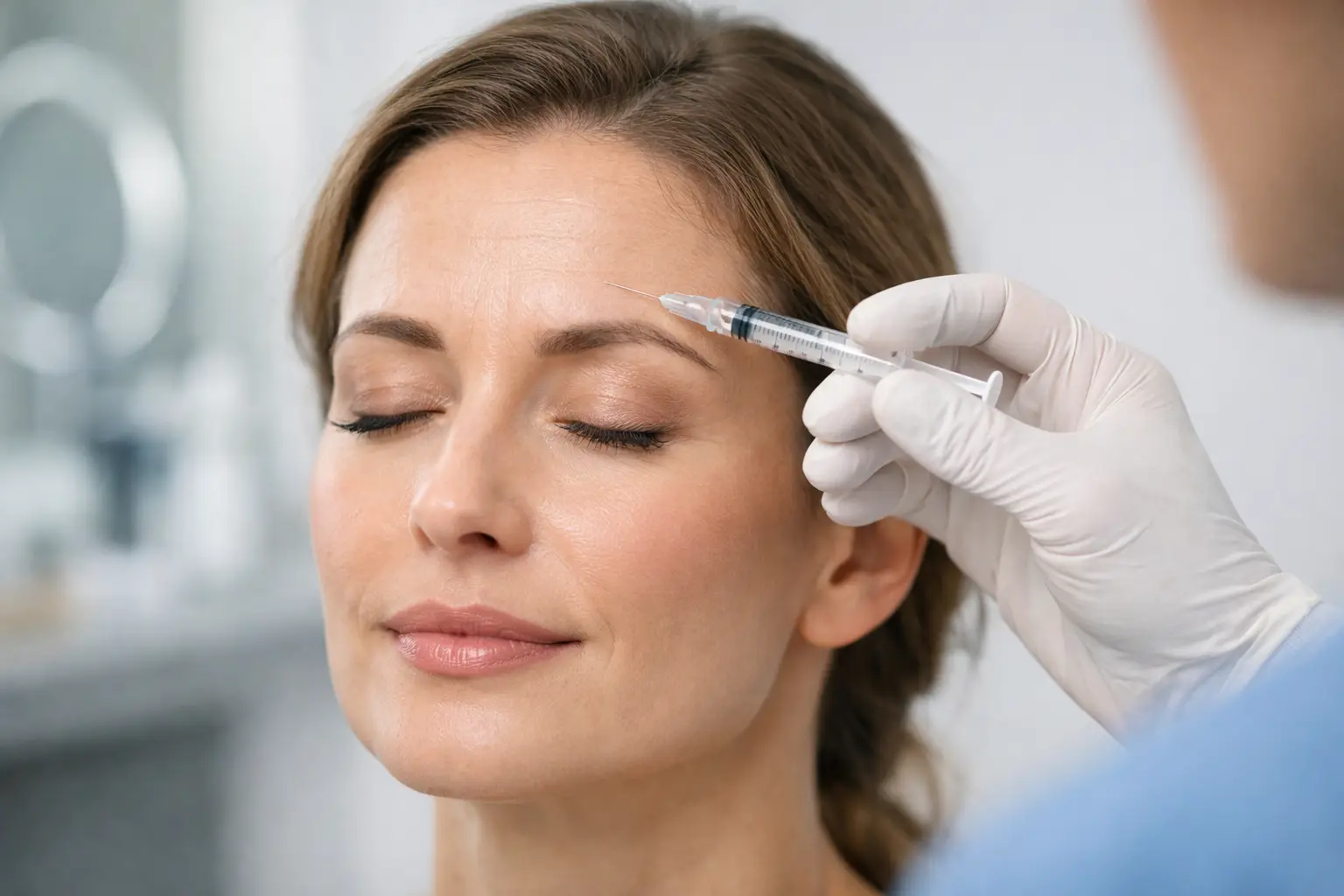
Botox works by temporarily reducing the activity of the targeted muscles. In the forehead, small amounts are carefully injected into specific points so the muscle cannot contract as strongly. As that movement softens, the skin has a chance to smooth out, and the lines become less noticeable.
This does not mean the entire forehead should stop moving. A skilled injector aims to preserve natural expression while reducing the motion that is creating unwanted lines. The treatment plan should be based on your anatomy, brow position, muscle strength, and how much movement you want to keep.
What forehead Botox can and cannot do
Botox is very effective for horizontal forehead lines caused by expression. It can also play an important role in treating the area between the brows, where frown lines often contribute to a tired or angry appearance. When those areas are treated together, the result usually looks more natural because the upper face moves in a more balanced way.
What Botox cannot do on its own is fix every type of wrinkle. If your forehead lines are deeply etched into the skin at rest, Botox may soften them significantly but not remove them completely. In those cases, some patients benefit from combining neuromodulators with skin-rejuvenating treatments that improve texture and collagen support.
There is also an important trade-off to understand. If you ask for maximum smoothing, you may lose more movement. If you want to keep a more expressive forehead, you may still see a little line activity. Neither approach is wrong. It depends on your goals and what looks natural on your face.
Who is a good candidate for botox for forehead lines
Most healthy adults who are bothered by expression lines in the upper face can be good candidates. Many start treatment in their late 20s to 30s as a preventive step, while others begin later when lines become more visible at rest.
You may be a strong candidate if your forehead lines are linked to repeated brow movement, your skin quality is generally good, and you want a non-surgical treatment with minimal downtime. Botox is especially appealing for busy professionals because appointments are short and recovery is usually straightforward.
A proper consultation still matters. Patients with heavy brows, significant eyelid hooding, asymmetry, or compensatory forehead movement need careful assessment. In some people, the forehead muscle helps lift the brows. If too much product is placed incorrectly, the brows can appear lower or heavier. This is one reason treatment should always be planned by an experienced medical provider rather than treated as a routine beauty service.
What to expect at your appointment
The first step is evaluation, not injection. Your provider should assess your facial anatomy at rest and in motion, ask about your goals, review your medical history, and explain what kind of result is realistic. The forehead is not treated in isolation. The position of your brows, the activity of the frown muscles, and the way your upper face moves together all affect the final outcome.
The injections themselves are quick. A very fine needle is used, and most patients describe the sensation as a series of small pinches. No general anesthesia is needed, and many people return to work or normal activities the same day.
You may notice minor redness, tiny bumps at the injection sites, or occasional bruising, but these effects are usually temporary. Results do not appear instantly. Most patients begin to see changes within a few days, with fuller results developing over about 10 to 14 days.
How long results last
Botox for forehead lines is temporary, which is both a benefit and a limitation. On the positive side, the result is not permanent, so your treatment can be adjusted over time as your face changes or your preferences shift. On the other hand, maintenance is needed if you want to keep the effect.
For most patients, results last around three to four months. Some metabolize the product faster, especially with strong muscle activity, while others may enjoy longer intervals after repeated treatments. The exact timeline depends on dosage, anatomy, metabolism, and how expressive your forehead naturally is.
Consistency often helps. Patients who maintain regular treatment may notice that their lines become easier to manage over time because the skin gets a break from constant folding.
Natural results depend on technique
One of the biggest concerns patients have is looking frozen. That fear is understandable, but it usually comes down to technique, dose, and treatment planning. Good Botox should not advertise itself. People may say you look rested, smoother, or refreshed, but they should not immediately notice that you had an injectable treatment.
Natural-looking results come from respecting facial balance. If the forehead is treated too aggressively and the muscles between the brows are ignored, or if brow support is not considered, the upper face can look flat or heavy. Precision matters more than volume.
This is also why a customized approach is better than a one-size-fits-all formula. Two patients with the same visible lines may need very different injection patterns based on muscle strength and brow shape. At A H T Aesthetic Medical Center, that individualized planning is central to achieving a refined result that still looks like you.
Aftercare and recovery
Recovery is simple for most patients, but following aftercare guidance helps reduce the chance of irritation or unwanted product migration. You will usually be advised to stay upright for several hours after treatment and avoid rubbing or massaging the area. Intense exercise, heat exposure, and alcohol may also be restricted for the rest of the day depending on your provider’s recommendations.
If you have an important event, it is wise to schedule treatment at least two weeks in advance. That gives the product time to settle fully and allows any minor bruising to resolve.
A follow-up visit may be recommended, especially for first-time patients. This gives your provider a chance to assess how your muscles responded and whether any small adjustment is needed.
Common questions patients ask
Many patients want to know whether starting Botox early is better. In some cases, yes. Treating dynamic lines before they become deeply etched can be a smart preventive approach. But early treatment is not mandatory, and later treatment can still produce meaningful improvement.
Another common question is whether Botox and fillers do the same thing. They do not. Botox relaxes muscle movement. Fillers restore volume or support. For forehead lines caused by expression, Botox is typically the first-line treatment.
Patients also ask whether they will look different. The honest answer is yes, but ideally in a subtle way. You should still look like yourself, just less strained and more refreshed. If your goal is believable improvement rather than dramatic change, Botox is often a very effective option.
Is it worth it?
If forehead lines make you look older, angrier, or more fatigued than you feel, Botox can be one of the most efficient ways to refresh the upper face without surgery. It offers visible improvement, very little downtime, and a treatment plan that can be tailored closely to your features.
The key is choosing the right provider and having clear expectations. Botox works best when it is used with restraint, medical judgment, and a focus on facial harmony. A thoughtful treatment should not erase your personality. It should help your reflection feel more like you again.
If you are considering treatment, the most helpful next step is a professional consultation where your anatomy, goals, and treatment options can be assessed carefully. A good plan starts with listening, and the best results usually do too.