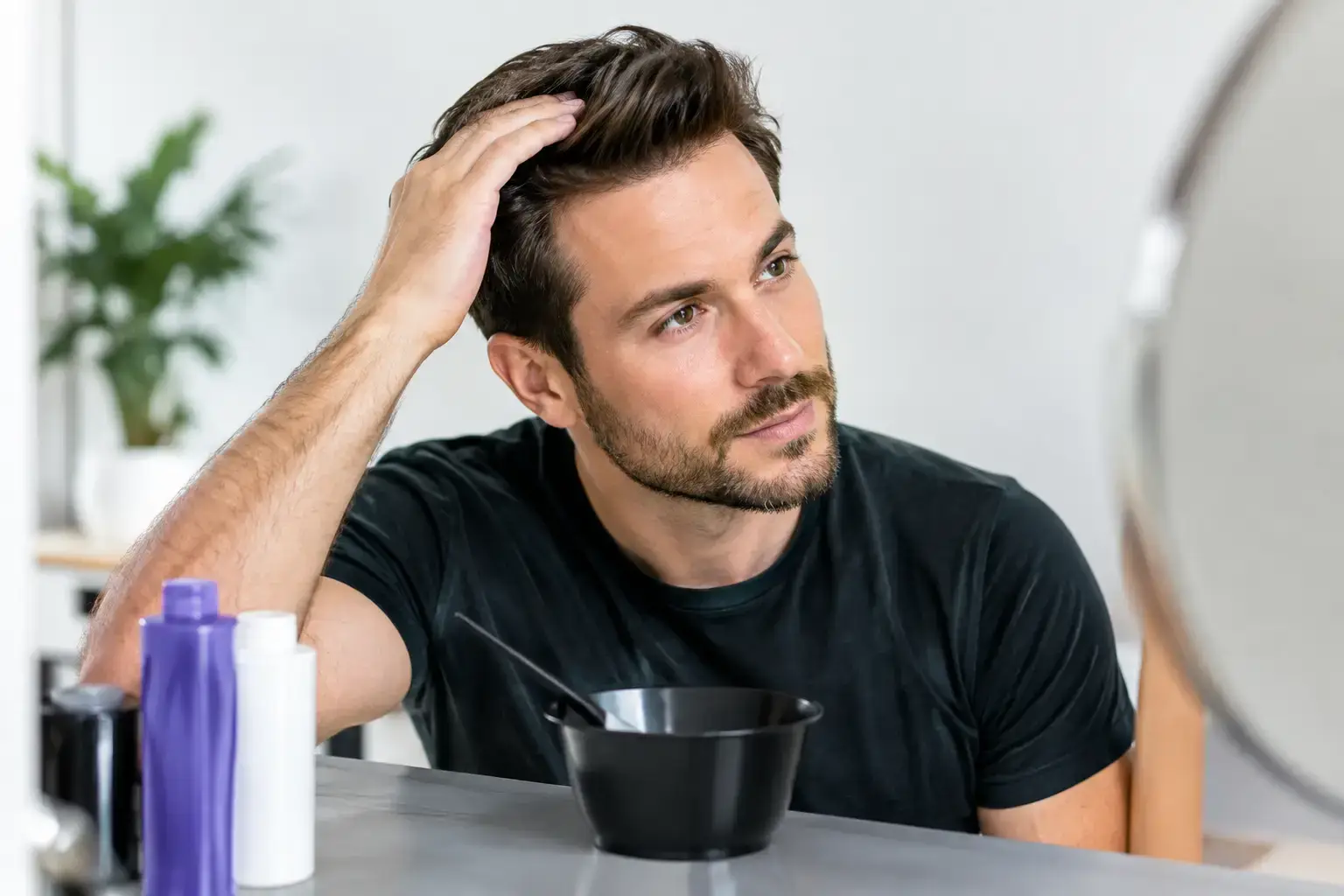
A new hairline can change how you see yourself in the mirror. It is understandable to want the color to look just as fresh as the coverage. So, can transplanted hair be dyed? Yes, once the transplanted follicles have fully healed and established themselves. The timing, product choice, and condition of your scalp matter far more than the dye itself.
For most patients, hair dye is not a long-term threat to transplanted follicles. Those follicles are your own permanent donor hairs, usually taken from the back or sides of the scalp, and they grow like natural hair after successful healing. The risk comes from coloring too early, when the scalp is still recovering and the new grafts need uninterrupted care.
Can Transplanted Hair Be Dyed Safely?
After the recovery period, transplanted hair can generally be dyed, highlighted, toned, or covered for gray hair. A hair transplant does not make the new hair unable to accept color. In fact, because the transplanted hairs retain the characteristics of the donor area, they will usually respond to color treatments much as they did before surgery.
The key distinction is between the hair shaft and the follicle beneath the skin. Hair dye works on the visible shaft. A properly performed color service does not reach deeply enough to damage a healthy, fully settled follicle. However, chemical color can irritate a healing scalp, cause dryness, or trigger inflammation if used before the transplant area has recovered.
This is why a personalized recommendation from your hair transplant surgeon should take priority over a standard salon timetable. Healing rates vary according to the procedure, the extent of transplantation, skin sensitivity, and whether any redness, scabbing, folliculitis, or irritation remains.
How Long Should You Wait Before Dyeing Hair?
A conservative rule is to wait at least four to six weeks before applying permanent dye to the transplanted area. Many surgeons prefer patients to wait longer, often around two to three months, particularly after a larger procedure or when the scalp remains sensitive. At this point, the grafts are secure, surface healing is complete, and early shedding has often begun or passed.
It may feel counterintuitive to wait when the transplanted hairs begin to shed. This temporary shedding, sometimes called shock loss, is a normal part of the growth cycle. The follicles remain beneath the scalp and will begin producing new hairs over the coming months. Dyeing does not speed up or prevent this phase, so it is best not to introduce unnecessary chemical stress while your scalp is adjusting.
If you want to conceal gray roots before permanent dye is approved, speak with your medical team. A gentle, temporary root touch-up product may be suitable for some patients after initial healing, but it should never be applied over open skin, scabs, or active irritation. Avoid assuming that a product is safe simply because it is marketed as natural or ammonia-free.
Signs Your Scalp Is Ready
Your scalp should be free from scabs, wounds, tenderness, significant redness, and persistent itching before you consider coloring it. You should also be able to wash and lightly massage the area normally without discomfort.
A healthy-looking scalp is encouraging, but a follow-up assessment gives greater reassurance. Your surgeon can confirm that your grafts are stable and advise whether your preferred color service is appropriate at your stage of recovery.
The Best Hair Color Options After a Transplant
Not all hair-coloring methods place the same demands on your hair and scalp. Permanent dye uses stronger chemicals to open the hair cuticle and create lasting color. It can be a suitable choice after full healing, but it is more likely to cause dryness or sensitivity than a gentler alternative.
Demi-permanent and semi-permanent colors are often a more cautious starting point. They generally deposit color with less cuticle disruption and can be useful for blending gray hair or refreshing tone. They do fade over time, which means more frequent applications may be needed.
Highlights, bleaching, and lightening require extra care. Bleach is more drying and can be irritating, especially when applied close to the scalp. If you are considering a dramatic color change, give your transplanted hair more time to mature and choose an experienced colorist who can work carefully around a sensitive scalp. A gradual change may protect the quality of both your natural and transplanted hair better than an aggressive lightening session.
Henna and botanical dyes are not automatically safer. Some products contain metallic salts, undisclosed additives, or ingredients that can cause allergic reactions. Always check the full ingredient list and perform a patch test, even if you have used the product in the past.
How to Color Transplanted Hair With Less Risk
Once your surgeon has cleared you to dye your hair, preparation makes a meaningful difference. Tell your stylist that you have had a hair transplant and explain how long ago the procedure was performed. A professional should be willing to use a gentler formula, minimize scalp contact where possible, and avoid harsh scrubbing.
Request a patch test 48 hours before your appointment. This is particularly valuable after surgery because scalp sensitivity can change temporarily. If you experience burning, swelling, rash, or itching during the test, do not proceed with coloring until you have discussed it with your clinician.
On the day of your appointment, do not scratch, exfoliate, or use a clarifying shampoo on the scalp. During application, follow the processing time precisely. Leaving dye on longer will not improve the result, but it can increase irritation and dryness.
After coloring, use a mild shampoo and a moisturizing conditioner suited to color-treated hair. Limit very hot water, frequent heat styling, and strong chemical treatments. Healthy hair shafts make your transplant result look fuller, smoother, and more natural.
What Can Go Wrong If You Dye Too Soon?
Coloring before the scalp has healed can cause avoidable discomfort and may interfere with recovery. Permanent dye, bleach, fragrance, peroxide, and ammonia can sting compromised skin. Inflammation may prolong redness, cause flaking, or create conditions that make it harder for your medical team to assess healing.
Early coloring can also dislodge fragile scabs if the scalp is rubbed aggressively during washing or rinsing. While color chemicals alone are not likely to remove properly placed grafts after the earliest days, the mechanical handling involved in a salon service can be a concern during the initial recovery period.
Contact your surgeon if you notice increasing pain, warmth, swelling, pus, spreading redness, or a rash after using a color product. These signs should be assessed promptly rather than treated with more cosmetic products.
Does Dyed Hair Affect Future Growth?
When used appropriately after healing, hair dye should not stop transplanted follicles from growing. New growth commonly becomes noticeable from around three to four months after surgery, with more substantial improvement over six to twelve months. The final result can take up to 12 to 18 months, depending on the individual and the area treated.
What dye can affect is the cosmetic quality of the growing hair. Repeated bleaching or strong permanent color can leave shafts dry, porous, and more prone to breakage. That does not mean the grafts have failed, but breakage can make the result appear thinner than it is. Thoughtful coloring and consistent conditioning help preserve the polished, natural-looking outcome you invested in.
At AHT Aesthetic Medical Center, post-transplant guidance is tailored to the procedure, your scalp condition, and your goals – whether that includes covering gray hair, returning to a favorite color, or simply protecting your new growth. Give your follicles the healing time they need, then color with confidence and care.
Ready to explore your hair restoration options?
Complete a free Hair Analysis or book a consultation with AHT Aesthetic Medical Center in Dubai.
Ready to explore your hair restoration options?
Complete a free Hair Analysis or book a consultation with AHT in Dubai.