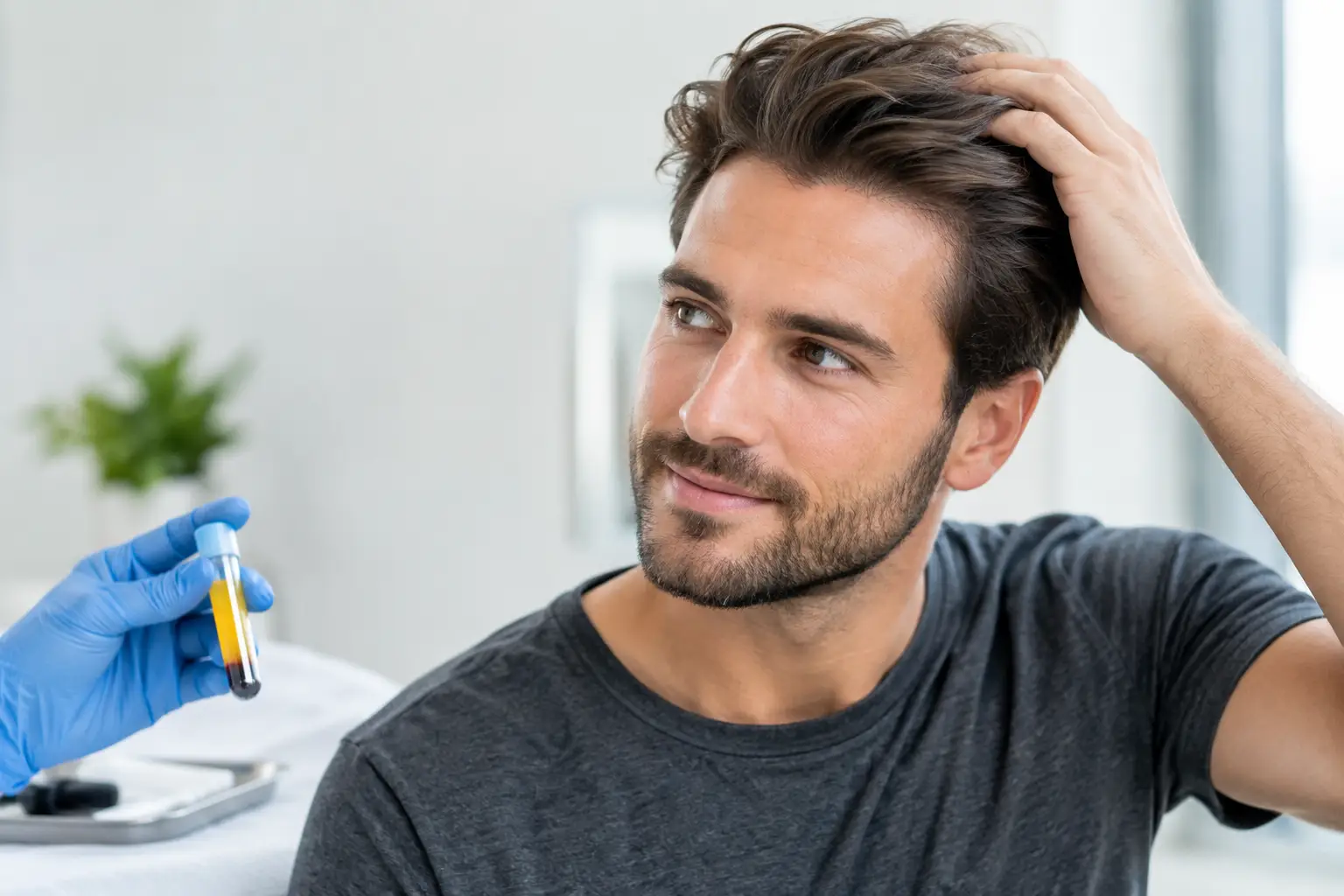
The first 24 to 48 hours after a PRP hair treatment are when simple choices can make recovery more comfortable. If you are researching how to care after PRP, focus less on complicated routines and more on protecting the treated scalp, following your clinician’s instructions, and giving the growth factors time to work.
PRP, or platelet-rich plasma, uses a concentrated portion of your own blood to support hair follicles. It is commonly selected by men with early hair thinning, women with diffuse shedding, and patients who want to support hair restoration alongside other treatments. There is usually little downtime, but proper aftercare matters. Your exact instructions should always take priority, particularly if you have had PRP combined with a hair transplant or another scalp procedure.
How to Care After PRP for Hair in the First 48 Hours
Immediately after treatment, your scalp may feel tender, tight, mildly swollen, or itchy. Small red marks at the injection sites are also common. These reactions usually settle quickly and do not mean the treatment has gone wrong.
For the rest of your treatment day, avoid touching, rubbing, or massaging the scalp. PRP is placed precisely in areas where follicles need support, and leaving the area undisturbed helps minimize irritation. If your clinician has placed a topical product on your scalp, ask when it is safe to rinse it away rather than assuming you can wash your hair that evening.
Most patients should wait at least 24 hours before washing their hair, although your clinician may recommend a longer interval based on your scalp condition and the technique used. When you do wash, use lukewarm water and a gentle shampoo. Let the water run over the scalp, apply shampoo softly with your fingertips, and avoid vigorous scratching or scrubbing.
Sleep with your head slightly elevated on the first night if you have swelling or tenderness. A clean pillowcase is a sensible precaution, especially if there is mild pinpoint bleeding from injection sites. Avoid tight hats, helmets, headbands, and anything that creates friction or pressure on the treated area during this early period.
What to Avoid After PRP Hair Therapy
The goal is not to put your life on hold. It is to avoid activities that increase heat, sweating, inflammation, or exposure to bacteria while the scalp is sensitive. For the first 24 to 48 hours, skip intense gym sessions, running in high heat, hot yoga, steam rooms, saunas, and swimming pools.
In the UAE, outdoor heat and direct sun deserve extra attention. Avoid prolonged sun exposure for several days, especially during the hottest part of the day. If you need to be outdoors, stay in the shade where possible and wear a loose, clean hat only after your clinician confirms it is appropriate. Do not apply sunscreen directly onto fresh injection sites unless it has been specifically recommended.
It is also wise to postpone hair coloring, bleaching, chemical straightening, keratin treatments, and scalp exfoliation for several days. These treatments can irritate a scalp that is already recovering from injections. The same applies to styling products with strong fragrance, alcohol, or heavy buildup potential. A mild shampoo and a simple routine are usually best during the first week.
Alcohol and smoking can work against recovery. Alcohol may increase bruising or swelling in some patients, while smoking can affect circulation and tissue healing. Your treatment team may ask you to avoid alcohol for at least 24 hours and to stop smoking before and after treatment whenever possible.
Medications and Pain Relief After PRP
Mild soreness is common and generally short-lived. If you need pain relief, acetaminophen is often preferred, but follow the advice given by your clinician. Avoid taking aspirin, ibuprofen, naproxen, or other anti-inflammatory medications unless your treating provider tells you otherwise.
This guidance exists because PRP relies on platelets and their natural signaling activity. Anti-inflammatory medication may not be appropriate around treatment for some patients. Do not stop a prescribed medication on your own, especially if you take blood thinners or medication for a chronic health condition. Instead, speak with the physician who manages that medication and your PRP provider before making changes.
Supplements deserve the same care. Fish oil, vitamin E, ginkgo, and certain herbal supplements may affect bruising for some people. Your clinician should know about all medications, vitamins, and supplements you use, even if they seem unrelated to hair health.
When Can You Return to Your Normal Hair Routine?
Many patients can return to work the same day or the following day. Light daily activity is usually fine once you feel comfortable. Exercise can often resume after 24 to 48 hours, but this depends on how your scalp feels and whether you have undergone another procedure at the same time.
You can usually reintroduce your usual hair products gradually after a few days, as long as the scalp is no longer tender or irritated. If you use minoxidil, prescription treatments, medicated dandruff shampoos, or topical scalp serums, ask when to restart them. The timing varies. Some patients are advised to wait 24 hours, while others may need a longer pause based on their treatment plan and scalp sensitivity.
If PRP is part of a broader hair restoration plan, do not judge results by the first few days. PRP supports the follicle environment over time. Hair growth follows a slow biological cycle, so visible changes often require a series of treatments and several months of consistency. Some patients first notice reduced shedding or improved hair texture before seeing fuller-looking coverage.
Support Your Results Between PRP Sessions
PRP is most effective when it is part of a personalized strategy rather than a one-time event. The right plan depends on the cause of thinning, the stage of hair loss, family history, hormone changes, nutritional status, and the health of the scalp.
Protect your scalp from repeated sunburn, eat a balanced diet with adequate protein, and manage conditions that may contribute to hair shedding. Sudden shedding, patchy hair loss, scalp scaling, or persistent itching should be assessed rather than covered up with styling products. Hair loss is not always purely genetic, and identifying contributing factors can shape a more effective treatment plan.
For patients considering hair transplant surgery, PRP may be used before or after the procedure as directed by the surgeon. Aftercare is more restrictive after a transplant than after PRP alone, so never apply general PRP instructions to a freshly transplanted scalp. Your surgical aftercare plan comes first.
When to Contact Your Treatment Team
Most post-PRP effects are mild and resolve without intervention. However, contact your clinic promptly if you develop worsening pain, significant swelling, spreading redness, warmth, pus, fever, a rash, or symptoms that do not improve after a few days. These signs are uncommon, but they should be evaluated.
You should also contact your provider if you are unsure about washing your hair, restarting a medication, traveling soon after treatment, or scheduling a color appointment. Asking early is far better than guessing. A professional team can give advice that reflects your medical history and the specific PRP protocol used.
At AHT Aesthetic Medical Center, PRP hair therapy is approached as part of a tailored hair restoration journey, not a generic treatment. The most reassuring aftercare plan is one that is clear, realistic, and matched to your scalp and goals. Give your scalp a gentle few days, stay consistent with your recommended plan, and let your follow-up visits guide the next step toward healthier-looking hair.
Ready to explore your hair restoration options?
Complete a free Hair Analysis or book a consultation with AHT Aesthetic Medical Center in Dubai.
Ready to explore your hair restoration options?
Complete a free Hair Analysis or book a consultation with AHT in Dubai.