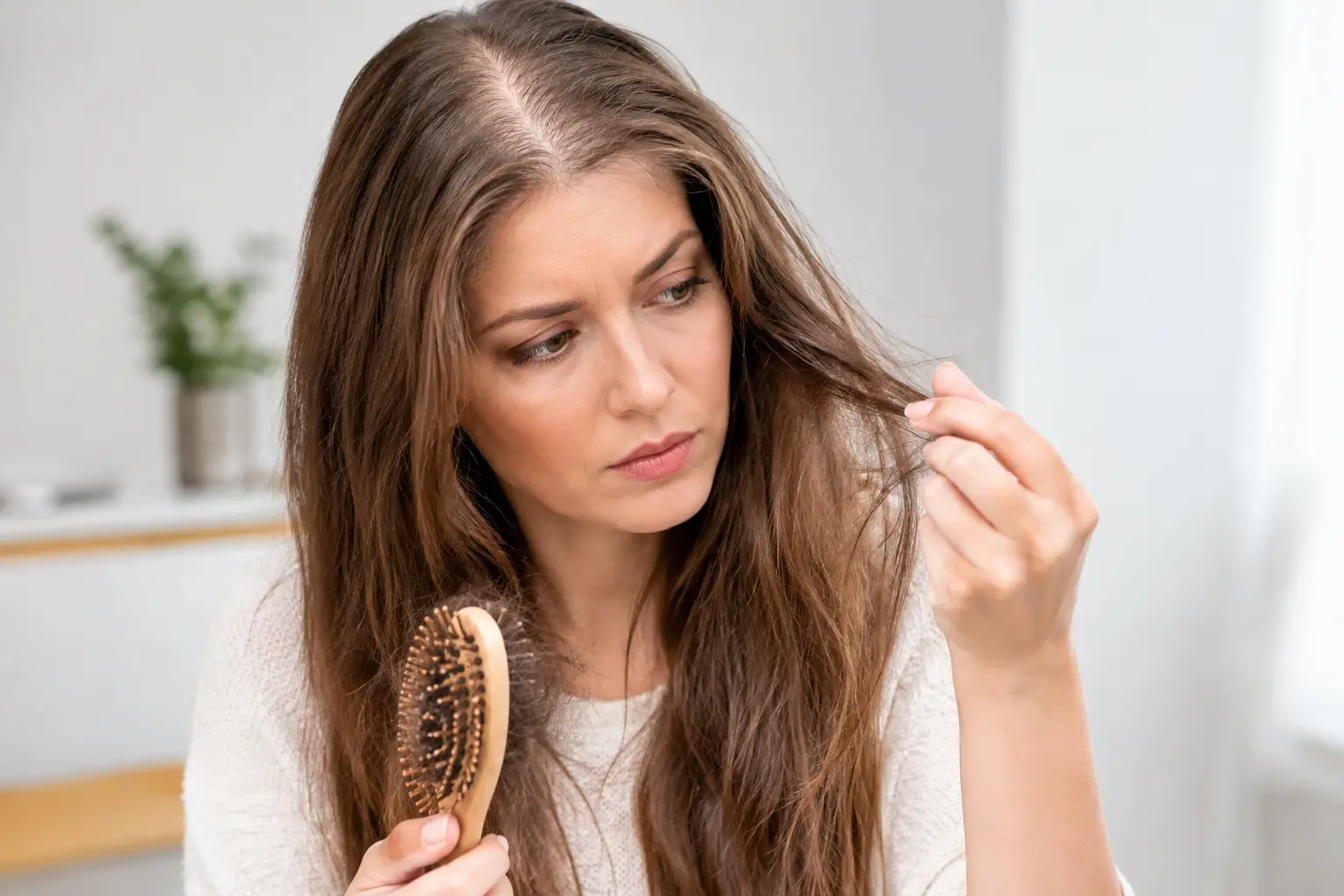
A female thinning example is rarely just about seeing more scalp in the mirror. For many women, the change starts with a part that looks wider in photos, a ponytail that feels smaller, or hair that no longer holds the same volume around the crown. Understanding the pattern helps separate temporary shedding from a concern that deserves a professional hair assessment.
Hair thinning in women can be emotionally difficult because it often develops gradually. The good news is that early evaluation can identify contributing factors and create a treatment plan that protects existing hair while addressing visible density loss.
What a Female Thinning Example Can Look Like
Female hair thinning does not always follow the same pattern as male-pattern hair loss. Rather than a receding hairline or isolated bald area, women often notice diffuse thinning across the top of the scalp. The front hairline may remain relatively intact while density slowly decreases behind it.
A common example is a widening center part. What was once a narrow line of scalp becomes more visible, particularly under strong overhead lighting. Another example is reduced fullness at the crown, where the hair may appear flatter even after styling. Some women experience thinning throughout the scalp, making the hair feel lighter and less substantial from root to end.
In other cases, hair loss is more sudden. A person may notice excessive strands on the pillow, in the shower drain, or on a hairbrush over several weeks. This type of shedding can occur after illness, major stress, rapid weight change, surgery, childbirth, or a nutritional deficiency. It can be temporary, but persistent shedding should not be ignored.
Widening Part With Preserved Hairline
This pattern can be associated with female pattern hair loss, also called androgenetic alopecia. Individual hairs gradually become finer and shorter over time, reducing overall coverage. It is often influenced by genetics and can begin at different ages, including during the reproductive years or around menopause.
Diffuse Shedding Across the Scalp
Diffuse shedding may suggest telogen effluvium, a condition in which more hairs than usual enter the shedding phase. The trigger can be temporary, but recovery depends on identifying and addressing the underlying cause. Because diffuse shedding and female pattern hair loss can occur together, a clinical examination is valuable.
Thinning at the Temples or Along the Edges
Hair loss around the temples, forehead, or edges can be related to traction from tightly pulled hairstyles, extensions, braids, or frequent heat and chemical processing. Early traction-related thinning may improve when tension is reduced. Long-standing damage can become permanent if follicles have been repeatedly stressed.
Why the Pattern Matters Before Treatment
Two women may describe their concern as “thin hair” while requiring very different care. A patient with nutrient-related shedding may need medical evaluation and time for regrowth. A patient with progressive pattern thinning may benefit from therapies focused on preserving miniaturizing follicles. Someone with scar-related hair loss needs prompt specialist care because inflammation can permanently affect follicles.
This is why a treatment should not be chosen from photos alone. The scalp, distribution of thinning, hair shaft quality, medical history, family history, medications, diet, recent stressors, and hormonal changes all matter. A qualified clinician may also recommend laboratory testing when there is reason to investigate iron levels, thyroid function, vitamin deficiencies, or other health factors.
The goal is not simply to make the hair look thicker for a day. It is to understand whether follicles are still active, whether hair loss is ongoing, and which options are appropriate for your specific diagnosis.
When to Book a Hair Loss Consultation
A little daily shedding is normal. Hair moves through natural growth, transition, and shedding cycles, so individual strands are expected to fall. The concern is a clear change from your usual baseline.
Consider a professional consultation if you notice a widening part, visible scalp that was not previously apparent, continued heavy shedding for more than a few months, bald patches, scalp burning or itching, or thinning after a medical event that does not begin to improve. It is also sensible to seek advice before relying on supplements or unregulated topical products. More is not always better, and some products can irritate the scalp or delay a proper diagnosis.
For patients in Dubai and the wider UAE, an in-person assessment offers a clearer view of scalp health and donor hair quality than online comparisons. It also provides the space to discuss medical concerns privately and set realistic expectations without pressure.
Treatment Options Depend on the Cause and Stage
The best treatment plan depends on what is causing the thinning, how long it has been present, and how much active density remains. A patient-centered plan may include medical management, regenerative therapies, lifestyle guidance, or surgical restoration when appropriate.
PRP Hair Therapy for Active, Miniaturizing Hair
PRP hair therapy uses a concentrated portion of the patient’s own blood, prepared and placed into targeted scalp areas. It may be recommended for suitable patients with early-to-moderate thinning who still have active follicles. PRP is commonly used as part of a broader plan rather than a one-time solution.
Results vary by patient, and a course of sessions is often advised. Some people notice reduced shedding first, followed by improved hair quality or density over time. The response depends on the underlying condition and consistency with the treatment plan.
Medical Support and Scalp Care
A clinician may discuss prescription or topical options when appropriate, especially for female pattern thinning. These recommendations should account for age, medical history, pregnancy plans, hormone-related concerns, and possible side effects. Women who are pregnant, breastfeeding, or planning pregnancy need individualized guidance before using hair-loss medications.
Healthy hair care also supports a treatment plan. Avoiding constant traction, reducing excessive bleaching and high-heat styling, and addressing nutritional gaps can reduce preventable breakage. These steps cannot reverse every cause of hair loss, but they can protect fragile existing hair.
Hair Transplant for Carefully Selected Candidates
Hair transplant surgery can be an option for some women with stable, well-defined areas of thinning and adequate donor density. During an FUE or Sapphire FUE procedure, follicles are harvested from a suitable donor area and placed strategically to improve coverage in the recipient area.
However, surgery is not the first answer for every female thinning example. Diffuse thinning throughout both the top and donor areas may limit candidacy. Ongoing shedding, untreated medical causes, or unstable hair loss should be addressed before considering transplantation. A responsible consultation should explain these limits clearly, because protecting natural hair is as important as adding grafts.
What Natural-Looking Results Really Require
Natural-looking restoration is not based on the number of grafts or the latest treatment name alone. It requires a plan that respects the direction of growth, the width and shape of the hairline, existing hair density, and the likelihood of future hair loss.
For women, preserving the ability to part, style, and wear hair comfortably is often central to the treatment design. A thoughtful approach also avoids overpromising. Some patients are best served by medical and regenerative therapy, while others may benefit from a combination of hair restoration methods over time.
At AHT Aesthetic Medical Center, the consultation process is designed to match treatment recommendations to the individual rather than force every concern into one procedure. Clear advice, careful planning, and appropriate follow-up give patients a stronger foundation for decisions about their hair.
If your hair has changed in a way that feels unfamiliar, trust that observation. A timely assessment can provide reassurance when shedding is temporary and a clear plan when it is not, helping you move forward with greater confidence.
Ready to explore your hair restoration options?
Complete a free Hair Analysis or book a consultation with AHT Aesthetic Medical Center in Dubai.
Ready to explore your hair restoration options?
Complete a free Hair Analysis or book a consultation with AHT in Dubai.