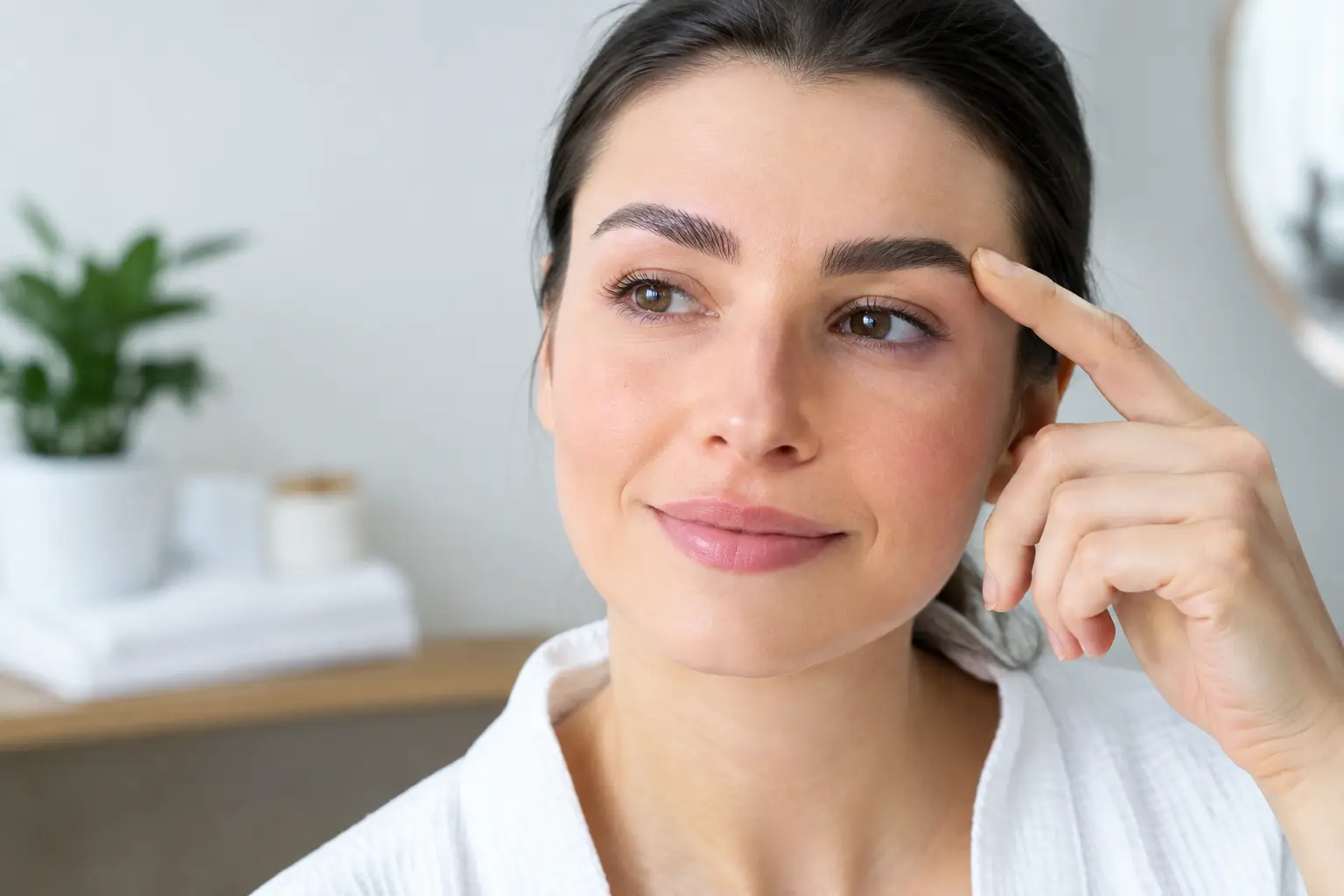
The first few days after an eyebrow transplant are when careful aftercare does the most work. This guide to eyebrow transplant recovery explains what the treated area may look and feel like, when new growth usually appears, and how to protect every graft while it settles into place. Your surgeon’s personal instructions should always take priority, because your technique, skin condition, and graft count can affect the timeline.
The first 72 hours: protect the newly placed grafts
Fresh eyebrow grafts are delicate. They need time to establish a blood supply, so the goal is simple: avoid pressure, friction, moisture, and accidental pulling. Mild redness, pinpoint scabbing, and slight swelling around the brow or upper eyelids can be expected during this stage. Swelling often peaks around day two or three, then improves.
Sleep on your back with your head elevated on extra pillows for the first few nights. This can limit swelling and helps prevent the transplanted area from rubbing against bedding. Avoid touching the brows unless you have been instructed to apply a product or clean the area. Even a light scratch can dislodge a graft early on.
Do not use makeup, eyebrow pencils, concealer, retinol, exfoliants, or fragranced skin care near the recipient area. Patients should also avoid steam rooms, swimming pools, saunas, and strenuous exercise that causes heavy sweating. For patients recovering in Dubai or elsewhere in the GCC, direct sun exposure and heat deserve extra caution. Wear a loose, clean hat only if your clinical team confirms it will not touch the grafts.
Days 4 to 10: gentle cleansing and normal scabbing
By this point, the brows may look darker, uneven, or more defined than you expected. That is usually temporary. Small crusts form around the transplanted hairs as the skin heals. They are part of the normal recovery process, not a sign that the treatment has failed.
Your clinic will advise when and how to begin washing. In many cases, patients use a gentle, low-pressure rinse and carefully dab the surrounding skin dry. Do not scrub, pick, or attempt to remove scabs ahead of schedule. Pulling off a scab too early may also pull out a graft that has not fully anchored.
Itching is common as healing progresses. Resist rubbing the area. If itching feels intense or is accompanied by worsening redness, heat, tenderness, or discharge, contact your clinic rather than applying an over-the-counter cream on your own.
What to expect visually
Most patients can return to desk-based work relatively quickly, but the decision depends on how visible the redness or swelling is and how comfortable they feel. Scabs commonly begin to shed naturally over one to two weeks. Once they have cleared, the brows may appear thinner than they did immediately after the procedure. This is a normal transition, not a setback.
Weeks 2 to 8: the shedding phase can be unsettling
Transplanted eyebrow hairs often shed within the first month or two. This is known as shock shedding, and it is one of the most misunderstood parts of eyebrow transplant recovery. The hair shaft falls out, while the implanted follicle remains under the skin and enters a resting phase before producing new growth.
Some patients also notice temporary shedding in nearby native eyebrow hairs. This can happen after localized trauma and typically improves as the area recovers. Although the waiting period requires patience, early shedding does not mean the follicles have been lost.
You can usually resume more normal activity as healing advances, but return to workouts, swimming, sun exposure, and cosmetics according to your surgeon’s plan. The right timing varies. A patient with persistent redness or sensitive skin may need a more cautious approach than someone whose skin has settled quickly.
Months 3 to 6: early regrowth begins
New eyebrow hairs commonly begin to emerge around the third or fourth month. They may initially look fine, light, or irregularly spaced. Growth is rarely perfectly synchronized because each follicle follows its own cycle. One section of the brow may appear ahead of another, and this can be entirely normal.
The hairs used in an eyebrow transplant are commonly harvested from the scalp. For that reason, they may grow faster or behave differently than natural eyebrow hair at first. Regular, careful trimming is usually needed once growth starts. Your practitioner can show you how to trim without cutting too close to the skin or disrupting the developing shape.
Avoid making early judgments about density or symmetry. During this phase, the outline of the brows may still change as more follicles activate. Clear monthly photographs in the same lighting can be more useful than checking the mirror every day.
Months 6 to 12: refinement and fuller results
By six months, a more meaningful improvement in coverage and direction is often visible. The hairs continue to mature in texture and blend more naturally over the following months. Many patients see their final result between 10 and 12 months, though individual healing patterns can extend that timeline.
A successful result is not only about density. Eyebrow transplantation requires meticulous placement of each graft to respect the brow’s natural angle, direction, arch, and softness. A hair that grows at the wrong angle can be more noticeable than a slightly sparse area. This is why a personalized design and experienced graft placement matter as much as the recovery routine.
In some cases, a second session may be discussed later if a patient wants greater density or has extensive hair loss. That decision should wait until the first procedure has fully matured. Planning too early can lead to unnecessary treatment or unrealistic expectations.
Recovery habits that protect your investment
Aftercare is not about following a long list of restrictions forever. It is about giving the grafts the right conditions during the period when they are most vulnerable. Keep the recipient area clean as directed, take prescribed medications exactly as instructed, and attend follow-up appointments so your progress can be assessed properly.
Avoid smoking and nicotine products during the healing period specified by your surgeon. Nicotine can affect circulation, which is particularly relevant when newly transplanted follicles are establishing themselves. A balanced diet, regular hydration, and adequate sleep also support normal wound healing, even though they cannot speed up the natural hair-growth cycle overnight.
If you use treatments for skin conditions, hair loss, or pigmentation, ask before restarting them near the brows. Products that are safe for other areas of the face may be too irritating during recovery.
When to contact your clinic
Most redness, mild swelling, crusting, and tenderness improve steadily. Contact your medical team promptly if you develop increasing pain, spreading redness, fever, pus-like drainage, significant bleeding, or swelling that worsens rather than settles. You should also seek advice if you are unsure whether a product, activity, or cosmetic treatment is safe.
Patients sometimes worry after seeing a shed hair with a tiny bulb-like tip. This does not always indicate that an implanted follicle has been removed. However, a clinic can assess concerns accurately through an examination or a clear photo, which is far better than guessing.
A recovery plan should fit your life
For work commitments, travel, weddings, or other social events, timing matters. The immediate healing phase is short, but visible scabbing and the later shedding period can affect how you feel about your appearance. A consultation before treatment should include an honest discussion of your schedule, sun exposure, exercise habits, and expectations for density.
At AHT Aesthetic Medical Center, eyebrow transplant planning is tailored to the patient’s facial features and recovery needs, with the aim of creating brows that look balanced rather than overdone. The best recovery is calm, consistent, and closely guided by professional advice. Give the follicles time to do their work, and let your follow-up team support you at every stage.
Ready to explore your hair restoration options?
Complete a free Hair Analysis or book a consultation with AHT Aesthetic Medical Center in Dubai.
Ready to explore your hair restoration options?
Complete a free Hair Analysis or book a consultation with AHT in Dubai.