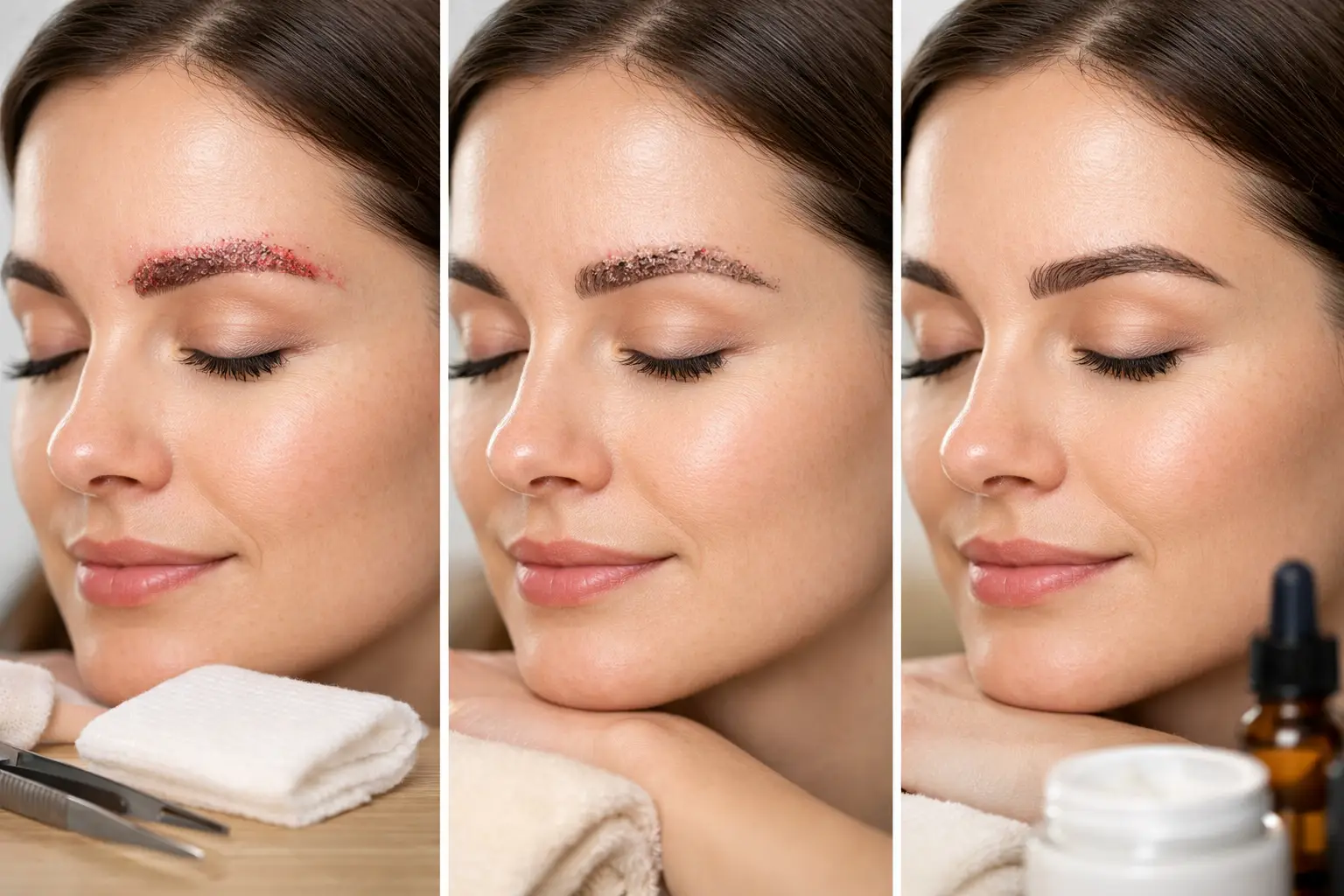
Your new eyebrow shape is visible as soon as the procedure is complete, but it is not the final result. Eyebrow transplant healing stages involve a short period of redness and scabbing, followed by shedding, then gradual regrowth that rewards patience. Knowing what is normal at each point can make recovery feel far more manageable and help you protect your grafts.
An eyebrow transplant places individual hair follicles, usually harvested from the scalp, into carefully designed channels along the brow. The angle, direction, and density of every graft matter because eyebrow hair needs to lie flat and follow the natural movement of the face. Healing is therefore not only about comfort. It is also about giving those newly placed follicles the stable environment they need to grow.
What Eyebrow Transplant Healing Stages Look Like
Recovery varies slightly with skin sensitivity, graft count, medical history, and how closely aftercare instructions are followed. Still, most patients progress through the same recognizable milestones.
Days 1 to 3: Protecting the Newly Placed Grafts
During the first 48 to 72 hours, the transplanted follicles are delicate. You may see mild redness, pinpoint crusts around each graft, and minor swelling around the forehead or upper eyelids. Swelling can look more dramatic on the second or third day before it settles. This is a common response to the procedure and does not usually affect the outcome.
The eyebrows may appear darker, fuller, or slightly uneven at this stage because of dried blood and early crusting. Avoid judging the shape too soon. The skin is still healing, and the visible density will change considerably over the coming weeks.
Your clinical team may recommend gentle saline spraying or a specific cleansing method. Follow that guidance precisely. Do not rub, scratch, pick, or press on the eyebrow area. Sleep with your head elevated for the first few nights if advised, and avoid activities that cause heavy sweating, including intense exercise, hot yoga, saunas, and steam rooms.
Days 4 to 10: Scabbing and Early Surface Healing
Small scabs form around the implanted hairs as the recipient area heals. This can be the phase patients find most tempting to interfere with, especially if the skin feels itchy. However, pulling off a scab too early can also pull out a graft that has not yet secured itself.
By around day 7 to 10, your provider may allow gentle washing and may instruct you on how to soften and release crusts safely. Do not use makeup, exfoliants, brow pencils, or active skincare products near the brows until your surgeon confirms it is appropriate. Retinoids, acids, and fragranced products can irritate healing skin.
Most redness and swelling should be substantially improved by the end of this period. If you are planning the procedure around work, social events, or travel to Dubai, this early recovery window is the most important time to keep your schedule flexible.
Weeks 2 to 4: The Shedding Phase
Once the skin looks calmer, many patients are surprised to see transplanted hairs shed. This is expected. The hair shaft can fall out while the follicle remains in place beneath the skin, entering a temporary resting phase before producing a new hair.
Shedding does not mean the transplant has failed. In fact, it is part of the normal healing process for many eyebrow transplant patients. The brows may look patchy or close to their pre-procedure appearance again, which can be emotionally frustrating after the excitement of the first week.
Continue treating the area gently. You can usually return gradually to normal daily activities, but follow your provider’s individual advice about swimming, sun exposure, facials, and cosmetic products. Direct sun can worsen redness or cause temporary pigmentation changes in healing skin, particularly in the UAE’s strong sunlight. A hat and the sun-protection plan recommended by your medical team are sensible precautions.
Months 1 to 3: A Quiet Growth Phase
The first few months often require the most patience. Some patients notice little visible change after shedding, while others see fine new hairs begin to emerge toward the end of this period. Early growth can be soft, thin, or irregular. That is normal.
Not every follicle begins growing at the same time. Hair cycles are naturally staggered, so density develops gradually rather than appearing all at once. The new hairs may also resemble scalp hair more than natural eyebrow hair at first. They can grow faster or appear slightly curlier, which is why careful grooming becomes part of long-term eyebrow transplant care.
Avoid comparing your progress too closely with photographs from other patients. Graft characteristics, existing brow hair, skin type, and the original treatment plan all influence the timeline.
Months 4 to 6: Noticeable New Definition
For many patients, the eyebrows begin to look meaningfully fuller between four and six months. New hairs become more visible and start contributing to the overall outline of the brow. You may still see uneven areas as some follicles remain behind others in the growth cycle.
At this point, you may be able to trim the new hairs if they become longer than desired. Use clean, small scissors and trim conservatively. Do not pluck transplanted hairs without discussing it with your provider. A transplant is designed to create lasting coverage, and unnecessary plucking can work against the result you chose the procedure to achieve.
Months 7 to 12: Maturation and Final Assessment
The most natural-looking improvement usually develops from seven months onward. Hair shafts become stronger, coverage becomes more consistent, and the brow shape starts to settle into the intended design. Final results are commonly assessed around 10 to 12 months after treatment.
A touch-up may occasionally be considered if a patient wants more density, has significant scar tissue, or has a particular cosmetic goal. That decision should be made only after enough time has passed to evaluate the full growth pattern. A personalized plan is more reliable than promising identical density for every patient.
How to Support a Smooth Recovery
The best aftercare is simple and disciplined. Protect the grafts, keep every follow-up appointment, and use only the products and medications approved by your surgeon. Avoid smoking and nicotine exposure if possible, as nicotine can affect circulation and wound healing. Maintain good hydration, balanced nutrition, and regular sleep to support your body’s recovery.
It is equally important to manage expectations. An eyebrow transplant is a long-term aesthetic procedure, not a quick cosmetic fix. The early appearance, shedding period, and slow return of growth are all temporary parts of the process. Patients who understand this before treatment are better prepared to appreciate the final result.
When to Contact Your Medical Team
Some tenderness, mild itching, redness, and short-lived swelling are common. Contact your clinic promptly if you experience increasing pain, spreading redness, warmth, pus-like drainage, fever, persistent bleeding, or swelling that worsens rather than improves. These symptoms do not automatically mean there is a serious issue, but they should be assessed without delay.
You should also contact the clinic before using a new skincare product, arranging a facial treatment, or restarting exercise if you are unsure about timing. Clear, early guidance can prevent avoidable irritation during the most sensitive phase of recovery.
At AHT Aesthetic Medical Center, eyebrow restoration is planned around your facial proportions, existing brow pattern, and desired level of definition. The goal is not simply to place more hair, but to create a brow that looks appropriate from every angle and continues to feel like your own.
Give your eyebrows the time they need. With careful aftercare and realistic expectations, the healing period leads gradually to fuller, natural-looking brows that can restore definition and confidence for years to come.
Ready to explore your hair restoration options?
Complete a free Hair Analysis or book a consultation with AHT Aesthetic Medical Center in Dubai.
Ready to explore your hair restoration options?
Complete a free Hair Analysis or book a consultation with AHT in Dubai.