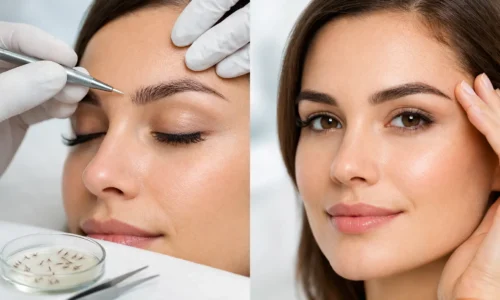
Hair thinning rarely starts all at once. It usually shows up in the mirror as a wider part, a weaker hairline, or more scalp showing under bright light. When patients ask about prf versus prp hair treatments, they are usually asking one practical question – which one gives me the best chance of keeping and improving my hair without moving straight to surgery?
The answer depends on your stage of hair loss, your scalp condition, and how your body responds to regenerative treatment. Both PRP and PRF use your own blood to support the hair follicles. Both are commonly used for men and women with early thinning, shedding, or weakened growth. But they are not identical, and the difference matters when you are choosing a treatment plan.
PRF versus PRP hair: the main difference
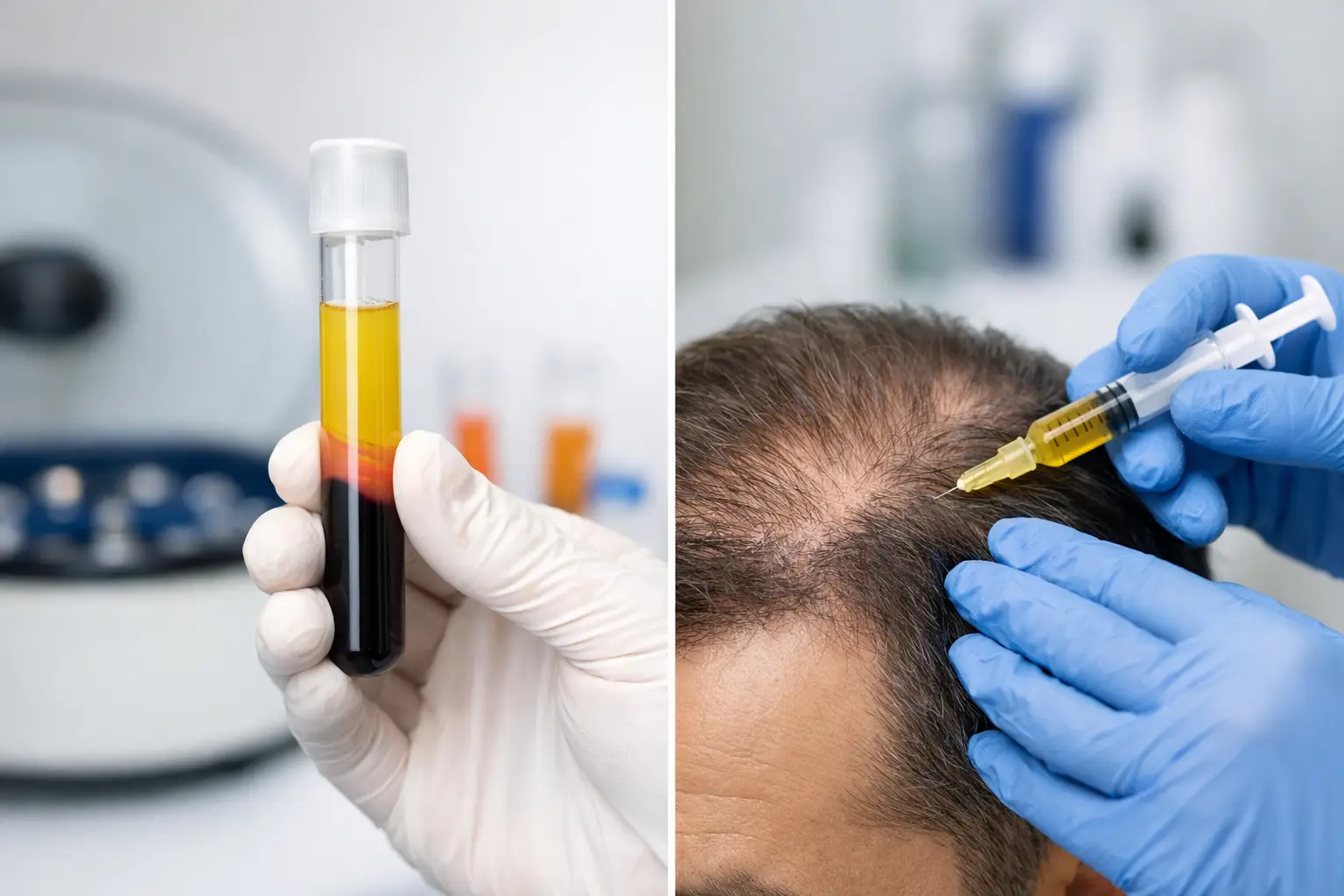
PRP stands for platelet-rich plasma. PRF stands for platelet-rich fibrin. In both treatments, a blood sample is taken and processed so the growth factors in your blood can be injected into areas of thinning hair.
The main distinction is how that blood is prepared and what the final injectable material contains. PRP is typically spun at a higher speed and often uses an anticoagulant to keep the sample from clotting. The result is a plasma layer rich in platelets, which carry growth factors that may help stimulate follicles and improve scalp health.
PRF is processed more gently and usually without anticoagulants. Because of that, it contains platelets along with fibrin, white blood cells, and stem-cell-associated components from the blood sample. The fibrin matrix allows the growth factors to be released more gradually rather than all at once.
For patients, that technical difference translates into a simple idea: PRP delivers a concentrated signal for repair, while PRF may offer a slower, more sustained release.
How PRP works for hair restoration
PRP has been used in hair restoration for years and remains one of the most recognized non-surgical options for thinning hair. After the blood is processed, the platelet-rich portion is injected into targeted areas of the scalp. The goal is to support circulation, reduce inflammation around vulnerable follicles, and encourage healthier hair growth.
PRP is often recommended for androgenetic alopecia, which is the most common pattern hair loss in men and women. It can also be useful for patients experiencing diffuse thinning or post-stress shedding once the underlying trigger has been addressed.
One reason PRP remains popular is familiarity. It has a long track record in aesthetic and regenerative medicine, and many patients like that it is quick, minimally invasive, and performed in a medical setting with little downtime.
How PRF works for hair restoration
PRF follows a similar treatment path but with a slightly different biological profile. Because it includes fibrin and is prepared without anticoagulants, the injectable material is often richer and more natural in composition. The slower release of growth factors may help create a more prolonged regenerative effect around the follicle.
Some practitioners prefer PRF for patients with early thinning, weakened hair caliber, or a scalp environment that may benefit from a more sustained healing response. It is also increasingly used as part of combination plans, including support after hair transplant procedures, where improving healing and graft support can be especially valuable.
PRF is not automatically better than PRP in every case. It is better described as a next-generation variation that may offer advantages for selected patients.
Is PRF better than PRP for hair?
This is the question most patients want answered quickly, but it is not a one-size-fits-all decision. PRF may be the stronger option for patients who want a more natural preparation and a slower release of growth factors. It may also appeal to people looking for a treatment with fewer additives.
PRP may still be the better fit when the clinic has a well-established protocol, the patient responds well to classic platelet therapy, or the treatment plan includes a series designed around PRP’s performance profile. In experienced hands, PRP can deliver visible improvement in shedding, thickness, and hair quality.
The better question is not whether PRF beats PRP across the board. It is whether your scalp, hair loss pattern, and treatment goals make one more appropriate than the other.
PRF versus PRP hair results: what patients can expect
Neither treatment creates instant density. Hair growth works in cycles, and follicles need time to respond. Most patients notice reduced shedding first, then gradual improvement in texture, strength, and fullness over the following months.
With either treatment, best results are usually seen in patients who still have active but weakened follicles. These treatments do not revive follicles that are completely gone. If an area is fully bald, regenerative injections alone are less likely to create meaningful regrowth. In that situation, a hair transplant may be the more effective solution, sometimes supported by PRP or PRF afterward.
Results also depend on consistency. A single session may help, but most patients need a series followed by maintenance. The exact schedule varies by protocol, but regenerative hair treatment is usually not a one-visit fix.
Who is a good candidate?
PRP and PRF are often best for adults in the earlier stages of hair loss, including men with thinning at the hairline or crown and women noticing widening parts or reduced density. They can also help patients who want to strengthen transplanted or native hair as part of a broader restoration plan.
A good candidate typically has realistic expectations, enough active follicles to treat, and a medically assessed cause of hair loss. If the real issue is thyroid imbalance, severe iron deficiency, autoimmune disease, or active scalp inflammation, that needs attention as part of the plan.
This is where a proper consultation matters. Hair loss that looks similar on the surface can have very different causes underneath.
Treatment experience and downtime
From the patient’s perspective, PRP and PRF are both straightforward in-office procedures. Blood is drawn, the sample is processed, and the treatment is injected into targeted scalp areas. A numbing method may be used to improve comfort.
Most people return to normal activity the same day or the next day. Mild tenderness, tightness, or redness at the injection sites can happen, but downtime is limited. Patients usually appreciate that these treatments fit into a busy schedule without requiring surgical recovery.
Because both use your own blood, the risk of allergic reaction is low. That said, low risk does not mean no risk. Technique, sterility, patient selection, and aftercare still matter.
Cost, value, and long-term planning
Patients often compare PRF and PRP on price, and that is understandable. PRF may cost more in some practices because of the preparation method and treatment design. But the cheapest option is not always the best value.
The better way to think about cost is in terms of a complete strategy. How many sessions are recommended? What level of improvement is realistic? Will maintenance be needed? Is the clinic evaluating whether injections alone are enough, or whether a transplant, medical therapy, or a combined plan would deliver better long-term results?
A treatment that matches your actual condition is almost always more cost-effective than repeating the wrong one.
When PRP or PRF should be part of a bigger plan
Hair restoration is often most successful when it is personalized rather than isolated. A patient with mild thinning may do very well with regenerative injections alone. Someone with more advanced loss may need a combination of options, such as medical therapy, scalp support, and transplant planning.
That is especially true for patients who have delayed treatment. Once follicles have miniaturized for too long or disappeared completely, injections become less effective. In those cases, PRP or PRF may still have value, but more as support than as the primary answer.
At a specialist center such as A H T Aesthetic Medical Center, this type of planning can make the difference between modest improvement and a result that looks genuinely natural and confidence-building.
So which should you choose?
If you are deciding between prf versus prp hair treatment, the smartest move is to stop looking for a universal winner and start looking for the right fit. PRF may offer a more sustained regenerative effect and a more natural preparation. PRP remains a trusted, effective option with strong clinical relevance for many patients.
What matters most is not the label on the tube. It is whether your treatment is being chosen by an experienced medical team that understands hair loss patterns, scalp health, and when non-surgical treatment is enough.
The best hair restoration plan should feel clear, medically sound, and tailored to your goals. If a treatment helps you keep more of your existing hair, improve thickness, and act before thinning becomes harder to reverse, that is often the right place to start.