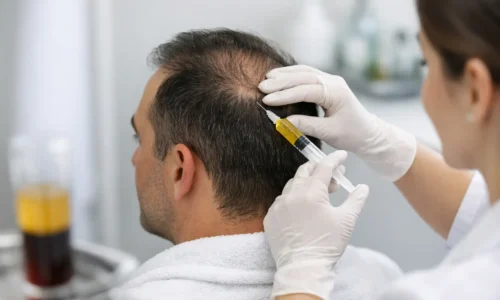
A polished website and a low package price can make almost any clinic look convincing. What matters is what happens after the consultation – who evaluates your hair loss, who performs the procedure, how the hairline is designed, and whether the result will still look natural years from now. If you are researching how to choose hair transplant clinic options, the goal is not simply to find a place that offers the procedure. It is to find a medical team that can deliver safe treatment and a result that fits your face, age, hair type, and long-term hair loss pattern.
Why choosing the right clinic matters
A hair transplant is not a standard beauty treatment. It is a medical procedure that depends on planning, surgical judgment, graft handling, and aftercare. Two clinics may both offer FUE, but the quality of the outcome can be very different.
The right clinic will focus on donor preservation, natural density, and realistic expectations. The wrong one may overharvest grafts, design a hairline that looks too low or too straight, or recommend surgery when another treatment should come first. Repairing a poor transplant is often harder, more expensive, and more limited than doing it properly the first time.
That is why the decision should be based on medical standards and long-term thinking, not marketing alone.
How to choose hair transplant clinic options with confidence
Start by looking at who is leading the medical side of the clinic. A strong clinic is transparent about its doctors, qualifications, and approach to treatment planning. You should be able to find clear information about who assesses patients, who performs key parts of the procedure, and how cases are selected.
This is especially important because not every person with hair loss is an ideal transplant candidate right away. Some patients need medical therapy first. Some have limited donor supply. Some women with diffuse thinning need a more careful diagnostic workup before surgery is even discussed. A trustworthy clinic will tell you when to wait, when to combine treatments, and when a transplant may not be the best option.
Look beyond the technique name
Many patients begin by comparing FUE to other methods, but technique alone does not tell you enough. FUE can produce excellent results when grafts are harvested carefully, angles are planned precisely, and the donor area is managed conservatively. It can also produce disappointing results if done in a rushed, high-volume setting.
Ask how the clinic approaches graft selection, hairline design, density planning, and donor management. If the answer stays vague or sounds scripted, that is worth noticing. Good clinics can explain their process in a way that is easy to understand without avoiding the details.
Pay attention to the consultation quality
A serious consultation should feel personalized, not rushed. You should be asked about your hair loss history, family pattern, medications, health conditions, previous procedures, and goals. Your scalp and donor area should be examined carefully. The conversation should cover what is possible now and what may happen as your hair loss progresses.
If you are promised a perfect result in one visit without discussion of limitations, that is not reassuring. In hair restoration, honest planning is a sign of expertise.
What to ask before you book
The best questions are the ones that reveal how the clinic thinks. Ask who will perform the extractions, recipient site creation, and graft placement. Ask how many grafts are being recommended and why. Ask what result is realistic for your current stage of hair loss.
You should also ask to see before-and-after photos of patients with a similar hairline pattern, hair texture, and donor quality to your own. A good result on someone with thick, dark hair does not automatically predict the same outcome for someone with fine hair or advanced thinning.
Another important question is what happens after the procedure. Hair transplantation does not end when the grafts are placed. Follow-up care, healing guidance, and long-term hair maintenance matter. Clinics that offer a broader hair restoration plan, including treatments such as PRP or regenerative options when appropriate, are often better equipped to support the full journey rather than just the surgery day.
Red flags patients often miss
One of the biggest red flags is pressure. If you are pushed to book quickly because of a discount, limited slot, or same-day offer, step back. Medical decisions should not feel like retail promotions.
Another concern is when every patient seems to be offered the same solution. Hair loss is personal. The right plan depends on age, gender, donor strength, scalp condition, and future risk of progression. Standardized sales language can hide the fact that the treatment is not truly tailored.
Be cautious with clinics that advertise extremely high graft numbers as a selling point. More is not always better. Overharvesting can weaken the donor area and reduce options for the future. A natural result comes from strategy, not just volume.
It is also worth being careful if all the attention goes to price and very little goes to medical safety, healing, or expected growth timelines. A lower upfront cost can become far more expensive if the outcome requires correction later.
Reviews, results, and real credibility
Online reviews can be helpful, but they should not be your only filter. Look for patterns rather than isolated praise. Do patients mention feeling informed, cared for, and followed up with after the procedure? Do they talk about natural-looking outcomes rather than just friendliness and convenience?
Photos matter, but they need context. Strong before-and-after examples show consistent lighting, clear angles, and enough time between images to evaluate growth properly. Clinics that rely only on immediate post-procedure images are not showing the final result.
Credibility also comes from how openly the clinic communicates. When a team is confident in its standards, it usually does not need exaggerated promises.
It depends on your hair loss pattern
There is no single formula for how to choose hair transplant clinic care because the right clinic for one patient may not be the right fit for another. A man with a receding hairline in his early 30s has different needs than a woman with diffuse thinning or a patient seeking eyebrow or beard restoration.
For example, female hair restoration requires careful diagnosis because thinning can have hormonal, medical, or diffuse causes that affect surgical planning. Facial hair and eyebrow transplants also demand a refined aesthetic eye because angle, direction, and density are highly visible. In these cases, you are not just choosing a clinic that performs transplants. You are choosing a team that understands the specific anatomy and artistry of that treatment area.
This is why specialization matters. A clinic that regularly treats different hair restoration concerns and builds customized plans is usually better positioned to recommend the right procedure, the right timing, and the right supporting therapies.
Why aftercare should influence your decision
A transplant can be technically sound and still feel stressful if aftercare is weak. Patients often underestimate how much reassurance they need in the first days and weeks after surgery. Questions about washing, shedding, redness, scabbing, and growth timelines are normal.
Choose a clinic that explains recovery clearly and stays available after the procedure. Good aftercare supports healing, reduces anxiety, and helps you understand what is normal at each stage. It also reflects how patient-centered the clinic really is.
For many patients, the best experience comes from a center that combines surgical skill with a broader medical aesthetics and hair restoration perspective. That kind of environment tends to support not only the procedure itself, but the confidence-building process that follows.
A practical way to make your final decision
Once you narrow your options, compare clinics on four things: medical leadership, natural-looking results, personalized planning, and aftercare. If one clinic is cheaper but vague, and another is clear, medically grounded, and realistic, the second is usually the safer investment.
Trust the consultation experience. You should feel informed, not sold to. You should leave with a better understanding of your hair loss, your options, and your likely outcome. If a clinic takes time to assess you properly and recommends a plan that makes sense for your future as well as your present, that is a strong sign you are in the right place.
Choosing a hair transplant clinic is ultimately about protecting both your appearance and your peace of mind. The best choice is the one that treats your result like a long-term medical and aesthetic responsibility, not a one-day procedure.