If you are researching how long do hair transplant procedures take, you are probably not just curious about the clock. You want to know how much of your day, recovery, and routine this decision will actually require. That is a smart question, because procedure time can vary quite a bit based on the treatment plan, the number of grafts needed, and the technique your provider uses.
For most patients, a hair transplant procedure takes between 4 and 8 hours in a single day. Smaller sessions may finish sooner, while larger cases can take most of the day or sometimes be split across two sessions. The short answer is simple. The more useful answer is that your timeline depends on what your scalp needs to create a natural result.
How long do hair transplant procedures take on average?
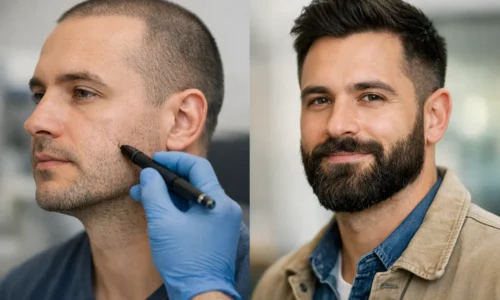
A hair transplant is not one single step performed in a few minutes. It is a carefully staged medical procedure. Your team typically begins by reviewing the hairline design, preparing the donor area, administering local anesthesia, extracting grafts, and then placing those grafts into thinning or balding areas.
That is why time adds up.
A small procedure for early hairline recession may take around 4 to 5 hours. A moderate case often falls in the 6 to 8 hour range. A larger restoration with a high graft count can take longer, especially when precision placement is needed across the hairline, mid-scalp, and crown.
Patients are often relieved to learn that while the procedure takes several hours, it is generally manageable. You are not under general anesthesia, and the day is structured with breaks as needed. Most people describe it as a long but comfortable appointment rather than an overwhelming surgical experience.
What affects how long a hair transplant procedure takes?
The biggest factor is graft count. If you need 1,000 grafts, the procedure will naturally be shorter than a case requiring 3,000 or more. Every graft must be harvested and implanted with attention to angle, direction, and density. Speed matters less than accuracy.
Technique also influences timing. Follicular Unit Extraction, or FUE, often takes several hours because grafts are removed one by one. That level of detail supports minimal visible scarring and a more targeted approach, but it can extend the length of the session. If a clinic uses advanced tools and a highly experienced team, the workflow may be more efficient without sacrificing quality.
Your hair characteristics matter too. Coarse hair, curly hair, and varying donor density can all affect planning and execution. In some patients, graft extraction is straightforward. In others, it requires more time to preserve follicle health and maintain strong survival rates.
Then there is the treatment area itself. Rebuilding a natural hairline is detail-heavy work. The front of the scalp is where design matters most, so even a smaller graft session can take time if the focus is artistry and natural placement. Crown work may involve a different pattern and can be time-intensive for larger areas.
The timeline for each stage of the procedure
Understanding the day in stages makes the process feel more predictable.
Consultation and design
This usually happens before procedure day, but some final planning is done when you arrive. Your provider confirms the hairline, reviews the graft plan, checks the donor area, and answers any last-minute questions. This part may take 30 minutes to an hour depending on the complexity of the case.
Preparation and numbing
The scalp is cleaned, the donor area is prepared, and local anesthesia is administered. This stage is important because comfort affects the rest of the experience. It is not usually the longest part of the day, but it should not be rushed.
Graft extraction
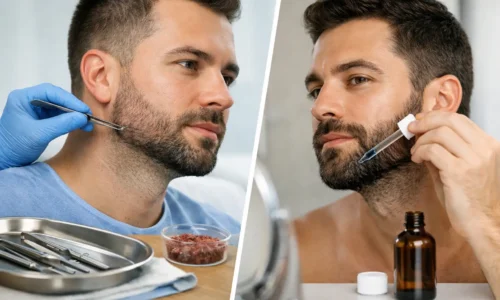
For FUE, follicles are extracted individually from the donor area. This can take a few hours on its own. The larger the graft count, the longer this stage tends to be.
Site creation and implantation
Tiny recipient sites are created in the thinning area, and the grafts are placed carefully into position. This is where the natural look is built. Hairline direction, density transitions, and placement angles all matter. Implantation often takes as long as extraction, and sometimes longer in highly refined cases.
Breaks and aftercare review
Most patients have short breaks during the day for food, stretching, or rest. Once the procedure is complete, your team reviews aftercare instructions and the first steps of recovery.
Why some procedures take longer than patients expect
Hair transplantation sits at the intersection of medicine and aesthetics. Patients sometimes assume that once grafts are available, placing them is quick. In reality, this is the stage where experience shows.
A rushed procedure can compromise naturalness. Hair that is implanted at the wrong angle, too densely in the wrong zone, or without proper spacing may not look balanced. A well-executed transplant takes time because the goal is not just to move hair. It is to create a result that looks like it belongs there.
This is especially true for patients who want a soft, age-appropriate hairline rather than an overly aggressive design. Better planning may add time on procedure day, but it can also protect the quality of the result long term.
Will you need more than one session?
Sometimes, yes. Not every patient is best served by a single long session.
If hair loss is advanced, the provider may recommend a staged approach. One session may focus on the frontal hairline and mid-scalp, while a later session addresses the crown or adds density. This can be the safer and more strategic choice, especially when donor supply needs to be managed carefully.
Some patients also choose a second session later because their hair loss continues over time. A transplant restores hair to treated areas, but it does not stop future thinning in untreated hair. That is why long-term planning matters.
How much time should you set aside beyond the procedure itself?
The procedure day is only part of the schedule. You should also plan for recovery, even though most patients return to light activity fairly quickly.
Many people take a few days off work, especially if they want privacy during the early healing period. Mild redness, scabbing, and swelling can occur in the first several days. For office-based work, some patients feel comfortable returning within 3 to 5 days. Others prefer a full week.
Strenuous exercise usually needs to wait longer. Your provider will give specific guidance, but intense workouts, heavy sweating, and activities that increase pressure or irritation around the scalp are often limited for at least several days to two weeks depending on healing.
So when asking how long do hair transplant procedures take, it helps to think in two parts. The procedure itself may take one day. The social and physical recovery timeline may take a bit longer.
Is a longer procedure better?
Not automatically. Longer does not always mean better, and shorter does not always mean better either. What matters is whether the procedure length matches the clinical need.
An efficient, experienced team can complete a well-planned transplant in an appropriate timeframe while maintaining graft quality and patient comfort. On the other hand, if a case is complex, extra time may be exactly what allows for a stronger result.
This is one reason personalized planning matters so much. A quality clinic should explain not just how many hours to expect, but why your treatment is estimated that way.
Questions worth asking at your consultation
If timing is a major concern, ask how many grafts are recommended, whether your case is likely to be completed in one session, and what the expected start-to-finish schedule looks like. You should also ask how much downtime is realistic for your work and lifestyle.
These questions help set expectations early. They also give you a clearer view of whether the treatment plan is being built around your goals rather than a one-size-fits-all estimate.
At A H T Aesthetic Medical Center, that kind of individualized planning is part of what makes patients feel more confident moving forward. Knowing the timeline helps, but knowing the plan behind it helps even more.
The real answer patients need
Most hair transplant procedures take several hours, and many are completed in a single day. But the best way to think about timing is not to ask how fast it can be done. Ask how carefully it will be done, how comfortably it will be done, and whether the plan fits your pattern of hair loss.
When the procedure is tailored properly, the time spent in the chair becomes part of a bigger goal – a result that looks natural, heals well, and feels worth it when you look in the mirror months from now.