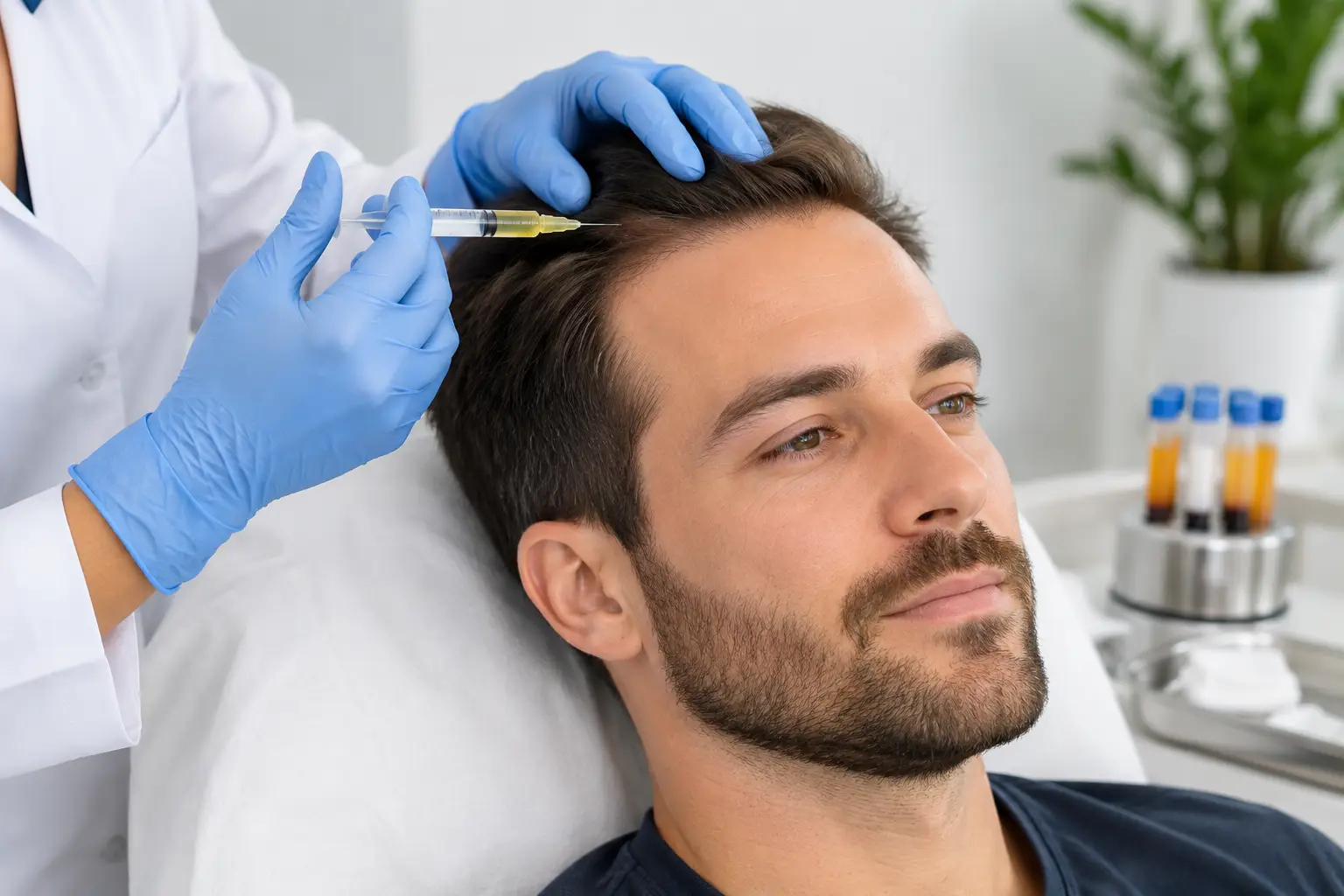
Hair thinning rarely follows a convenient schedule. You may notice more hair in the shower, a widening part, or a receding hairline, then start comparing treatment options and prices. PRP hair pricing is a natural concern, but the lowest quote is not always the best value when treatment quality, clinical assessment, and a personalized plan can affect your outcome.
Platelet-rich plasma, or PRP, uses a concentrated portion of your own blood to support hair follicles. It is commonly considered for early-stage hair thinning, weakened hair quality, and ongoing hair restoration support. At a qualified medical center, the price should reflect far more than a single injection appointment.
What PRP Hair Pricing Covers
A PRP hair therapy session typically begins with a blood draw. The sample is processed in a centrifuge to separate the platelet-rich plasma, which is then carefully administered into targeted areas of the scalp. The goal is to deliver a concentrated preparation where follicles need support most.
In Dubai, PRP hair treatment may be priced per session or as a multi-session package. Broadly, a session can range from approximately AED 800 to AED 2,500 or more, depending on the clinic, the protocol, the area treated, and the level of medical oversight. A package of several sessions may offer a more practical overall cost, particularly when the provider recommends an initial treatment course.
A clear quote should state whether it includes the medical consultation, scalp assessment, blood processing, PRP preparation, injections, post-treatment guidance, and follow-up review. If a price seems unusually low, ask what is included and who will perform the procedure. These details matter to both safety and treatment consistency.
Why there is no single PRP price
PRP is not a one-size-fits-all service. A patient with mild diffuse thinning may need a different injection plan from someone managing genetic hair loss, postpartum shedding, or reduced density following a hair transplant. The right plan is based on your hair history, scalp condition, current medications, family history, and realistic goals.
A consultation also helps identify situations where PRP may not be the first or only recommendation. For example, sudden or severe shedding may require a medical evaluation for an underlying cause before proceeding with cosmetic hair restoration treatment.
What Influences PRP Hair Pricing?
The most useful way to compare PRP costs is to compare the treatment standards behind them. Several factors can change the final investment.
The first is the experience of the medical team. Hair restoration requires an understanding of scalp anatomy, hair-loss patterns, injection technique, and patient suitability. Treatment performed under appropriate medical supervision can provide greater reassurance than a generic add-on service.
The second is the PRP preparation protocol. Clinics may use different equipment, processing methods, and blood volumes. The objective is to prepare an appropriate platelet-rich concentration for treatment, but protocols can vary. Ask how the clinic prepares PRP and whether its approach is designed specifically for hair therapy.
The third is the size and condition of the treatment area. Treating a small area of early thinning may require less time than addressing diffuse thinning across the crown, hairline, and mid-scalp. More extensive concerns can influence the number of injections and the recommended schedule.
Finally, packages and follow-up care affect the price. A lower per-session price may look attractive, but it is only a meaningful comparison if the number of recommended sessions, consultation fees, and follow-up appointments are equally clear.
How Many Sessions Will You Need?
For many patients, PRP is planned as a series rather than a single appointment. A common starting approach is three to four sessions spaced several weeks apart, followed by maintenance treatments based on progress and the type of hair loss being managed. Your provider may adjust this schedule after examining the scalp and reviewing your response over time.
This is why package pricing can make sense, but only if it is clinically appropriate. Avoid committing to a large package before you understand the treatment plan, expected timeline, and the clinic’s policy for reassessment. Hair growth is gradual, and visible changes in shedding, texture, or density may take several months.
PRP can support existing follicles, but it does not create new follicles in areas where hair loss is long-standing and the follicles are no longer active. Patients with advanced baldness may be better suited to a hair transplant consultation, while others may benefit from PRP before or after a transplant as part of a broader strategy.
Questions to Ask Before You Accept a Quote
A confident decision starts with direct questions. Ask whether the quoted amount is per session or for a package, how many sessions the clinician recommends, and whether consultation and follow-up are included. You should also ask who performs the injections and what clinical assessment is completed before treatment.
It is reasonable to ask about the expected benefits for your specific pattern of thinning. A trustworthy provider will not promise a dramatic result for every patient. Instead, they should explain whether the goal is to reduce shedding, strengthen existing hair, improve thickness, support transplant recovery, or maintain progress from other treatments.
Photographs can also be valuable. Standardized before-and-after images taken in similar lighting and angles help create a more realistic view of change. Your hair restoration plan should be measured against your starting point, not against an unrealistic image of instant density.
When Higher PRP Hair Pricing Can Be Worth It
A higher price may be justified when it reflects detailed diagnosis, experienced medical care, quality-controlled preparation, and a treatment plan built around your needs. This does not mean the most expensive clinic is automatically the right choice. It means price should be considered alongside safety, transparency, practitioner qualifications, and the ability to provide ongoing care.
For medical tourists and GCC patients, continuity is especially important. If you are traveling for treatment, ask whether follow-up can be coordinated around your stay and what maintenance schedule will be practical once you return home. An affordable first session is less useful if the long-term plan is unclear.
At AHT Aesthetic Medical Center, PRP hair therapy is approached as part of an individualized hair restoration plan, not as a standard appointment with a standard answer. The focus is on assessing the cause and stage of thinning, then recommending the most appropriate next step.
PRP as Part of a Hair Restoration Plan
PRP can be used on its own for suitable candidates, but it may also complement other treatments. Patients considering Sapphire FUE hair transplant may discuss PRP as supportive care before or after their procedure. Others may need a plan that combines medical guidance, lifestyle review, and carefully timed maintenance sessions.
The best results usually come from treating hair loss early. If follicles are still active but producing finer, weaker hairs, supportive treatments may have more potential than they do after many years of complete hair loss. That is another reason not to delay a consultation simply because you are unsure of the cost.
A transparent PRP quote should leave you feeling informed, not pressured. Choose a clinic that explains what you are paying for, what results are realistic for your hair condition, and how your treatment can be adjusted as your needs change. A professional scalp assessment is the most reliable first step toward a plan that protects both your confidence and your investment.
Ready to explore your hair restoration options?
Complete a free Hair Analysis or book a consultation with AHT Aesthetic Medical Center in Dubai.
Ready to explore your hair restoration options?
Complete a free Hair Analysis or book a consultation with AHT in Dubai.