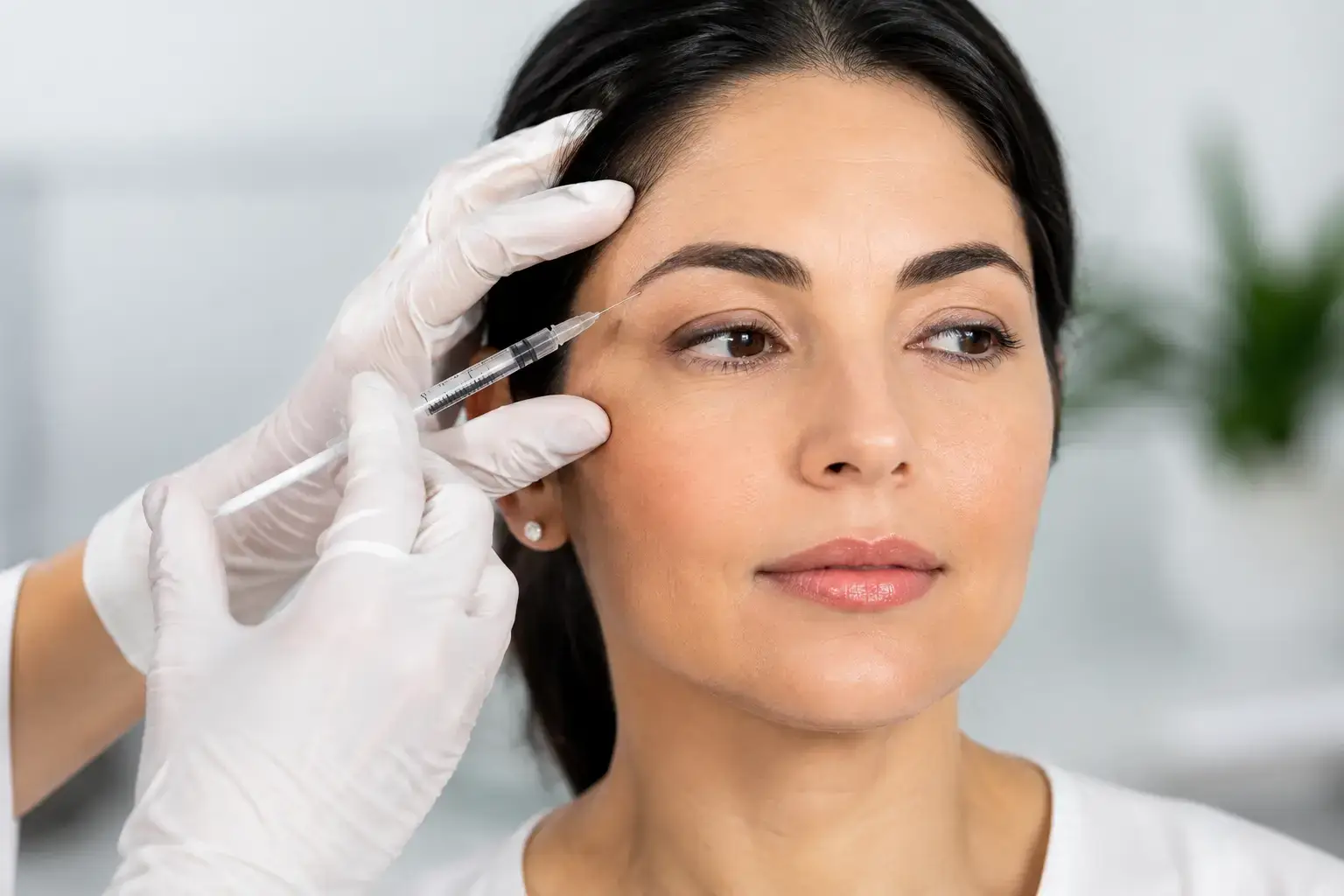
A heavier upper eyelid can make the eyes appear tired, less open, or uneven in photos, even after a good night’s sleep. So, can Botox lift hooded eyes? For the right person, carefully placed Botox can create a modest brow lift that makes the eye area look more open. It cannot remove excess eyelid skin or replace eyelid surgery, and the difference is usually subtle rather than dramatic.
The key is identifying what is actually causing the hooded appearance. A qualified medical injector should assess the brow position, eyelid skin, muscle movement, natural asymmetry, and your goals before recommending treatment. This evaluation matters because the wrong placement or dose can make heaviness more noticeable rather than improve it.
Can Botox Lift Hooded Eyes?
Botox works by temporarily relaxing selected facial muscles. In the upper face, some muscles pull the eyebrows downward, particularly at the outer brow and between the brows. When these downward-pulling muscles are treated strategically, the forehead muscles may have a slightly stronger lifting effect on the brow.
This is often called a Botox brow lift or chemical brow lift. It may create a small amount of elevation at the outer brow, which can reduce the appearance of mild hooding and reveal more of the upper eyelid. The result is generally measured in millimeters, not a major change in eyelid anatomy.
For patients whose hooding is mainly related to a low or downward-turning brow, this can be an appealing nonsurgical option. It requires no incisions and little to no downtime. However, Botox cannot tighten loose skin, remove fat pads, or correct significant eyelid drooping.
When Botox Is Most Likely to Help
A Botox brow lift tends to work best when the concern is mild and caused by muscle activity or brow position. Some people notice that their outer brows pull downward when they frown, squint, or look tired. Relaxing the muscles responsible for that pull can soften the expression and create a fresher look.
It may also suit someone who wants to test a subtle change before considering a more permanent procedure. Results develop gradually, so the outcome does not appear sudden or surgical. Most patients begin seeing changes within several days, with the full effect usually visible around two weeks after treatment.
The best candidates generally have good forehead muscle function, mild brow descent, and realistic expectations. A skilled injector will also consider your gender, facial proportions, brow shape, skin quality, and whether one brow naturally sits lower than the other. The goal is not to create an overly arched or surprised appearance. It is to preserve natural expression while improving balance around the eyes.
When Botox Will Not Correct Hooded Eyes
Not all hooded eyes are the same. In many cases, the upper lid looks hooded because there is extra skin folding over the eyelid crease. This is called dermatochalasis. Botox does not remove that skin, so its effect may be limited or not appropriate.
More significant brow ptosis, where the brow itself has descended, can also require a different approach. In these cases, surgical brow lifting may be considered after a detailed consultation. If the eyelid margin itself is low and partially covers the pupil, the issue may be ptosis. This needs assessment by an ophthalmologist or oculoplastic specialist because it can sometimes affect vision.
Botox should not be used as a shortcut for every eyelid concern. If excess skin is substantial, an upper blepharoplasty may offer a more predictable and longer-lasting result. This procedure removes or repositions excess tissue to restore a clearer eyelid contour. The appropriate option depends on anatomy, not simply on how hooded the eyes appear in a mirror or on social media.
The Importance of Injection Technique
The eye area is one of the most technically demanding areas to treat with Botox. Small changes in muscle balance can influence brow position, eyelid opening, and facial expression. This is why treatment should be performed by a properly qualified, experienced medical professional who understands upper-face anatomy.
Injecting too much product, treating the wrong muscles, or placing injections too low on the forehead can reduce forehead lift and contribute to a heavier brow. A temporary eyelid droop is also possible if product affects a nearby muscle involved in lifting the lid. Although uncommon with appropriate technique, this risk is one reason a personalized assessment is essential.
During your consultation, share any history of eyelid surgery, naturally uneven brows, dry eyes, neuromuscular conditions, or previous Botox results. You should also disclose medications and any pregnancy or breastfeeding status. These details help the clinician decide whether treatment is suitable and how conservative the plan should be.
What Results and Recovery Look Like
A Botox brow lift is a quick in-office treatment. Most appointments take roughly 15 to 30 minutes, depending on whether other areas are being treated. Tiny injection points may look slightly red or raised immediately afterward, but this usually settles quickly.
Your provider may advise avoiding rubbing the treated area, strenuous exercise, and lying flat for a short period after injections. Follow the aftercare instructions you are given, as recommendations can vary based on your treatment plan.
The effect is temporary. Many patients enjoy their result for approximately three to four months, though metabolism, dosage, muscle strength, and lifestyle can influence longevity. Maintenance treatments are needed to preserve the look. For this reason, Botox can be a useful option for subtle refinement, but it is not a permanent solution to hooded eyelids.
How to Decide Between Botox and Surgery
The decision usually comes down to the source of the concern and the scale of change you want. If you want a modest outer-brow lift without downtime and understand that results will fade, Botox may be worth discussing. If your goal is to remove excess upper-lid skin or improve a functional visual-field concern, a surgical consultation may be more appropriate.
A thoughtful clinician may recommend no treatment at all if Botox is unlikely to deliver a meaningful improvement. That is not a missed opportunity. It is responsible aesthetic care. The most satisfying outcomes come from choosing the treatment that matches your anatomy rather than forcing a treatment to solve the wrong problem.
Questions to Ask at Your Consultation
Ask whether your hooding is caused primarily by brow position, excess eyelid skin, eyelid ptosis, or a combination of factors. You can also ask how much lift is realistic in your case, where injections would be placed, how long results may last, and what alternatives would better address your goals.
Before-and-after photos of patients with similar eye shapes can help set expectations, but your own result will always be individual. A conservative first treatment is often sensible, particularly around the eyes, because adjustments can be made once your response is clear.
If hooded eyes are affecting your confidence, begin with an in-person assessment rather than a one-size-fits-all promise. A subtle Botox lift can be effective for selected patients, while others will benefit more from a different medical or surgical plan designed around their natural features.
Ready to explore your hair restoration options?
Complete a free Hair Analysis or book a consultation with AHT Aesthetic Medical Center in Dubai.
Ready to explore your hair restoration options?
Complete a free Hair Analysis or book a consultation with AHT in Dubai.