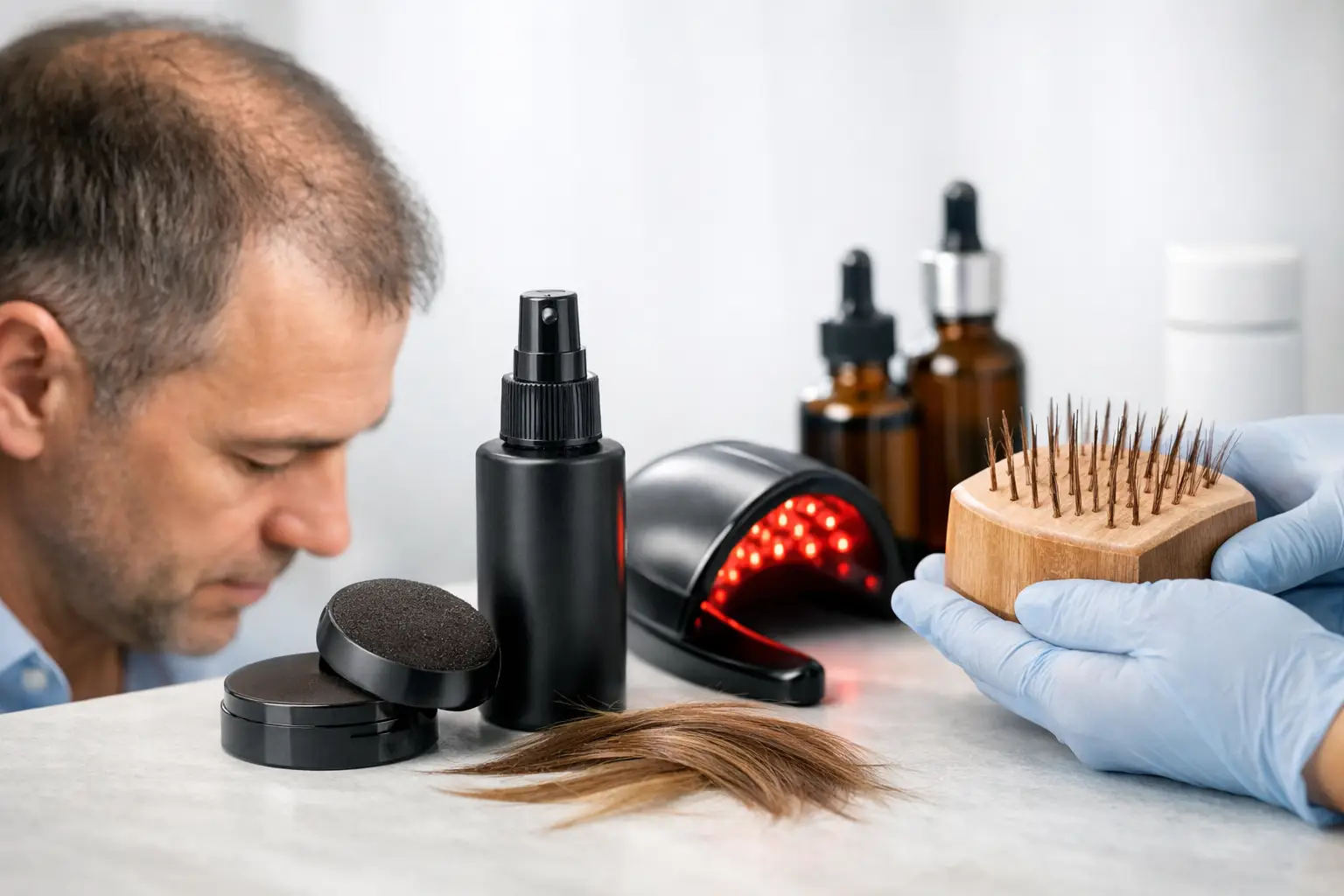
A widening part, more scalp visible under overhead lighting, or a receding hairline can feel like a major change long before anyone else notices it. The best options for thinning hair are not one-size-fits-all products or procedures. They are medically guided solutions chosen according to the cause of shedding, the pattern of loss, the quality of your donor hair, and the outcome you want to see.
For many patients, early treatment makes a meaningful difference. Thinning hair can often be slowed, stabilized, and improved, especially when a personalized plan begins before follicles become permanently inactive.
Start by Finding the Cause of Hair Thinning
Hair thinning is a symptom, not a diagnosis. The most common cause in adults is androgenetic alopecia, often called male- or female-pattern hair loss. It is influenced by genetics and hormones and typically progresses gradually. Men may notice recession at the temples or thinning at the crown, while women often experience a broader part line and reduced density across the top of the scalp.
Other causes need a different approach. Stress, rapid weight changes, illness, thyroid conditions, iron deficiency, certain medications, postpartum hormonal shifts, tight hairstyles, and inflammatory scalp conditions can all trigger shedding. A treatment that works well for pattern hair loss may not address these factors.
A professional consultation should include a close scalp and hair assessment, a review of your health history, and, when appropriate, laboratory testing. This step protects you from spending time and money on treatments that do not match what your hair actually needs.
Best Options for Thinning Hair in the Early Stages
When follicles are still producing fine, miniaturized hairs, non-surgical treatment may help preserve and strengthen them. Results take consistency. Hair grows slowly, so most treatments need several months before changes in shedding, thickness, or density become clear.
Medical hair loss therapy
Prescription and topical treatments can be an important first-line option for suitable patients with pattern hair loss. Topical minoxidil is commonly used to encourage follicles to remain in the active growth phase longer. It can be appropriate for both men and women, though the right strength, formulation, and routine should be selected with medical guidance.
Oral medications that address hormone-related hair loss may also be considered for some patients. These treatments can be effective, particularly for men with progressive androgenetic alopecia, but they are not right for everyone. Potential side effects, medical history, family-planning considerations, and pregnancy risks must be discussed carefully with a qualified provider.
The trade-off is straightforward: medical therapy can help maintain native hair and may improve density, but it generally requires ongoing use. Stopping treatment can allow genetically driven hair loss to resume.
PRP and PRF treatments
Platelet-rich plasma, or PRP, uses a concentrated portion of your own blood that contains growth factors. After a blood draw, the plasma is prepared and carefully injected into targeted areas of the scalp. PRF, or platelet-rich fibrin, is a related treatment designed to provide a more gradual release of biologically active components.
These treatments are often chosen by patients who want a non-surgical way to support weak or thinning follicles. They may be used alone in early hair loss or alongside medical therapy and hair transplant treatment. A series of sessions is typically recommended, followed by maintenance based on your response and degree of hair loss.
PRP and PRF are not instant-density treatments, and they cannot recreate follicles in an area that has been bald for years. Their strongest role is supporting existing, living follicles and improving the environment of the scalp.
Scalp health and customized care
Healthy hair growth depends on a healthy scalp. Flaking, irritation, excess oil, inflammation, and product buildup can make shedding feel worse and may interfere with the comfort of other treatments. A customized program may include medical-grade scalp care, nutritional guidance when a deficiency is identified, and realistic recommendations around styling habits.
Be cautious with dramatic claims from shampoos, oils, supplements, and social-media trends. A shampoo can improve scalp condition and hair appearance, but it does not replace medical treatment for genetic hair loss. Supplements are useful when a real nutritional need exists, not as a universal answer to every form of thinning.
When Advanced Regenerative Treatments May Help
Some patients are interested in newer regenerative approaches, including exosome-based treatments. These options are intended to support the scalp environment and follicular activity, often as part of a broader hair restoration strategy.
The appropriate use of regenerative treatments depends on the product, protocol, clinical evidence, and local regulatory standards. They should never be presented as a guaranteed replacement for proven medical therapy or transplantation. A responsible provider will explain what is known, what is still evolving, and whether the treatment is suitable for your specific stage of loss.
For patients who have tried conventional options without enough improvement, an individualized discussion can clarify whether an advanced treatment has a reasonable role in their plan.
FUE Hair Transplant for Permanent Density
When an area has lost a significant number of follicles, hair transplantation may offer the most visible and lasting improvement. In an FUE hair transplant, individual follicular units are extracted from a donor area, usually the back or sides of the scalp, and placed into thinning or bald areas with attention to angle, direction, and natural hairline design.
Because transplanted follicles retain much of their resistance to pattern hair loss, they can continue growing long term. However, a transplant does not stop ongoing thinning in the surrounding native hair. This is why a strong treatment plan often combines surgery with medical or regenerative support to protect the hair you still have.
A successful transplant depends on more than graft numbers. Donor supply is limited, and the design must account for your age, future hair-loss pattern, hair texture, facial proportions, and realistic density goals. An overly aggressive hairline may look appealing in the short term but can create challenges if hair loss continues later.
At A H T Aesthetic Medical Center, hair restoration planning is centered on natural-looking placement and a strategy that respects both present concerns and long-term hair preservation.
How to Choose the Right Treatment Path
The right choice depends on where you are in the hair-loss process. Patients with recent diffuse thinning may benefit most from diagnosis, medical treatment, and PRP or PRF. Those with stable recession or a clearly depleted crown may be stronger candidates for FUE transplantation. Many people need a combination rather than a single solution.
During a consultation, ask direct questions: What is causing my thinning? How much improvement is realistic? When should I expect to see change? Will I need ongoing maintenance? What are the risks, recovery expectations, and total treatment timeline?
Photographs taken in consistent lighting can also be helpful. Hair density changes gradually, and progress is easier to evaluate when you compare standardized images rather than relying on day-to-day impressions in the mirror.
Do Not Wait for Severe Hair Loss to Seek Advice
Waiting is understandable. Many people hope a new shampoo, haircut, or supplement will solve the problem. But early action usually gives you more options because it focuses on protecting follicles that are still active.
The goal is not to chase an unrealistic version of your hair from ten years ago. It is to create a plan that fits your biology, lifestyle, and confidence goals – whether that means reducing shedding, restoring a fuller appearance, or rebuilding a natural hairline. A thoughtful consultation can turn uncertainty into a clear next step.
Ready to explore your hair restoration options?
Complete a free Hair Analysis or book a consultation with AHT Aesthetic Medical Center in Dubai.
Ready to explore your hair restoration options?
Complete a free Hair Analysis or book a consultation with AHT in Dubai.