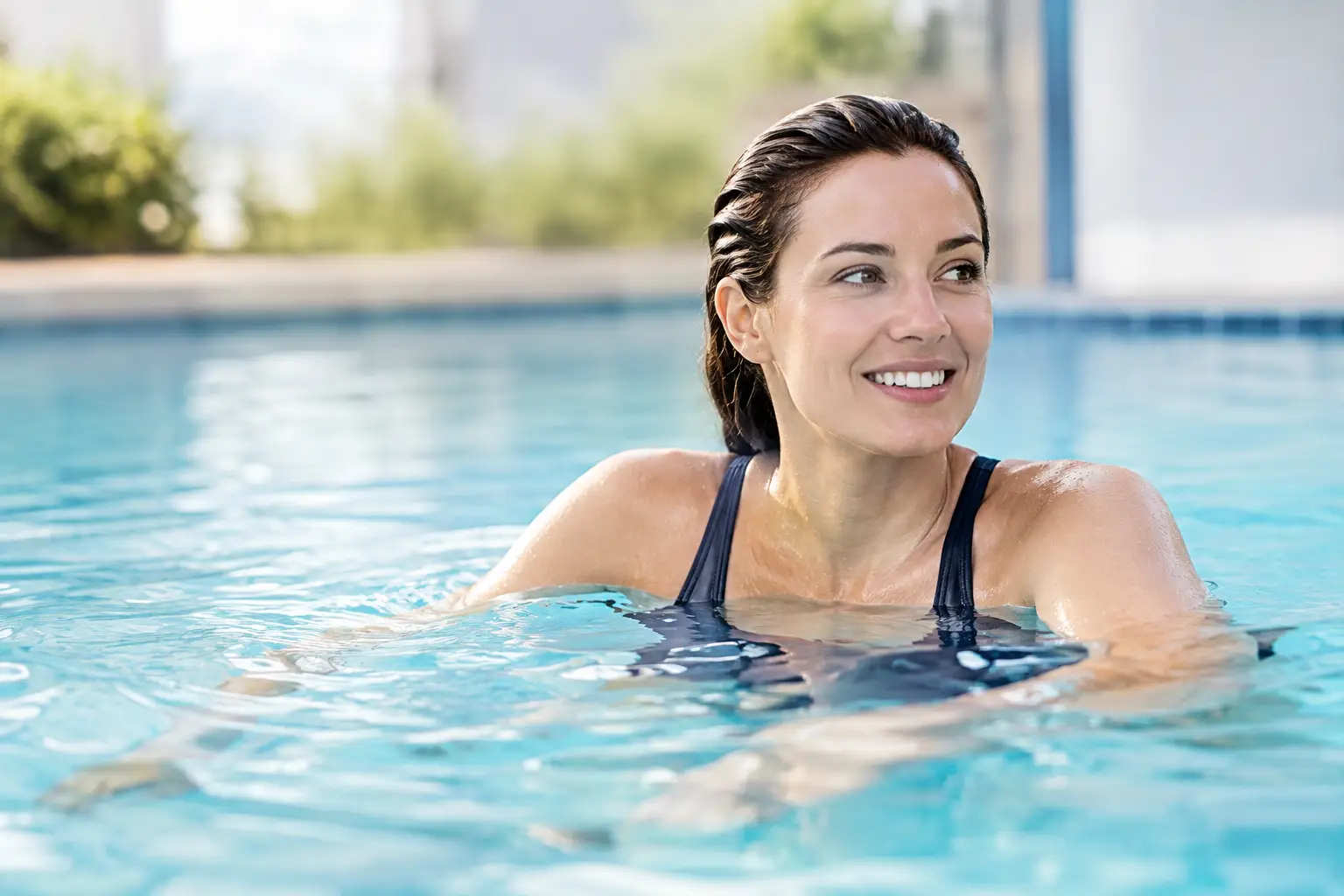
A pool day can feel especially tempting in Dubai’s heat, but the first days after a hair transplant are not the time to test your new grafts. Can grafts survive swimming? Once they have properly anchored, yes. The concern is not that water will instantly destroy successful grafts. It is that early swimming can expose healing skin to infection, chemicals, friction, and swelling when the transplanted area is still vulnerable.
A safe return to swimming depends on your healing progress, the type of water, and the instructions from your hair transplant surgeon. For most patients, waiting is a short-term compromise that protects a result designed to last for years.
Can Grafts Survive Swimming in the First Two Weeks?
In the first 7 to 10 days, transplanted follicular grafts are still establishing themselves in their new blood supply. During this period, even ordinary activities need care. Direct water pressure, rubbing with a towel, a tight swim cap, or accidental contact with the pool edge can disturb scabs and irritate the recipient area.
Swimming also means prolonged exposure to water that may not be clean enough for healing skin. Chlorinated pool water can dry and irritate the scalp. Hot tubs add heat and bacteria concerns. In the sea, saltwater, sand, and natural microorganisms can aggravate small healing wounds. These risks matter more after Sapphire FUE and other FUE procedures because the scalp has many tiny recipient and donor-site openings while it heals.
For this reason, patients should generally avoid swimming, submerging the head, and water sports for at least two weeks after a hair transplant. Your surgeon may recommend a longer wait based on the density of your transplant, the condition of your scalp, or any signs of delayed healing.
Why Early Swimming Can Affect Recovery
The graft itself is only one part of recovery. The recipient skin, donor area, and scabs all need time to heal. Swimming too soon can create problems that affect comfort and, in uncommon cases, the final cosmetic result.
The main issue is infection. Pools are treated, but they are not sterile. Ocean and beach water can contain bacteria and other contaminants, while hot tubs can be particularly unsuitable for fresh surgical sites. An infection may cause redness, tenderness, discharge, or delayed healing. It should always be assessed promptly by your medical team.
Chlorine is another consideration. It is useful for maintaining pool hygiene, but it can irritate healing skin and increase dryness or itching. Scratching a healing scalp can loosen scabs before they are ready to shed naturally. Saltwater may sting and dry the scalp, while sand can lodge around healing follicles and create friction when removed.
Sun exposure often comes with swimming, and that creates a separate concern. A newly transplanted scalp is sensitive to heat and UV exposure. Strong sun can worsen redness and swelling and may contribute to uneven pigmentation in healing skin. In the UAE, this can be relevant even outside peak summer hours.
A Practical Timeline for Returning to Water
Your own post-procedure plan takes priority, but the following timeline gives a realistic framework for many hair transplant patients.
Days 1 to 7: Keep the Scalp Dry Except for Approved Washing
Do not swim or submerge your head. Follow the clinic’s washing protocol precisely, using gentle pouring or low-pressure rinsing only when instructed. Avoid showers with strong water pressure directed at the recipient area.
Sweating should also be minimized during this stage. That means postponing intense gym sessions, sauna visits, and outdoor activities that leave the scalp hot and damp. Light walking is usually a better choice if your surgeon has cleared it.
Days 8 to 14: Healing Continues, but Swimming Still Waits
Scabs may begin to loosen and shed during this period. Do not pick them, rub them away, or use a swim cap to hide them. Although grafts are becoming more secure, the skin remains sensitive and exposure to pool chemicals or open water is not worth the risk.
Many patients feel almost back to normal by the second week, which is exactly why they may be tempted to resume every routine at once. Feeling well is encouraging, but the scalp’s surface healing still needs respect.
After Two Weeks: Ask Before You Return
Some patients may be cleared for a brief, gentle swim after two weeks if the scalp is fully healed, there is no persistent redness or crusting, and their surgeon agrees. This is not a universal rule. Patients with slower healing, a large treatment area, or irritation may need more time.
A cautious approach is especially sensible for chlorinated pools, hot tubs, and the sea. Many surgeons prefer patients to wait closer to three or four weeks before prolonged swimming or water sports. If you are traveling or planning a beach holiday, discuss the date before your procedure so your treatment plan and recovery schedule can be coordinated properly.
Which Type of Swimming Has the Most Risk?
Not all water exposure is equal. A clean, private pool may be less unpredictable than open sea water, but it still contains chlorine and is not sterile. Public pools carry more potential exposure because of heavy use and varying maintenance standards.
Hot tubs deserve extra caution. Their warm temperatures and shared water can promote bacterial growth, while heat can increase scalp swelling and discomfort. They are usually the last option to reintroduce after a hair transplant.
The ocean brings a different set of concerns: salt, waves, sand, sun, and microorganisms. Even if you keep your head above water, splashing and windblown sand can irritate the scalp. Water sports such as jet skiing, surfing, and diving add the risk of impact, helmets, tight straps, and falls. These are best postponed until your surgeon confirms that both the grafts and donor area are fully recovered.
How to Protect Your Results When You Resume Swimming
When your surgeon clears you to swim, ease back in rather than making your first session a long day in the water. Keep the first exposure short, avoid diving, and do not wear anything that rubs or compresses the transplanted area unless your provider has specifically approved it.
Rinse your scalp gently with clean, lukewarm water afterward and use only the shampoo or products recommended for your stage of recovery. Pat the area dry rather than rubbing it. If sun exposure is unavoidable, ask your provider when a loose, clean hat and scalp-appropriate sun protection can be used safely.
Pay attention to changes after swimming. Increasing pain, warmth, redness, swelling, unusual itching, a rash, or any discharge should not be ignored. Contact your clinic rather than trying to treat a possible infection with over-the-counter products.
Common Questions About Swimming After a Hair Transplant
Can I wear a swim cap after a hair transplant?
Not in the early recovery period. A swim cap can create pressure and friction against fresh grafts and scabs. Once healing is complete, your surgeon can advise when it is safe to wear one and what fit is appropriate.
Can I go to the beach if I do not swim?
You can often visit the beach without entering the water once you feel comfortable, but sun, heat, sand, and sweat still require care. Avoid direct sunlight on the recipient area and follow your clinic’s instructions on hats and sun protection.
What if I accidentally get my head wet?
A brief accidental splash is not usually a reason to panic. Do not scrub or rub the scalp. Gently follow your post-operative cleansing instructions, then contact your clinic if the area was soaked, hit, or begins to bleed or feel unusually sore.
A successful transplant is built through precise surgical technique and careful recovery. Giving your scalp a few extra weeks away from the pool or sea is a small decision that supports the natural, lasting outcome you came for. If swimming is part of your routine or travel plans, raise it during your consultation so your recovery advice can be tailored to you.
Ready to explore your hair restoration options?
Complete a free Hair Analysis or book a consultation with AHT Aesthetic Medical Center in Dubai.
Ready to explore your hair restoration options?
Complete a free Hair Analysis or book a consultation with AHT in Dubai.