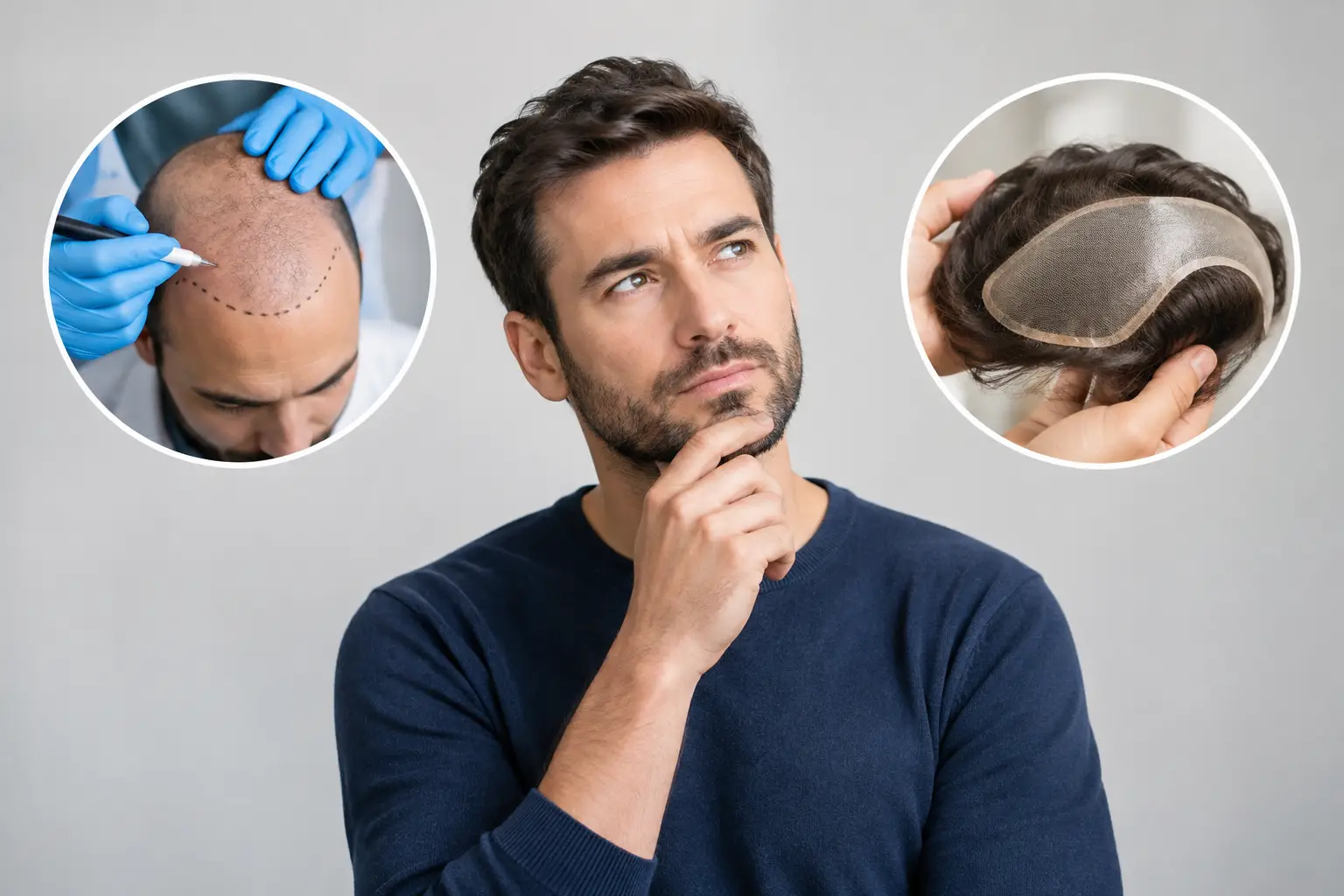
A receding hairline can change how you approach a mirror, a meeting, or a photograph. When comparing a hair transplant versus hair system, the real question is not which option is universally better. It is which one matches your hair-loss pattern, lifestyle, expectations, and willingness to commit to ongoing care.
A hair system can create immediate density without surgery. A hair transplant uses your own growing hair to create a permanent improvement in the right candidate. Both can look convincing when handled properly, but they require very different commitments. Understanding those differences before deciding helps you invest in a result you can feel confident about.
Hair Transplant Versus Hair System: The Core Difference
A hair transplant is a medical procedure that relocates healthy hair follicles, usually from the back and sides of the scalp, to areas affected by thinning or baldness. With modern FUE and Sapphire FUE techniques, follicles are extracted individually and placed at carefully planned angles to recreate a natural-looking hairline and density. Once the transplanted follicles establish themselves, they continue to grow as your own hair.
A hair system, sometimes called a non-surgical hair replacement system, is a custom-made base with human or synthetic hair attached to it. It is secured to the scalp with adhesive, tape, clips, or another attachment method. It does not treat hair loss or grow from the scalp, but it can cover a large bald area immediately.
This distinction shapes nearly every other part of the decision: appearance over time, maintenance, recovery, cost, and suitability.
Results: Immediate Coverage or Natural Growth?
A hair system offers the fastest visible change. Once it is fitted and styled, it can provide a full-looking head of hair in one appointment. This may appeal to someone with extensive hair loss who has an upcoming event, does not want a procedure, or lacks enough donor hair for transplantation.
The trade-off is that the result relies on the system being fitted, cleaned, reattached, and eventually replaced. Heat, humidity, swimming, exercise, and scalp oils can affect its hold. In the UAE, where outdoor heat and active lifestyles are common, this maintenance deserves serious consideration. A system can still be a practical choice, but it works best when you are comfortable with regular upkeep.
A hair transplant requires patience. Transplanted hairs usually shed in the first few weeks, which is a normal part of the healing cycle. New growth often begins around three to four months, with clearer improvement at six to nine months. Final maturation can take 12 months or longer.
The advantage is authenticity. Because the hair grows from your scalp, you can wash it, cut it, style it, and wear it without concern about edges lifting or an attachment weakening. A well-designed transplant prioritizes a soft, age-appropriate hairline rather than an overly dense or artificial result.
Density expectations matter
A hair system can create more immediate density than a transplant, especially in a large area of hair loss. A transplant is limited by the number and quality of available donor follicles. A responsible medical plan protects the donor area and considers the possibility of future hair loss.
For this reason, a skilled surgeon may recommend restoring the frontal hairline and mid-scalp first, then considering a second session later if appropriate. This approach is more conservative, but it helps create results that remain balanced as you age.
Maintenance and Daily Life
For many patients, maintenance is the deciding factor. A hair system typically needs professional servicing every few weeks, depending on the attachment method, skin type, and daily routine. The base and hair also need replacement periodically because they do not grow or repair themselves. Daily care includes gentle washing, careful brushing, and avoiding products that may interfere with the adhesive.
There is no need for a lifelong attachment routine after a hair transplant. Following the procedure, patients have a short period of careful aftercare while grafts settle and the scalp heals. Your medical team will advise you on washing, sleeping position, exercise, sun exposure, and when to return to normal grooming. Once the transplanted hair is established, it is cared for like natural hair.
However, a transplant does not stop ongoing hereditary hair loss in untreated areas. Some patients benefit from PRP hair therapy or a personalized medical plan to support existing hair and help preserve the overall appearance. This is particularly relevant for younger patients and those with active thinning.
Cost: Upfront Investment Versus Ongoing Expense
A hair system often has a lower initial price than surgery, but the total cost can increase over time. Regular servicing, adhesives, cleaning products, and replacement systems are recurring expenses. Over several years, those costs may become substantial.
A hair transplant involves a higher upfront investment because it includes surgical planning, graft extraction, implantation, and medical aftercare. Yet when the procedure is performed well on a suitable candidate, the transplanted follicles are designed to provide long-term growth.
The right financial comparison is not simply the price of the first appointment. Consider what you are likely to spend and maintain over the next five to ten years. Also consider the value you place on permanence, convenience, and the ability to treat your hair as your own.
Who Is a Good Candidate for Each Option?
A hair system may be suitable for people who want immediate coverage, are not ready for surgery, have limited donor hair, or prefer a fully reversible option. It can also be useful as a temporary cosmetic solution while someone explores long-term treatment.
Hair transplantation may be suitable for men and women with stable or reasonably predictable hair loss, healthy donor density, and realistic expectations. The best candidates understand that natural results depend on precise planning, graft handling, and a design that respects their facial proportions and future hair-loss pattern.
Women with diffuse thinning need particularly careful assessment. The cause may involve genetics, hormonal changes, nutritional factors, stress, or medical conditions. A detailed consultation can determine whether transplantation, PRP therapy, medical support, or a combination approach is most appropriate.
The importance of a personalized hairline plan
A transplant should never be treated as a one-size-fits-all procedure. Hair caliber, curl pattern, skin contrast, donor supply, age, and family history all affect the treatment plan. The goal is not to copy someone else’s hairline. It is to create a result that looks believable from close range and continues to suit you over time.
At AHT Aesthetic Medical Center, this planning is central to selecting the right restoration approach. A proper evaluation should include donor-area assessment, scalp examination, a discussion of your health history, and an honest conversation about expected density and timeline.
How to Make the Decision With Confidence
Ask yourself what you need most right now. If instant volume and a non-surgical option are your priorities, a high-quality hair system may meet your needs. Be realistic about the maintenance it requires and choose an experienced provider who can match the system to your hair texture, skin tone, and lifestyle.
If you want a long-term solution using your own hair, and you have suitable donor follicles, a hair transplant may be the more satisfying path. It requires recovery time and patience, but many patients prefer the freedom that comes with growing, styling, and living with their own transplanted hair.
A professional consultation should leave you clearer, not pressured. The best choice is the one that feels sustainable months and years after the initial change, whether that means immediate coverage today or a carefully planned path toward lasting natural growth.
Ready to explore your hair restoration options?
Complete a free Hair Analysis or book a consultation with AHT Aesthetic Medical Center in Dubai.
Ready to explore your hair restoration options?
Complete a free Hair Analysis or book a consultation with AHT in Dubai.