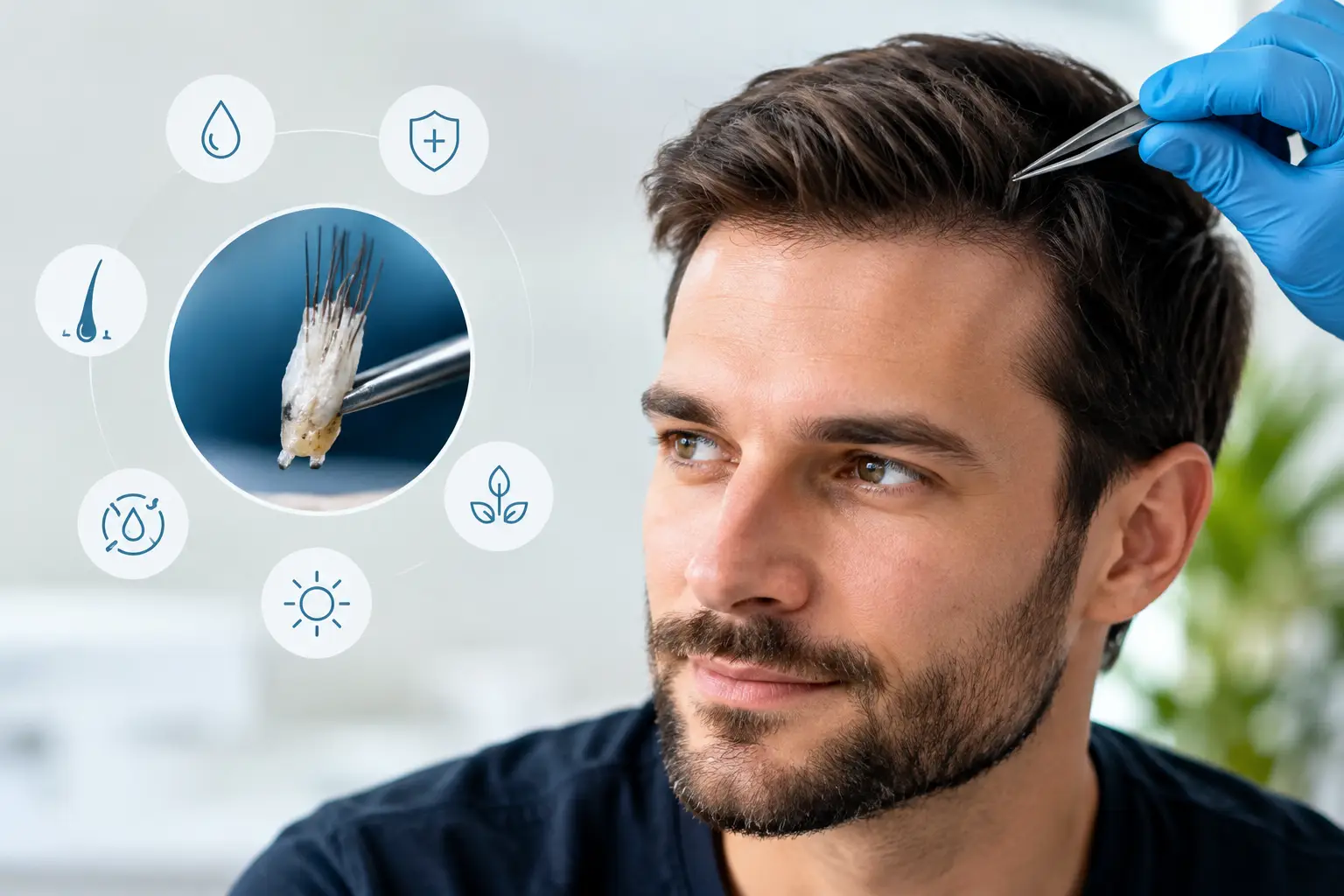
A successful hair transplant is not measured on procedure day. It is measured months later, when transplanted follicles establish a blood supply, enter a new growth cycle, and begin producing hair that blends naturally with the surrounding area. Graft survival factors affect every step of that process, from the way follicles are harvested to how carefully you protect your scalp during recovery.
For patients considering hair restoration, understanding these factors can replace uncertainty with realistic expectations. While no ethical clinic can promise that every graft will grow, precise planning, experienced medical care, and consistent aftercare can create the strongest conditions for healthy, lasting results.
What Does Graft Survival Mean?
A graft is a tiny unit of tissue containing one or more hair follicles. During an FUE or Sapphire FUE hair transplant, grafts are carefully extracted from the donor area, usually at the back or sides of the scalp, then placed into thinning or bald areas.
For a graft to survive, the follicle must remain healthy throughout extraction, handling, implantation, and healing. Once implanted, it needs to connect with the recipient area’s blood supply. The transplanted hairs commonly shed within the first few weeks, which can be alarming but is usually a normal part of the process. The follicles remain beneath the skin and typically begin producing new hair several months later.
Survival is not just about the number of grafts placed. It is about protecting the quality of each graft and placing it where it has the best opportunity to grow in the correct direction, density, and pattern.
Graft Survival Factors During the Procedure
Careful donor-area assessment
The donor area has a limited supply of follicles. A qualified physician evaluates its density, hair caliber, scalp characteristics, and long-term stability before recommending a graft count. Taking too many grafts can thin the donor area and may compromise the appearance of future restoration options.
This is particularly relevant for younger patients or those with progressive hair loss. A conservative, personalized plan may be more appropriate than pursuing maximum density in a single session. The goal is to create a natural result that continues to look balanced as your hair loss pattern changes over time.
Gentle extraction and graft handling
Hair follicles are delicate. Excessive force, dehydration, poor handling, or prolonged time outside the body can reduce their viability. Skilled extraction techniques help minimize trauma to the follicle and surrounding tissue.
After extraction, the clinical team must keep grafts properly hydrated, organized, and protected until placement. This detail may not be visible to a patient during surgery, but it is central to quality control. Advanced tools can support precision, yet the experience and discipline of the medical team remain equally important.
Recipient-site design and placement
A graft needs more than a place in the scalp. It needs a properly prepared recipient site with appropriate depth, angle, and spacing. If sites are made too close together, too deeply, or at an unnatural angle, the result may affect both graft growth and cosmetic appearance.
The hairline requires especially careful design. A natural hairline is not a straight row of identical grafts. It has soft irregularity, gradual density, and angles that follow the patient’s facial features and existing hair. For crown restoration, placement must account for the natural swirl pattern. The same principle applies to beard and eyebrow transplantation, where direction and angle are essential to an undetectable result.
Your Health Can Influence Healing
A hair transplant is a surgical procedure, and your general health matters. Good circulation and healthy skin support the early healing environment that transplanted follicles need.
Smoking and nicotine use can constrict blood vessels and reduce oxygen delivery to healing tissue. Many clinics advise stopping nicotine before and after the procedure for this reason. Alcohol, dehydration, poor sleep, and unmanaged stress can also make recovery more difficult, even if they do not determine the outcome on their own.
Medical conditions should be discussed openly during consultation. Diabetes, bleeding disorders, autoimmune conditions, scalp inflammation, and certain medications may require additional planning or medical clearance. Patients taking blood thinners should never stop medication without guidance from the prescribing physician.
Nutrition is another practical consideration. A restrictive diet or a deficiency in iron, vitamin D, protein, zinc, or other nutrients can contribute to hair shedding and may affect overall hair quality. Supplements are not a replacement for diagnosis. When thinning has an underlying medical or hormonal cause, addressing it alongside transplantation is often the wiser path.
Aftercare Protects Newly Placed Grafts
The first 10 to 14 days are a critical period. Newly implanted grafts are still settling, so friction, pressure, and accidental scratching can dislodge them. Your clinic should provide clear instructions tailored to your procedure and scalp condition.
In the first days, patients are commonly advised to sleep with the head elevated, avoid touching the recipient area, and follow the recommended washing technique. Gentle cleansing helps manage dried blood and crusting without disturbing grafts. Do not pick at scabs, even when itching begins.
Exercise also requires patience. Light walking may be appropriate soon after treatment, but strenuous workouts, swimming, sauna use, and activities that cause heavy sweating are typically restricted for a period set by your medical team. In Dubai’s heat, protecting the scalp from direct sun exposure and avoiding overheating can be especially relevant during early recovery.
A clean, loose-fitting button-front shirt is a simple but useful choice for procedure day and the days after. Pulling a shirt over your head can create unnecessary contact with the newly implanted area. Small precautions like this are not complicated, but they can make a meaningful difference during the vulnerable early stage.
Managing Expectations During the Growth Timeline
Hair transplant growth is gradual. In many cases, the transplanted hairs shed before new growth begins. Early growth may appear fine, uneven, or slower in some areas. Density and hair caliber improve as follicles mature, with results commonly continuing to develop for 12 months or longer.
This timeline can vary based on the treatment area, hair characteristics, healing response, and extent of restoration. Crown areas sometimes mature more slowly than hairlines. Curly or coarse hair may create a fuller visual effect with fewer grafts, while fine hair may require a different density strategy. These are not signs that one result is better than another. They are reasons personalized planning matters.
PRP hair therapy may be recommended for selected patients as part of a broader hair restoration plan. It is not a substitute for proper surgical technique or aftercare, but it may support scalp health and existing hair when clinically appropriate.
Choosing the Right Team Matters Most
The most influential graft survival factors are often decided before surgery begins. A thorough consultation should examine your hair loss pattern, donor capacity, family history, scalp health, goals, and expectations. It should also explain what the procedure can realistically achieve and when a non-surgical approach, such as PRP therapy, medication management, or observation, may be the better first step.
At AHT Aesthetic Medical Center, hair restoration planning is built around the individual rather than a one-size-fits-all graft number. The priority is to preserve donor resources, use advanced techniques appropriately, and create a result that looks natural from every angle.
The best next step is a professional assessment that gives you clear answers about your donor area, treatment options, and expected timeline. With an experienced team and careful recovery habits, you can give every transplanted graft the strongest possible environment to grow.
Ready to explore your hair restoration options?
Complete a free Hair Analysis or book a consultation with AHT Aesthetic Medical Center in Dubai.
Ready to explore your hair restoration options?
Complete a free Hair Analysis or book a consultation with AHT in Dubai.