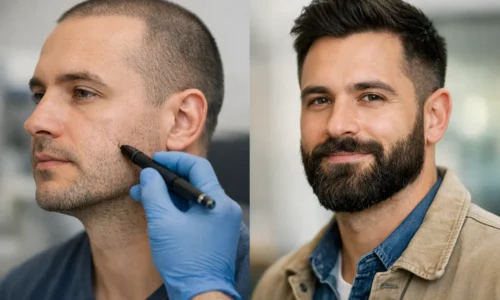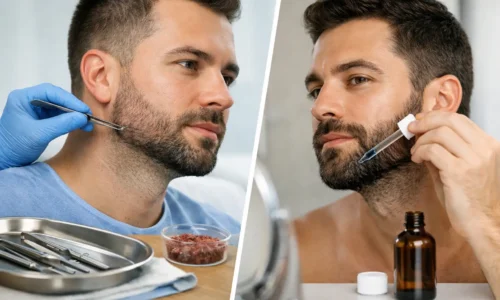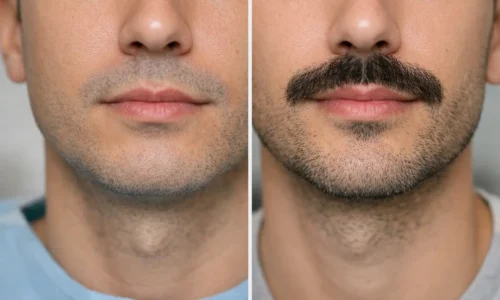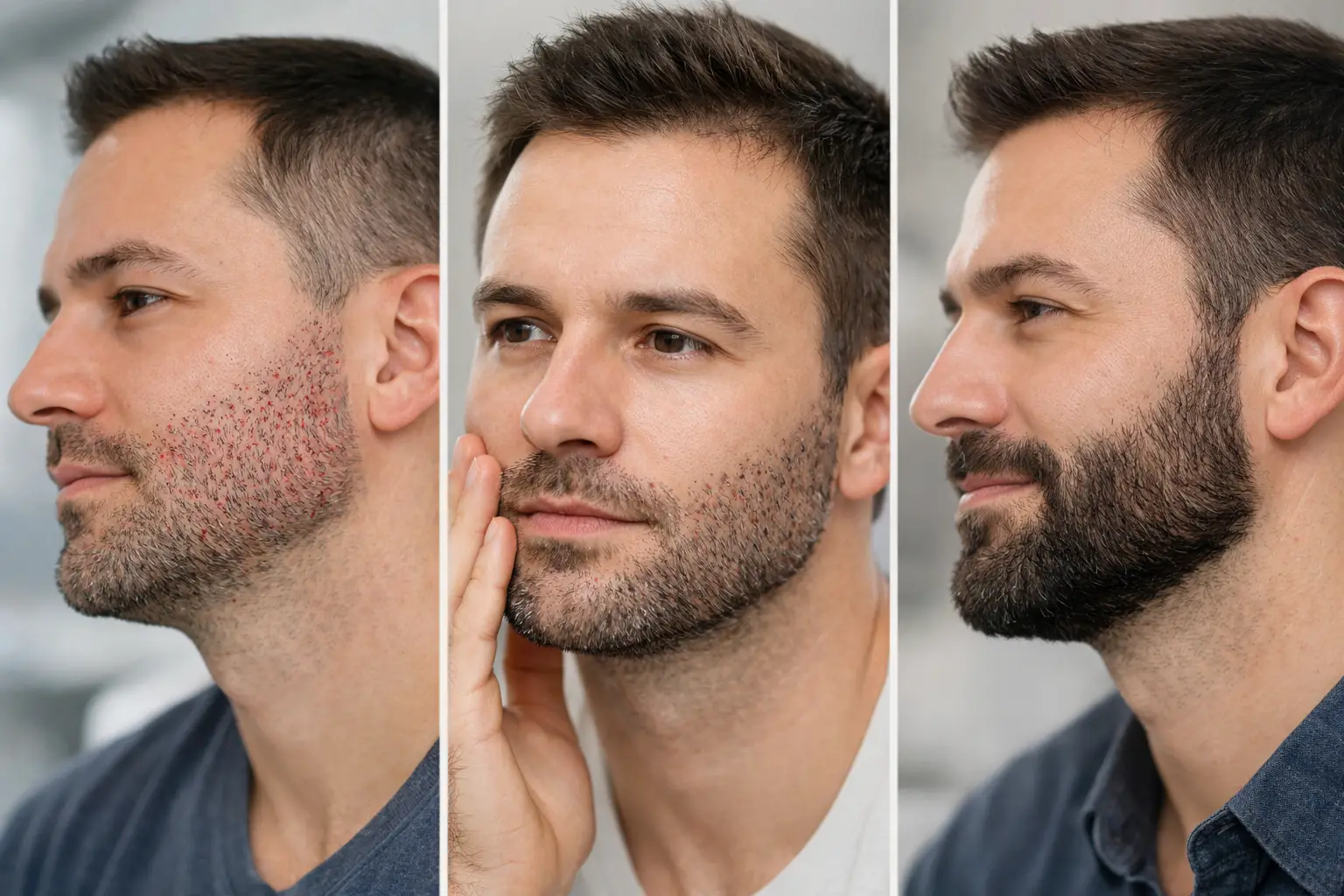
The first week after a beard transplant is usually the part patients think about most – and for good reason. You are looking closely at your face, watching every scab, every bit of redness, and every new change. Understanding beard transplant healing stages can take a lot of the stress out of recovery because most of what you see early on is temporary, expected, and part of normal healing.
A beard transplant is a precise procedure, but healing is not always identical from one patient to the next. Skin type, graft count, shaving habits, aftercare, and individual healing speed all affect how recovery looks. What matters is knowing the general timeline, recognizing what is normal, and understanding when to check in with your clinic.
Beard Transplant Healing Stages: What to Expect First
The earliest stage starts immediately after the procedure. Tiny grafts are placed into the beard area, and each site needs time to settle. At the same time, the donor area, often the back of the scalp, begins its own healing process. For most patients, the face looks more noticeable than it feels. Mild swelling, redness, pinpoint scabbing, and tenderness are common during the first few days.
This stage can feel visually dramatic even when recovery is going well. That is one reason good aftercare instructions matter so much. Touching, rubbing, picking, or shaving too soon can interfere with graft survival. The goal in these first days is simple – protect the grafts while your skin starts repairing itself.
Days 1 to 3
During the first 72 hours, the grafts are at their most delicate. You may see small crusts forming around each implanted follicle. The area can look dotted, slightly red, and uneven. Some patients also notice mild swelling around the cheeks or under the jawline, although this varies.
Discomfort is usually manageable. A beard transplant is generally considered minimally invasive, so most patients describe the feeling as soreness or tightness rather than significant pain. The donor area may feel more tender than the beard itself.
At this point, your focus should be on following washing instructions exactly, sleeping in the recommended position if advised, and avoiding anything that creates friction or sweat around the treated area.
Days 4 to 7
By the middle to end of the first week, the transplanted area often starts to look drier as the scabs mature. Redness may still be present, but it usually begins to soften. This is the phase when many patients are tempted to speed things up by scrubbing or peeling away the crusts. That should be avoided unless your medical team has told you it is time and shown you how to wash the area safely.
Most scabs start lifting naturally within about 7 to 10 days. Once that happens, the beard area often looks less obvious in public, although the skin can still appear pink for a bit longer, especially in patients with lighter or more reactive skin.
The Shedding Phase Often Causes Unnecessary Worry
One of the most misunderstood beard transplant healing stages happens after the first visible healing settles down. Patients often expect the transplanted hairs to keep growing continuously from day one. In reality, many of those hairs shed.
This usually starts around week 2 to week 4. The follicle remains in place under the skin, but the visible hair shaft may fall out. This is a normal response to the stress of transplantation. It does not mean the graft failed.
Shedding can be frustrating because the area may briefly look patchier than expected. For some patients, this is the point where anxiety peaks. The skin looks healed, but the cosmetic result is not there yet. That gap between procedure and visible growth is part of the process, not a sign that something has gone wrong.
Weeks 2 to 4
At this stage, most surface signs of healing have improved significantly. Scabs are usually gone or nearly gone. Redness may persist mildly, but many patients feel comfortable returning to normal social and work routines.
What changes now is less about the skin and more about the hair cycle. The transplanted follicles enter a resting phase before new growth begins. You may still notice small bumps or occasional sensitivity, especially if your skin is prone to irritation, but major healing concerns should be fading.
Beard Transplant Healing Stages in the First 3 Months
Months 1 through 3 can test your patience. Externally, it may seem like very little is happening. Internally, the follicles are establishing themselves and preparing for a new growth cycle. This period is quieter than the first week, but it is just as important.
Some patients see early sprouting before the three-month mark, while others need more time. Neither pattern is automatically better. Hair growth after transplant is rarely perfectly even. One side may appear fuller before the other. Certain areas, such as the mustache or cheek line, may also seem slower depending on blood supply, skin characteristics, and graft placement.
This is why realistic expectations matter. A beard transplant does not produce a finished result overnight. It produces a staged result that improves gradually.
Months 2 to 3
Around this point, the first new hairs may begin to appear. They are often finer, softer, and lighter at first. Texture can look irregular in the beginning, which is normal. New transplanted facial hair usually matures over time.
You may also notice uneven density during this phase. That does not necessarily mean you need a second procedure. Early growth is often inconsistent before it becomes fuller and more balanced.
When the Beard Starts Looking More Natural
The turning point for many patients comes between months 4 and 6. This is when visible progress often becomes easier to appreciate in the mirror. New growth becomes more consistent, and the beard starts blending better with existing facial hair.
At this stage, grooming becomes more relevant. Once your surgeon confirms it is safe, trimming and shaping can help the developing beard look more intentional. Still, it is wise to be patient with aggressive styling. The final density and direction of growth are still evolving.
From a results standpoint, this is often the phase where patients feel reassured that the procedure was worthwhile. The beard begins to frame the face more naturally, and patchy areas start filling in. If your goal was stronger cheek coverage, a more defined jawline, or better mustache continuity, this is usually when those improvements begin to show.
Months 4 to 6
Hair shafts generally become thicker and more beard-like during this period. You may need to shave or trim more regularly as the transplanted follicles become active. Some wiry or uneven texture can still happen early on, but this tends to improve as growth cycles normalize.
If a section seems behind schedule, your clinic may simply advise more time. Beard growth is not perfectly synchronized, and slower areas can catch up later.
Full Results Can Take 9 to 12 Months
Most patients need close to a year to judge the final outcome properly. By months 9 to 12, the transplanted hairs have usually matured in thickness, consistency, and overall appearance. The beard should look more integrated with the rest of your facial hair and respond more normally to grooming.
This is also when density can be assessed more accurately. If a patient is hoping for very high fullness or has naturally coarse facial hair, expectations should be discussed in advance. In some cases, one session creates an excellent natural improvement. In others, especially when larger areas are being rebuilt, a second session may be considered later for added density. That is not a failure – it is often a matter of design goals and available donor hair.
What Can Affect Healing Speed?
Healing is not only about the procedure itself. It is also about how your body responds. Smoking, poor aftercare, premature shaving, sun exposure, and skin irritation can all interfere with smooth recovery. On the other hand, careful washing, protecting the area, and attending follow-up visits support better healing.
Skin tone and sensitivity can change how recovery looks as well. Some patients lose redness quickly, while others stay pink for several weeks. Patients with acne-prone or reactive skin may have more inflammation or occasional bumps during regrowth. These differences are usually manageable, but they reinforce the value of personalized follow-up.
An experienced clinic will also plan graft angles and placement carefully, which affects not only how the beard looks later but how comfortably the area heals in the short term.
When to Contact Your Clinic
Most signs during beard transplant healing stages are expected, but a few deserve medical review. Increasing pain, spreading redness, pus, fever, or significant swelling that worsens instead of improving should be checked. The same applies if you accidentally disturb a large number of grafts early in recovery.
It is always better to ask than to guess. Reassurance is part of good patient care, especially when healing happens on such a visible part of the face.
A beard transplant asks for patience before it rewards you with visible change. If you understand the stages, follow aftercare closely, and give the follicles time to settle and grow, the process feels far less uncertain – and the result far more worth waiting for.