Most patients do not start by asking about scalp design or graft angles. They start with a mirror, a widening part line, a receding hairline, or a thinning crown that seems harder to hide every month. If you are researching how hair transplant surgery works, you are usually trying to answer a practical question: can this give me my hair back in a way that looks natural and feels worth it?
The short answer is yes, for the right candidate and with the right plan. Hair transplant surgery is a medical procedure that moves healthy hair follicles from one part of the scalp to another. The goal is not to create brand-new hair. The goal is to redistribute follicles that are genetically more resistant to shedding and place them where density has been lost.
How hair transplant surgery works in simple terms
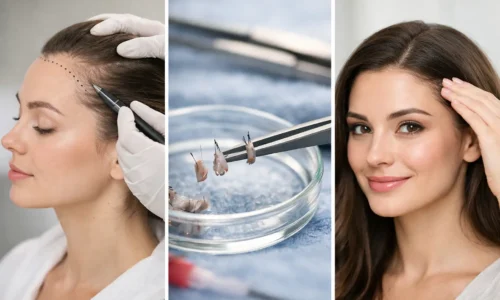
A hair transplant uses your own hair. In most cases, follicles are taken from the back or sides of the scalp, often called the donor area. These hairs are typically more stable over time because they are less affected by the pattern of hair loss seen in male and female pattern thinning.
Those follicles are then carefully prepared and transplanted into the recipient area, which may include the hairline, temples, mid-scalp, or crown. Once the grafts heal into place, the follicles begin producing hair in their new location.
That sounds straightforward, but the quality of the result depends on much more than moving hair from point A to point B. Planning, graft handling, hairline design, density control, and placement direction all affect whether the outcome looks natural.
The consultation comes first
Before surgery is scheduled, a proper consultation matters more than many patients realize. Hair loss is not one-size-fits-all. Some people have a receding hairline with strong donor density. Others have diffuse thinning, medical hair loss, scarring, or active shedding that needs to be stabilized first.
During consultation, the medical team assesses your scalp, donor supply, hair characteristics, pattern of loss, and long-term goals. Hair caliber, curl, color contrast, and scalp flexibility can all influence the plan. A person with thick, wavy hair may achieve the look of fullness with fewer grafts than someone with very fine, straight hair.
This stage is also where realistic expectations are set. A transplant can improve density and shape, but it cannot always restore the exact hair volume you had at 18. A strong plan focuses on what will look balanced, age-appropriate, and sustainable over time.
The two main methods used to collect grafts
There are two primary ways to harvest donor hair: FUE and FUT. Both can produce excellent results when performed well, but they work differently.
FUE
Follicular Unit Extraction, or FUE, removes individual follicular units directly from the donor area using a very small punch tool. Each unit usually contains one to four hairs. These grafts are then sorted and prepared for implantation.
FUE is popular because it does not require a long linear incision. It is considered minimally invasive, and tiny extraction points typically heal as small, less noticeable marks. Many patients prefer it for shorter hairstyles and a faster return to daily routines.
FUT
Follicular Unit Transplantation, or FUT, involves removing a thin strip of scalp from the donor region. That strip is then dissected under magnification into individual follicular units for transplant.
FUT can be useful in some cases because it may allow a high number of grafts to be collected efficiently. The trade-off is that it leaves a linear scar, which may matter if you wear your hair very short. Whether FUE or FUT is more suitable depends on your hair loss pattern, donor characteristics, and styling preferences.
At specialized clinics, FUE is often the preferred option for patients seeking minimally invasive treatment and natural-looking results with less visible scarring.
What happens on the day of surgery
Hair transplant surgery is usually performed under local anesthesia. That means the scalp is numbed, but you remain awake. Patients are often surprised by how manageable the procedure feels once the numbing is complete.
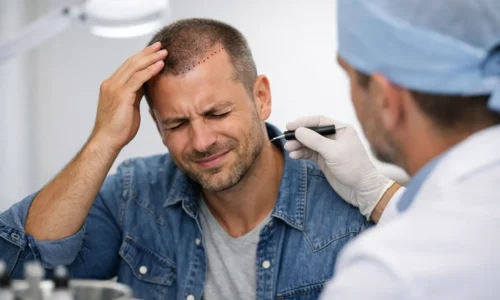
The day begins with preparation of the donor and recipient areas. Photos may be taken, the hairline or treatment zone is reviewed, and the scalp is cleaned. If needed, the donor area may be trimmed to allow precise extraction.
Once anesthesia takes effect, graft harvesting begins. In FUE, follicles are removed one by one with careful attention to angle and depth so the roots remain intact. In FUT, the strip is removed and then divided into grafts by the clinical team.
After harvesting, recipient sites are created in the thinning area. This is one of the most artistic and medically important parts of the procedure. The surgeon determines the angle, direction, and spacing of each site so the new growth follows a natural pattern. A hairline that is too straight, too low, or too dense in the wrong places can look unnatural even if the grafts survive.
The grafts are then placed into those sites. Single-hair grafts are often used at the front for softness and realism, while multi-hair grafts may be placed farther back to build density. This detail is one reason natural results depend heavily on experience and planning.
Why graft survival is such a big deal
Not every part of a transplant is visible to the patient, but graft handling behind the scenes matters enormously. Hair follicles are living tissue. They need to be extracted gently, stored properly, and implanted efficiently.
Excess trauma, dehydration, or poor technique can reduce survival rates. That is why experienced teams pay close attention to timing, temperature, handling methods, and placement precision. A transplant is not only about how many grafts are moved. It is about how many healthy grafts grow well afterward.
Healing and what to expect after surgery
The first few days are mostly about protecting the grafts and allowing the scalp to settle. Mild redness, swelling, tightness, and small scabs are common. Most of these early effects improve within one to two weeks.
Patients usually receive detailed aftercare instructions on washing, sleeping position, exercise limits, and how to avoid friction or accidental trauma. Following these instructions is part of protecting your investment.
One point that often causes anxiety is shedding. After the transplant, the newly placed hairs commonly fall out within the first few weeks. This is expected. The follicles remain in place under the skin, then enter a resting phase before producing new hair growth.
Visible regrowth usually starts around the three- to four-month mark, though timing varies. More noticeable improvement often appears between six and nine months, with continued maturation up to 12 months or longer. Crown areas sometimes take more time than the hairline.
Does a hair transplant look natural?
It can look extremely natural when the plan is customized and the technique is strong. The biggest factors are hairline design, graft placement, density strategy, and matching the transplant to your facial structure, age, and future hair loss pattern.
Natural does not always mean aggressive. In fact, one of the smartest decisions in hair restoration is often restraint. A mature, well-designed hairline usually ages better than a very low one. Good surgery respects both your current appearance and what may happen in the years ahead.
Who is a good candidate?
The best candidates usually have stable donor hair and a pattern of loss that can be improved with available grafts. Men with male pattern baldness are common candidates, but women can also benefit, especially when thinning is pattern-based and the donor area is strong.
It depends on the cause of the hair loss. If shedding is due to a medical condition, nutritional deficiency, scarring disorder, or active inflammation, treatment may need to come first. Some patients also benefit from combining transplant surgery with non-surgical support such as PRP-based therapy or medical hair loss management.
A transplant is also less ideal when expectations are unrealistic. If someone expects very high density from a very limited donor supply, the discussion needs to be honest. The best results come from matching the plan to what your scalp can actually deliver.
How many grafts do you need?
There is no universal number. Some patients need a smaller session to rebuild the front corners of the hairline. Others need a larger approach that includes the hairline, mid-scalp, and crown. The answer depends on the size of the area, the level of thinning, donor capacity, and the look you want to achieve.
A well-run consultation focuses less on selling a large graft count and more on building the right strategy. Sometimes that means doing one session now and preserving donor reserves for the future.
The result should fit your life, not just your scalp
The most successful hair transplant is not the one with the most dramatic before-and-after photo. It is the one that looks believable, heals well, and restores confidence without calling attention to the procedure itself. That takes medical skill, aesthetic judgment, and a treatment plan built around you.
At a specialist clinic such as A H T Aesthetic Medical Center, the value is not just in performing the procedure. It is in evaluating whether surgery is right, designing a result that suits your features, and guiding you through every stage with clarity and care.
If you are considering treatment, the best next step is not guessing from photos or forums. It is getting a professional assessment of your hair loss pattern, donor strength, and long-term options so your decision is based on what will truly work for you.