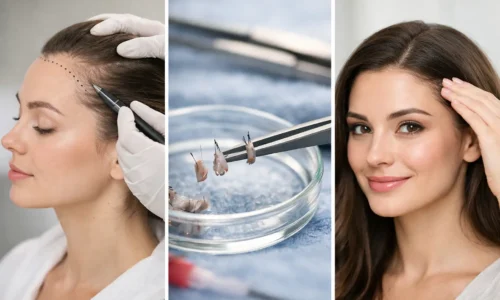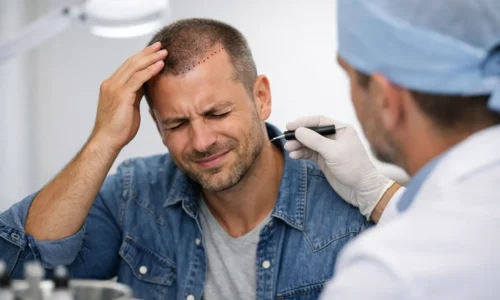
If you are searching for the best hair transplant technique, you are probably not looking for theory. You want to know what will give you natural density, the least visible signs of surgery, and a result that still looks right years from now. That is the real question, and the honest answer is that the best technique depends on your hair loss pattern, donor supply, hair characteristics, and expectations.
A good clinic should never push one method as the answer for everyone. Hair restoration is not one-size-fits-all. The technique matters, but planning matters just as much. Hairline design, graft placement, donor management, and the experience of the medical team all have a direct impact on how natural your outcome looks.
What is the best hair transplant technique?
For many patients today, FUE is considered the best hair transplant technique because it is minimally invasive, leaves tiny dot scars rather than a linear scar, and allows precise graft harvesting. It fits modern patient priorities well, especially for those who want shorter recovery, flexibility with hairstyles, and natural-looking results.
That said, FUE is not automatically the best option in every case. Some patients need a large number of grafts and may be better candidates for FUT, while others may benefit from DHI if the treatment plan calls for highly controlled implantation in specific areas. The right technique is the one that suits your scalp, hair type, and long-term restoration plan, not the one with the strongest marketing.
The main techniques compared
FUE
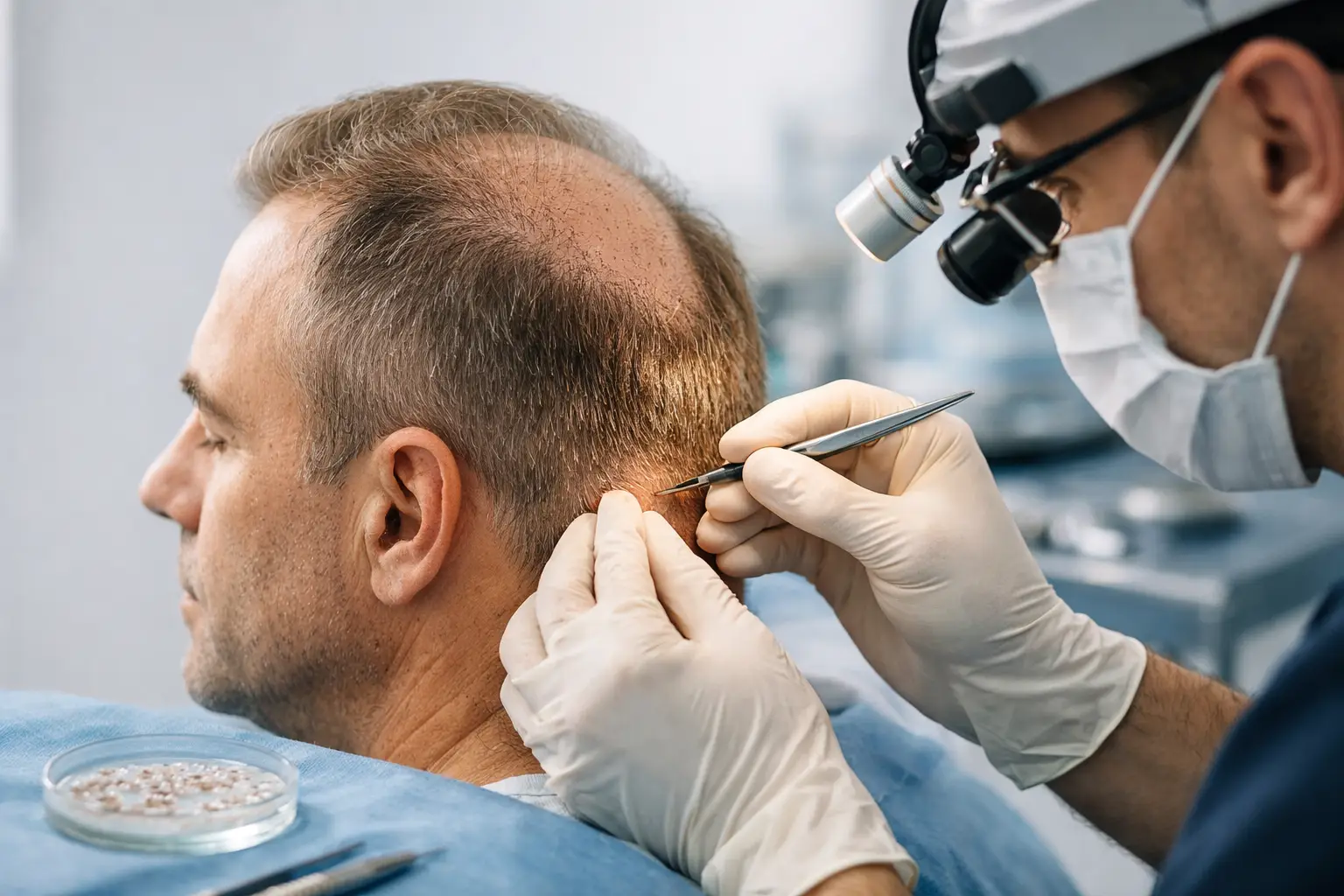
Follicular Unit Extraction, or FUE, involves removing individual follicular units from the donor area and implanting them into thinning or bald areas. This technique has become popular for good reason. It avoids the strip removal used in FUT, tends to heal quickly, and usually allows patients to wear shorter hair without a visible linear scar.
FUE works especially well for patients who want natural-looking hairline work, crown improvement, or beard and eyebrow restoration. It is also often preferred by people who value a less invasive experience. The trade-off is that FUE requires careful donor management. If it is done aggressively or by an inexperienced team, the donor area can look overharvested.
DHI
Direct Hair Implantation, or DHI, is often presented as a separate technique, though it is really a variation of FUE. The grafts are still extracted individually, but implantation is done using a specialized implanter pen rather than creating channels first and then placing grafts.
The appeal of DHI is control. In the right hands, it can help with angle, direction, and density placement, especially in detailed areas like the hairline, temples, eyebrows, or smaller zones of thinning. It may also be useful when working between existing hairs.
The downside is that DHI is not automatically superior just because it sounds more advanced. It is still highly dependent on surgeon planning and team skill. For larger sessions, some clinics may prefer standard FUE implantation because it can be more efficient without sacrificing quality.
FUT
Follicular Unit Transplantation, or FUT, involves removing a strip of scalp from the donor area, dissecting it into grafts, and then implanting those grafts where needed. FUT is older than FUE, but older does not mean obsolete.
For some patients, FUT remains a strong option, especially when a high graft count is needed and preserving donor resources is a priority. Because grafts are harvested from a strip, the surgeon may be able to obtain a large number of healthy follicles in one session.
The main drawback is the linear scar. Some patients do not mind this, especially if they wear their hair longer. Others want the freedom to keep the back and sides very short, which makes FUE more appealing.
Why technique alone does not decide your result
A lot of patients spend months comparing FUE, DHI, and FUT, then choose based on one feature like scarring or price. That is understandable, but it misses the bigger picture.
A technically advanced procedure can still produce an unnatural result if the hairline is too low, the density is placed poorly, or the donor area is overused. On the other hand, a well-planned procedure with the right candidate selection can look excellent even if it uses a less trendy method.
The best results come from a full treatment strategy. That means assessing the cause and stage of your hair loss, estimating future loss, protecting the donor area, and building a design that will age well. A natural transplant should not just look good in photos six months later. It should still make sense for your face and pattern of loss years down the line.
The best hair transplant technique for different goals
If you want the least visible scarring
FUE is usually the leading choice. The small extraction points tend to heal as tiny marks that are much less noticeable than a strip scar. For patients who wear short hair or want more discretion, this often matters.
If you need a large number of grafts
FUT may still deserve consideration. In some cases, it can provide strong graft yield while preserving donor efficiency. This is especially relevant for advanced hair loss where long-term graft budgeting matters.
If you want precise hairline or detail work
DHI or refined FUE implantation can both work well. The key is not the device itself but the skill of the team creating natural angles, irregularity, and softness at the front.
If you are treating beard or eyebrow areas
FUE-based approaches are commonly favored. These areas require careful handling and artistic placement because the wrong angle is easy to spot.
What makes a hair transplant look natural
Patients often ask about density, but naturalness usually comes first. A transplant can have a good graft count and still look obvious if the design is wrong.
Natural results depend on several things working together. The hairline should fit your age, facial proportions, and likely future hair loss. Single-hair grafts should be used where softness is needed. Multi-hair grafts should be placed strategically behind them for fullness. The direction and angle of each graft should mimic natural growth.
This is why the best hair transplant technique is only part of the decision. A great technique in untrained hands will not outperform a carefully planned procedure performed by an experienced team.
Questions to ask before choosing a clinic
When comparing clinics, ask who designs the hairline, who extracts the grafts, who makes the recipient sites, and who implants the follicles. Ask how your donor area will be protected for future needs. Ask to see healed results, not just immediate post-procedure photos.
You should also ask whether the clinic offers a personalized recommendation or simply promotes one method to every patient. A patient-centered clinic will explain why a specific technique fits your case and where its limitations are. That kind of honesty is usually a good sign.
If you are considering treatment in a competitive medical destination such as Dubai, this becomes even more important. High demand can create a wide range in quality, so it is worth focusing on medical expertise, consistent results, and tailored planning rather than sales language alone.
So which technique is actually best?
For most modern patients, FUE is the strongest all-around option because it balances natural results, minimal scarring, flexibility, and recovery. That is why it is often the first recommendation in contemporary hair restoration.
Still, the best choice is not about what is most popular. It is about what is medically appropriate for you. Some patients are better served by DHI for focused implantation work. Others may benefit from FUT when graft numbers and donor preservation are the bigger concern.
At a specialist clinic like A H T Aesthetic Medical Center, that decision should come from detailed assessment rather than a generic package. The right plan takes your current hair loss, donor strength, desired coverage, and long-term appearance into account.
The best place to start is not by choosing a buzzword. It is by getting an expert evaluation from a team that treats your result as a long-term investment in confidence, not just a one-day procedure.