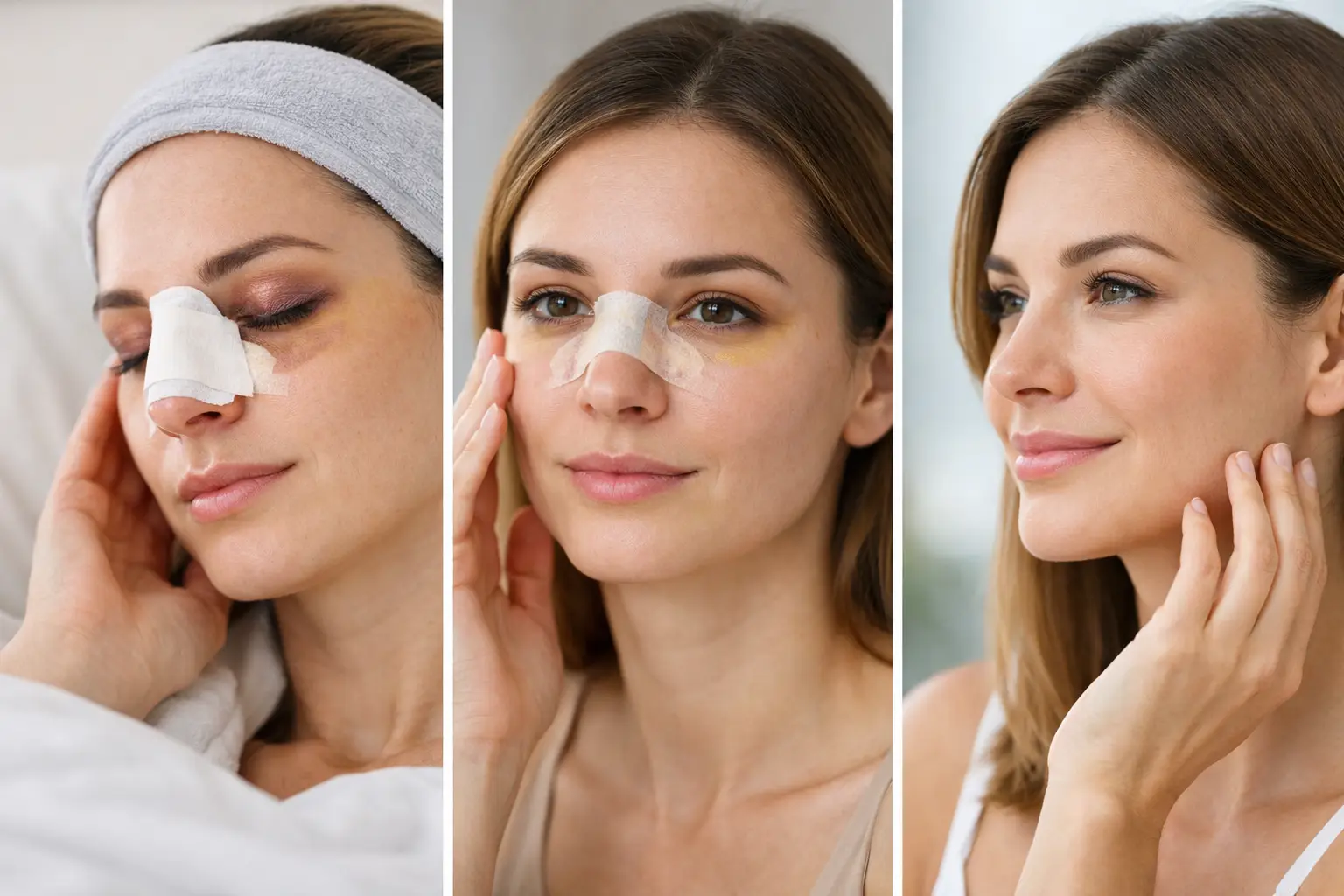
The first time you see your nose after surgery can be emotionally intense. There may be a splint, swelling, bruising, and a shape that does not yet resemble the final result you pictured. A clear rhinoplasty recovery week by week timeline helps put those early changes into perspective: healing is gradual, and the most refined result takes patience.
Every nose heals differently. Your skin thickness, the extent of bone or cartilage work, whether your procedure was primary or revision rhinoplasty, and how closely you follow aftercare all influence the pace of recovery. Your surgeon’s instructions should always take priority over a general timeline.
The first 72 hours: congestion and rest
The first few days are usually more uncomfortable than painful. Many patients describe pressure, stuffiness, and mouth breathing rather than severe pain. Swelling around the nose and eyes often begins quickly, while bruising may become more visible on the second or third day.
Keep your head elevated, including while sleeping, and use cold compresses only around the cheeks and eyes if your surgical team approves. Do not place pressure or ice directly on the nose. Take prescribed medication exactly as directed, drink fluids, choose easy-to-chew meals, and avoid smoking, alcohol, and strenuous activity.
A small amount of blood-tinged drainage can be normal early on. However, heavy bleeding, worsening one-sided pain, fever, sudden vision changes, shortness of breath, or swelling that rapidly increases should be reported to your surgeon promptly.
Rhinoplasty recovery week by week: week 1
Week one is focused on protecting the surgical work. Most patients wear an external nasal splint for about seven days, though the exact schedule varies. If internal splints or silicone supports are used, your surgeon will explain when they will be removed.
By the end of the week, bruising may start shifting from deep purple or blue to yellow-green. Swelling remains noticeable, especially across the bridge and tip. Nasal congestion is common because of internal swelling, dried blood, and healing tissue. It can make you feel as though you have a strong cold.
Splint removal is an exciting milestone, but it is not the final reveal. Your nose may look wider, higher, or more turned up than expected due to swelling. This is temporary. Many people feel comfortable doing desk work or attending low-key social activities after seven to 10 days, although makeup may be needed to cover any remaining bruising.
Week 2: looking more presentable
During the second week, most visible bruising fades substantially, and many patients return to work, school, or normal errands. The swelling is still there, but it is less obvious to others than it is to you. Photos can be misleading at this stage because lighting and camera angles often emphasize subtle swelling.
Light walking is usually encouraged, but elevated heart rate can worsen swelling. Avoid running, heavy lifting, bending for prolonged periods, hot yoga, saunas, and any activity that raises blood pressure until cleared by your surgeon. You should also avoid glasses resting on the nasal bridge unless your surgeon gives you a safe taping or support method.
Breathing may begin to improve, but it can fluctuate from day to day. One side may feel clearer than the other. This does not automatically mean something is wrong. Internal swelling often resolves unevenly.
Weeks 3 and 4: a return to routine
By weeks three and four, most patients feel physically like themselves again. Residual bruising is usually gone, and swelling has reduced enough that the nose appears more natural in everyday conversation. Still, the tip and upper bridge commonly remain puffy, firm, or slightly numb.
Your surgeon may allow a gradual return to more exercise during this period. Contact sports, activities with a risk of facial impact, and swimming should wait until you receive specific clearance. A minor bump to a healing nose can cause bleeding, swelling, or structural injury, so caution is worth the temporary inconvenience.
This is also the point when impatience can set in. You may compare your current appearance to before-and-after photos or scrutinize minor asymmetries. Healing tissue changes by small degrees, not overnight. Resist pressing, massaging, or trying to reshape the nose yourself unless your surgeon has specifically instructed you to do so.
Months 2 and 3: definition begins to show
At two to three months, the nose often looks significantly closer to its intended shape. Much of the broad, generalized swelling has settled, and the bridge can appear more defined. The tip, however, remains the slowest area to refine, particularly in patients with thicker skin or those who had extensive tip work.
You can often resume a broader range of activities once your surgeon approves. Sun protection remains essential. Healing skin can be more prone to discoloration, and sun exposure may make swelling appear worse. Use a hat and sunscreen as advised, taking care not to apply pressure to sensitive areas.
It is reasonable to notice changes from week to week at this stage, but do not judge the final result yet. Small differences in swelling can make the nose look uneven at times. Follow-up appointments give your surgeon the opportunity to assess healing in person rather than through a mirror or phone photo.
Months 4 to 6: the nose settles
Between four and six months, the result typically becomes more consistent. The bridge and side profile often look close to their final appearance, while tip swelling continues to improve gradually. Patients who had a reduction rhinoplasty may notice that the nose is becoming less stiff and more integrated with their facial expressions.
This phase is often reassuring because the changes are subtle but positive. The nose generally looks less “new” and more naturally balanced with the rest of the face. If your surgeon has recommended steroid injections, taping, or another targeted measure for persistent swelling, attend those reviews as scheduled rather than pursuing unverified remedies.
Months 6 to 12: final refinement
Most rhinoplasty patients see a mature result by one year. In some cases, especially after revision surgery or in noses with thick skin, final tip refinement can continue for 12 to 18 months. This longer timeline is not a setback. It reflects the careful way nasal soft tissue adapts after surgery.
A successful recovery is not measured only by how quickly swelling disappears. It also depends on protecting the nose, maintaining follow-up care, and allowing the tissues to heal without unnecessary pressure or trauma. If you are considering rhinoplasty while traveling for care, build enough time into your plans for early reviews and avoid flying home until your surgeon confirms it is appropriate.
What can slow rhinoplasty healing?
Nicotine use is one of the most avoidable risks because it restricts blood flow and can interfere with wound healing. Alcohol, poor sleep, high-sodium foods, premature exercise, and skipping aftercare appointments may also prolong swelling or complicate recovery.
There is no safe shortcut to a final rhinoplasty result. What helps most is consistent, sensible aftercare: sleep with your head elevated when advised, protect your nose from impact and sun, keep follow-up appointments, and ask your surgical team before restarting medications, supplements, or exercise.
Your recovery may not match someone else’s timeline, and that is normal. The most helpful mindset is to watch the overall direction of healing rather than reacting to each day’s reflection. With expert surgical planning and patient aftercare, the gradual changes can lead to a result that looks balanced, natural, and genuinely your own.
Ready to explore your hair restoration options?
Complete a free Hair Analysis or book a consultation with AHT Aesthetic Medical Center in Dubai.
Ready to explore your hair restoration options?
Complete a free Hair Analysis or book a consultation with AHT in Dubai.