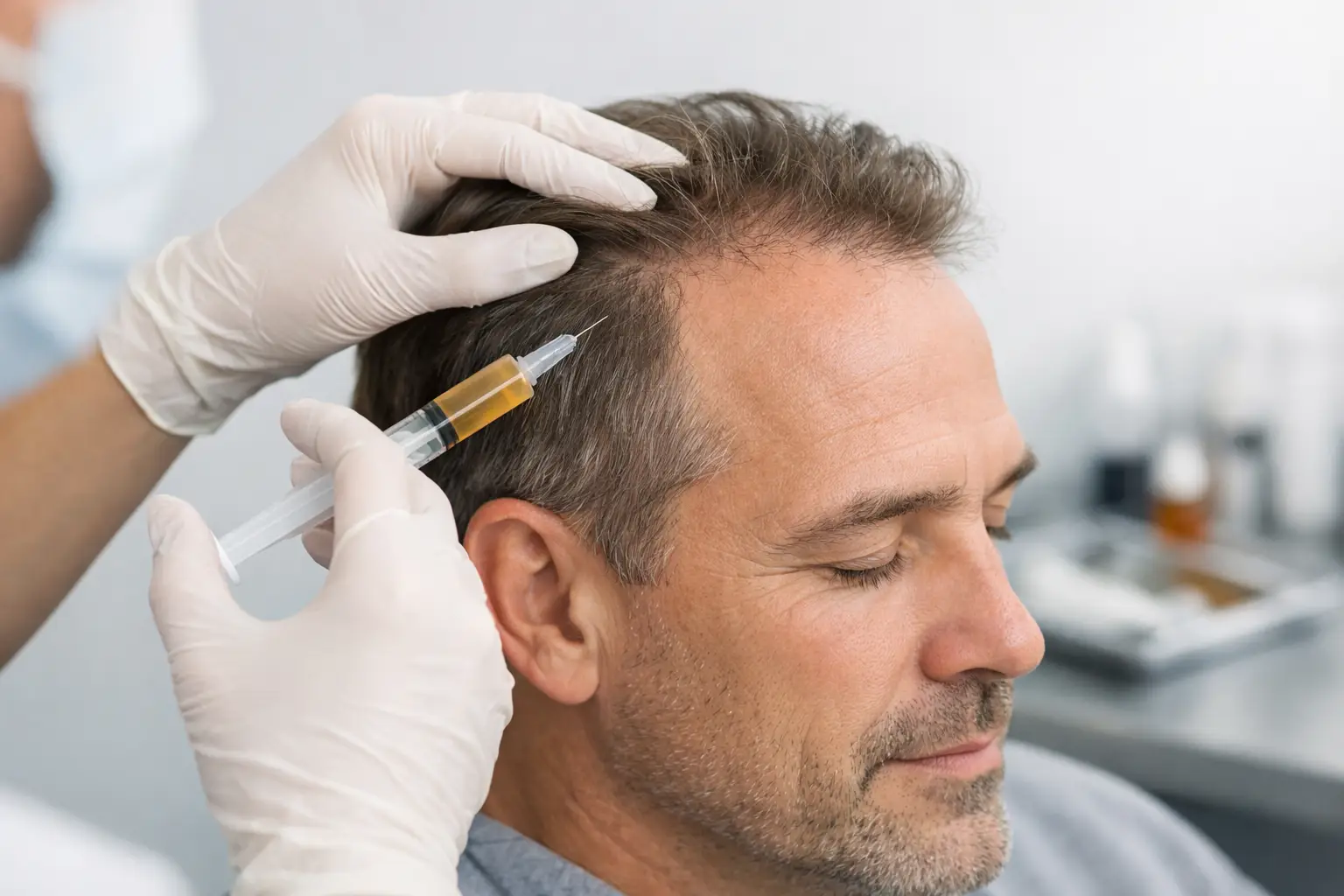
A widening part, more hair in the shower drain, or a receding hairline can make even routine grooming feel stressful. PRF injections for hair loss are a non-surgical option designed to support healthier follicles using concentrated components from your own blood. For the right patient, they can be a valuable part of a personalized hair restoration plan, particularly when thinning is noticed early.
At AHT Aesthetic Medical Center, treatment planning begins with the cause of hair loss, not a one-size-fits-all procedure. PRF may help improve hair quality and density in suitable candidates, but realistic expectations and a proper medical assessment are essential.
What Are PRF Injections for Hair Loss?
PRF stands for platelet-rich fibrin. It is an autologous treatment, meaning the injectable material is prepared from a small sample of your own blood. After blood is drawn, it is processed in a centrifuge to concentrate platelets, fibrin, white blood cells, and naturally occurring growth factors.
This platelet-rich material is then placed through a series of fine injections into areas of scalp thinning. The aim is to create a more supportive environment around vulnerable hair follicles. Hair follicles naturally cycle through growth, transition, and resting phases. In people with pattern hair loss, the growth phase often becomes shorter while follicles gradually shrink. PRF is intended to support follicular activity and scalp health rather than replace lost follicles.
PRF is often discussed alongside PRP hair therapy. Both use the patient’s own blood and are designed to deliver platelet-derived growth factors to the scalp. The primary difference is preparation: PRF generally forms a fibrin matrix that may allow growth factors to be released more gradually. The exact composition can vary depending on the blood sample and processing protocol.
Who May Benefit From PRF Hair Treatment?
PRF tends to be most appropriate for men and women with early to moderate thinning who still have active, miniaturized hair follicles. It may be considered for androgenetic alopecia, commonly called male- or female-pattern hair loss, and for some patients recovering from temporary shedding once the underlying cause has been addressed.
A consultation is especially valuable for women whose hair thinning has changed suddenly, as shedding can be connected to iron deficiency, thyroid concerns, hormonal shifts, stress, recent illness, restrictive dieting, or medication changes. Men with progressive temple recession or crown thinning also benefit from early assessment, before affected areas become completely smooth.
PRF is not usually the first answer for every type of hair loss. Scarring alopecia, active scalp disease, autoimmune hair loss, and advanced bald areas require a different clinical approach. When follicles are no longer viable, a hair transplant may provide a more predictable route to visible coverage. In some cases, PRF can still be used to support existing surrounding hair as part of a broader restoration plan.
What Happens During the Appointment?
A PRF session is typically completed in the clinic without surgery or major downtime. Your medical team first reviews your hair history, scalp condition, medications, medical background, and treatment goals. Clear scalp photographs may be taken to establish a baseline, because gradual changes are difficult to judge from memory alone.
A small blood sample is collected and processed while the scalp is prepared. Depending on your comfort level and the treatment area, a topical numbing agent may be used. The clinician then performs carefully placed injections across areas of thinning. Most patients describe pressure, brief pinching, or mild tenderness rather than significant pain.
The procedure itself is generally efficient, although appointment time can vary based on the size of the treatment area. You may have temporary redness, pinpoint swelling, or scalp sensitivity afterward. These effects commonly settle within a short period. Your clinician will provide specific aftercare instructions, which may include delaying hair washing, strenuous exercise, alcohol, or certain medications for a limited time.
When Will You See Results?
Hair growth is slow, and PRF should be approached with patience. The first change some patients notice is reduced shedding or improved texture. More visible changes in thickness and density may take several months because new hair must move through its natural growth cycle.
Results vary according to the cause and stage of hair loss, genetics, hormone sensitivity, scalp health, nutrition, and consistency with the recommended plan. A patient with early diffuse thinning and many active follicles may see a better response than someone with long-standing, advanced loss.
Most protocols involve an initial series of sessions followed by maintenance treatments when appropriate. The number and frequency should be determined after assessment rather than selected from a generic package. Progress photography and follow-up reviews help the clinical team decide whether the treatment is delivering meaningful value for you.
PRF Results Are Strongest Within a Complete Plan
PRF can be a useful standalone option, but it is often most effective when paired with a clear diagnosis and a practical long-term strategy. Depending on your needs, that strategy may include medical therapies recommended by your physician, nutritional evaluation, scalp care, PRP hair therapy, or hair transplant planning.
For transplant candidates, preserving existing native hair matters. A Sapphire FUE hair transplant can restore coverage in carefully selected areas, while supportive treatments may help maintain surrounding thinning hair. The correct sequence depends on your current pattern of loss, donor hair quality, future hair-loss risk, and desired look.
This is why the promise of a single treatment that works for everyone should be treated cautiously. Good hair restoration is not about chasing a trend. It is about protecting the hair you have, restoring areas where restoration is appropriate, and creating a plan that still looks natural as you age.
Safety and Important Considerations
Because PRF is derived from your own blood, the risk of allergic reaction to the injected material is low. However, every injectable procedure carries some potential risks, including temporary pain, bruising, swelling, bleeding, headache, infection, or inflammation at injection sites. These risks are reduced when treatment is performed under proper medical standards with sterile technique and appropriate patient screening.
Tell your clinician about blood disorders, active infections, anticoagulant use, pregnancy, chronic medical conditions, and any supplements or medications you take. Some factors may affect whether PRF is suitable or whether treatment timing needs to be adjusted.
It is also important to be candid about evidence. Research into platelet-based treatments for hair loss is promising, and many patients seek it because it uses their own biological material. At the same time, PRF protocols are not fully standardized across clinics, and individual response is not guaranteed. A responsible provider will explain potential benefits without promising a specific number of hairs or a permanent cure.
Questions to Ask Before Starting PRF
Before choosing PRF, ask who will diagnose your hair loss, how your scalp and progress will be monitored, and what plan is recommended if results are limited. You should also ask whether your current hair loss is stable, whether you are a transplant candidate, and what maintenance may be needed to protect your outcome.
The quality of the consultation matters as much as the treatment itself. A careful evaluation can prevent disappointment by identifying conditions that need medical attention first and by matching the procedure to your actual stage of hair loss.
For patients in Dubai and across the GCC, PRF can offer a reassuring, minimally invasive way to take action before thinning becomes more visible. Book a professional hair assessment to understand whether your follicles are likely to respond and to build a treatment plan that supports confidence for the long term.
Ready to explore your hair restoration options?
Complete a free Hair Analysis or book a consultation with AHT Aesthetic Medical Center in Dubai.
Ready to explore your hair restoration options?
Complete a free Hair Analysis or book a consultation with AHT in Dubai.