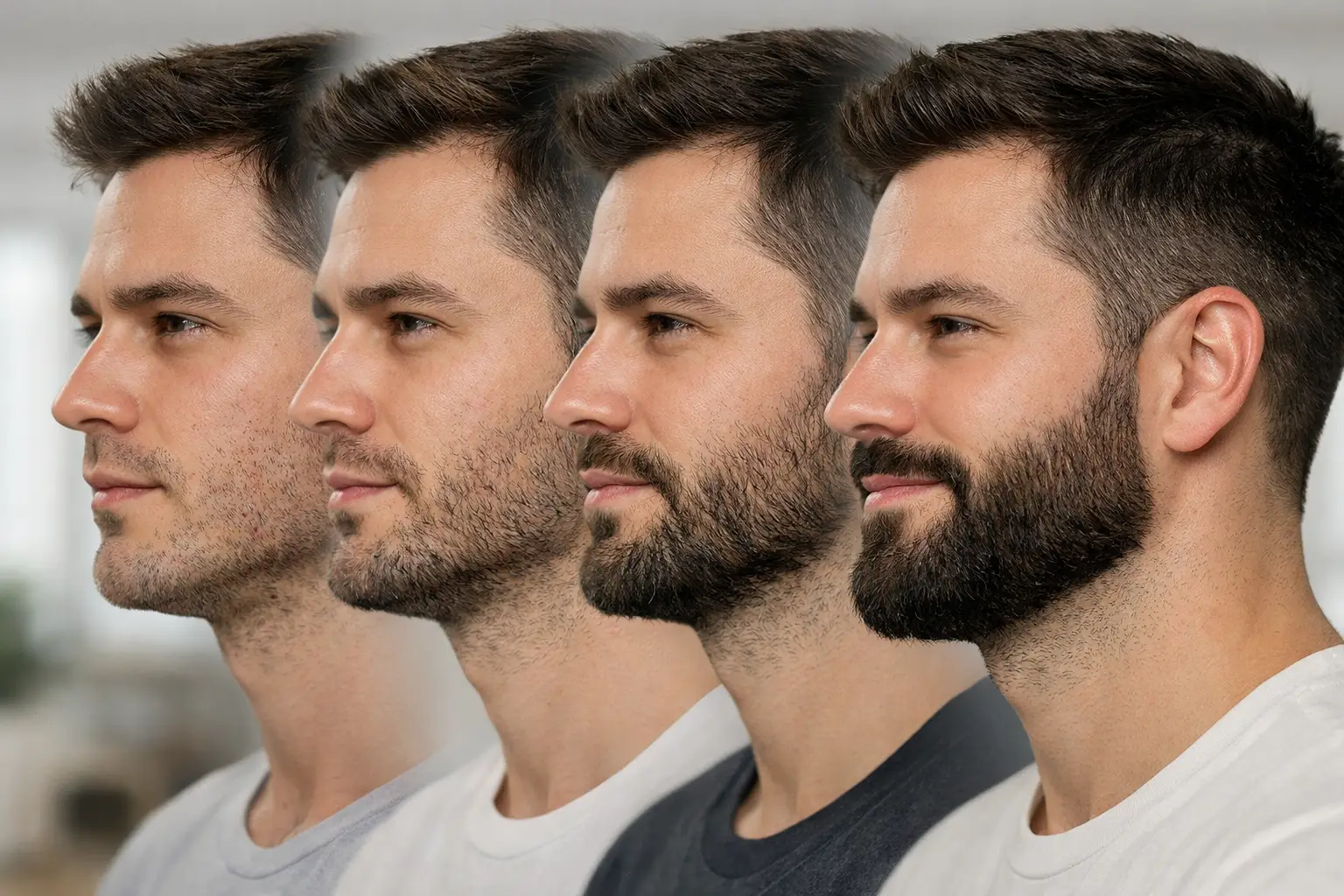
A beard transplant does not look “finished” when you leave the clinic. The beard transplant results timeline is a gradual process that includes healing, temporary shedding, new growth, and maturation of each transplanted hair. Knowing what happens at every stage can make the wait far less stressful and help you plan work, travel, social events, and grooming with confidence.
For most patients, the procedure itself is completed in one day. The visible change, however, develops over several months as the transplanted follicles settle into their new location and begin a normal growth cycle.
Beard Transplant Results Timeline: What to Expect
Days 1 to 7: Protecting the newly placed grafts
During the first week, the focus is not on appearance but on protecting the grafts. Small scabs, redness, mild swelling, and tiny crusts around the implanted hairs are normal. The recipient area may look denser immediately because the transplanted hairs are visible, but this is not your final result.
Your medical team will provide specific washing and aftercare instructions. Patients are usually asked to avoid touching, rubbing, shaving, strenuous exercise, swimming, direct sun exposure, and anything that could disturb the grafts. Sleeping with the head slightly elevated may help reduce swelling during the first few nights.
For patients traveling home after treatment, it is wise to schedule a calm first week. A short period away from intense meetings, gym sessions, and outdoor activities can make recovery more comfortable.
Weeks 2 to 4: Scabs clear and transplanted hairs shed
By the second week, scabs generally begin to loosen and fall away with gentle washing. Redness usually improves, though sensitive skin can remain pink for longer. Many patients are concerned when the implanted hairs start to fall out around this point. This is expected.
The hair shaft can shed while the follicle remains safely beneath the skin. This temporary phase is often called shock shedding. It does not mean the transplant has failed. In fact, shedding is a routine part of the healing process for many beard transplant patients.
The donor area, often at the back or sides of the scalp, also continues to heal. With FUE-based extraction, small donor sites typically become difficult to notice once the area has recovered and surrounding hair grows normally.
Months 1 to 3: The quiet stage
This is commonly the most challenging part of the beard transplant results timeline because there may be very little visible progress. The transplanted follicles are resting below the skin, establishing blood supply and preparing for a new growth cycle. Your beard can look similar to how it did before the procedure, or temporarily thinner in areas where the transplanted shafts have shed.
Patience matters here. Trying to judge the outcome too early can create unnecessary anxiety. A successful transplant is measured by follicle survival, natural direction, density planning, and growth over time, not by the first few weeks.
Most patients can return to their usual grooming routine after receiving clearance from their clinician. However, aggressive exfoliation, harsh skin treatments, and close shaving too soon should be avoided. If you have acne, dermatitis, or another skin concern in the beard area, let your medical team know so aftercare can be tailored appropriately.
Months 3 to 4: Early new growth appears
New beard hairs often begin to emerge between the third and fourth months. At first, growth can be fine, uneven, or slower than expected. Some follicles activate earlier than others, so patchiness at this stage is normal.
This early growth is encouraging, but it is still not a reliable indicator of final coverage. Transplanted hairs commonly become thicker and more consistent as they continue through later growth cycles. You may also notice that the beard needs time to blend with your existing facial hair in texture and direction.
The skill of graft placement is especially important in a beard transplant. Beard hair does not grow straight outward like scalp hair. It grows at a low angle and follows different patterns along the cheeks, jawline, mustache, chin, and sideburns. Careful placement helps the new growth look like part of your own beard rather than a separate patch of hair.
Months 5 to 6: Noticeable definition and coverage
Between five and six months, many patients see a more meaningful cosmetic change. Sparse cheeks may begin to look fuller, gaps in the jawline can soften, and a disconnected mustache and beard may start to appear more balanced. The exact change depends on the starting point, the number of grafts transplanted, skin characteristics, and the thickness of the donor hair.
At this stage, it may be tempting to shape the beard aggressively. Light trimming is often possible once the grafts are fully secure and growth is established, but follow your clinician’s advice. A conservative trim can help the beard look neater while it continues to fill in.
This is also a useful time for a follow-up review. Your surgeon can assess growth direction, healing, donor-area recovery, and whether your progress matches the expected pattern. Photographs taken in consistent lighting can be more helpful than checking the mirror every day.
Months 7 to 9: The beard starts looking more natural
By months seven through nine, the beard typically has stronger coverage and more mature texture. Individual hairs may become coarser and better matched to the surrounding beard. Styling becomes easier, and many patients can grow, trim, and shape their beard with more confidence.
Natural-looking density does not always mean maximum density. An experienced surgeon plans graft distribution to suit your facial structure, existing beard pattern, and available donor supply. A sharply defined full beard may require more grafts than modest cheek enhancement or scar camouflage. The right plan is one that looks believable at conversational distance and remains appropriate as you age.
Months 10 to 12: Final density and maturation
Most patients see the majority of their final beard transplant result between 10 and 12 months. The transplanted hairs should be long enough to assess density, direction, and overall design. Some slower-growing follicles can continue to improve beyond one year, particularly in areas where growth was delayed.
Once fully grown, transplanted beard hair can be washed, shaved, trimmed, and styled like natural facial hair. Because follicles are typically taken from the scalp, their growth rate and texture may differ slightly at first. With time and regular grooming, they usually integrate well into the beard.
What Can Affect Your Beard Transplant Timeline?
No two recovery journeys are identical. The timeline can vary based on the number of grafts, the quality and density of donor hair, your skin type, circulation, smoking status, medical history, and adherence to aftercare. Patients with thicker existing facial hair may see blending sooner, while those building a beard from minimal coverage may need more time before the overall shape appears complete.
Technique and planning also matter. A beard transplant should account for facial symmetry without making both sides look artificially identical. Natural beards have subtle variation. The goal is purposeful density and a hair direction that complements your features.
A second session is not necessary for every patient, but it can be considered when someone wants substantially greater density, has a large area to cover, or wants refinement after the first result has matured. This decision should be based on donor availability and a realistic long-term plan, not impatience during the early shedding phase.
How to Support Healing and Growth
Follow your personalized aftercare plan closely, especially during the first 10 to 14 days. Avoid smoking and nicotine if advised, as they can affect circulation and healing. Eat a balanced diet, stay hydrated, and contact your clinic if you develop increasing pain, spreading redness, unusual discharge, fever, or any concern about the recipient or donor area.
Avoid comparing your progress to another patient’s photos month by month. Before-and-after images can be useful, but they rarely show the full starting condition, graft count, hair characteristics, or recovery path. Your own baseline and treatment plan are the meaningful reference points.
At AHT Aesthetic Medical Center, a beard transplant plan is designed around your facial hair goals, donor capacity, and the natural character of your beard. The best next step is a detailed consultation where you can discuss the coverage you want and receive a clear, medically guided expectation for your individual timeline.
Ready to explore your hair restoration options?
Complete a free Hair Analysis or book a consultation with AHT Aesthetic Medical Center in Dubai.
Ready to explore your hair restoration options?
Complete a free Hair Analysis or book a consultation with AHT in Dubai.