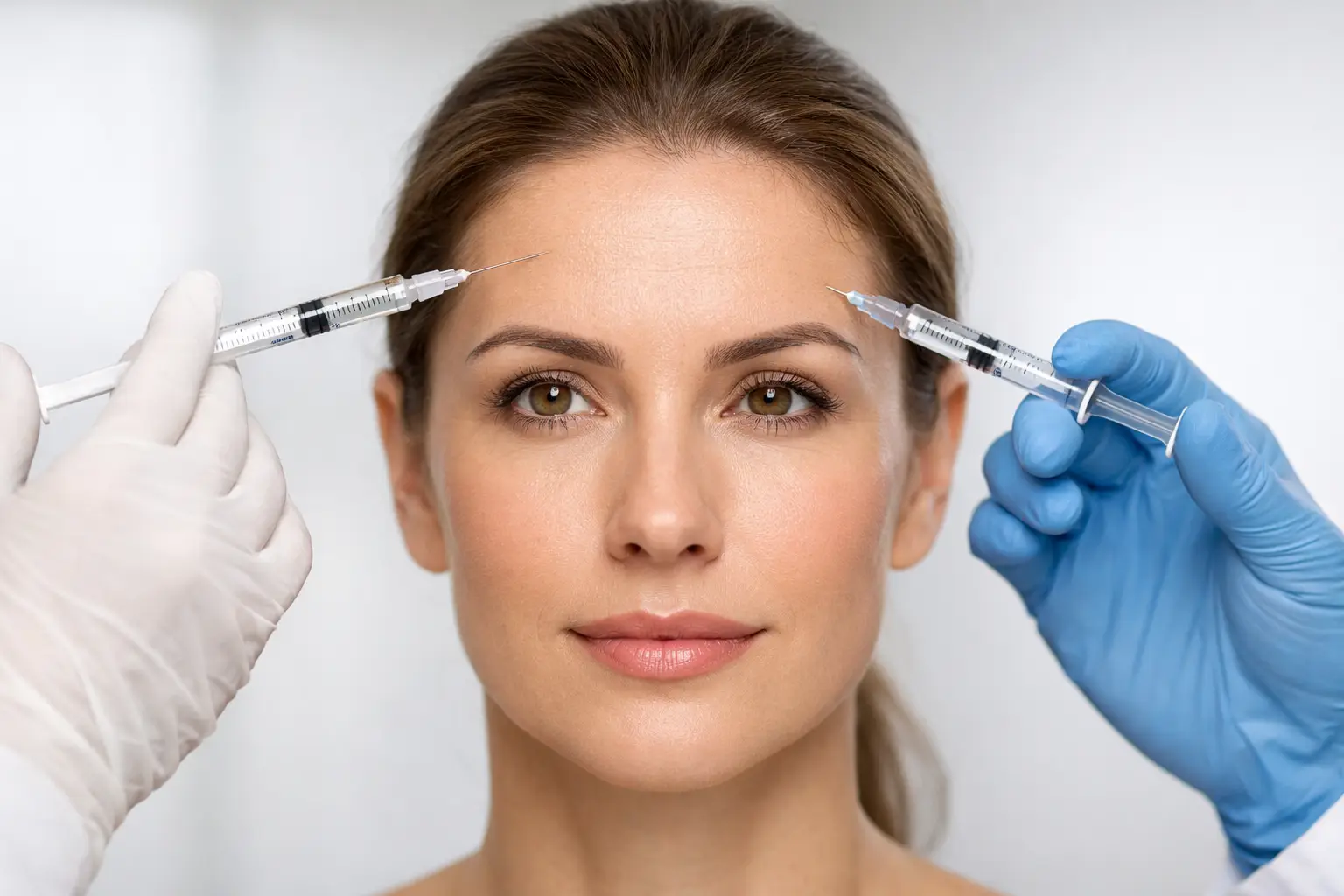
Forehead lines can make a rested face look tense, tired, or older than you feel. The choice of botox vs fillers for forehead is not simply about picking the longer-lasting option. These treatments address different causes of aging, and the safest, most natural-looking plan starts with understanding what your forehead is actually doing at rest and in motion.
For many patients, Botox is the more appropriate first discussion because forehead lines are often caused by repeated muscle movement. Fillers can be useful in carefully selected cases of volume loss or contour concerns, but the forehead is a technically demanding area with important blood vessels. Treatment should always be planned by a qualified, experienced medical professional who understands facial anatomy and prioritizes safety over a quick correction.
Botox vs Fillers for Forehead: The Core Difference
Botox is a brand name commonly used to describe botulinum toxin injections. It works by temporarily relaxing targeted muscles. In the forehead, this usually means reducing the activity of the frontalis muscle, which lifts the eyebrows and creates horizontal lines when you raise them.
Dermal fillers are gel-like injectable products, most often made with hyaluronic acid. Instead of changing muscle movement, they add or restore volume beneath the skin. In the right area, filler can soften a crease, support facial structure, or improve a hollowed appearance.
That distinction matters. If a line appears mainly when you raise your brows, it is a dynamic line and Botox is usually the more logical option. If a hollow, indentation, or contour change remains visible when your face is completely relaxed, volume loss may be contributing. Even then, filler is not automatically the answer for the forehead.
When Botox May Be the Better Choice
Botox is commonly used for horizontal forehead lines, frown lines between the brows, and the wrinkles that form from frequent facial expression. It can create a smoother, more refreshed look without adding volume or changing the natural shape of the forehead.
A good result should not make you look expressionless. The goal is to reduce excessive muscle pull while preserving a natural range of expression. This requires careful dosing and injection placement, particularly for patients whose forehead muscles compensate for naturally low or heavy brows.
Your provider will assess your brow position before treatment. Relaxing the forehead too aggressively can make the brows appear lower, especially when the frontalis muscle has been working hard to keep the eye area open. This is why an individualized plan matters more than following a standard number of units seen online.
Most patients begin to notice a change within several days, with the full effect typically visible around two weeks. Results commonly last about three to four months, although metabolism, muscle strength, dose, and previous treatment history can affect longevity.
Botox may also help prevent dynamic lines from becoming deeper over time. It does not erase every established crease immediately, but repeated, properly spaced treatment can soften the appearance of lines that are etched into the skin at rest.
When Fillers Might Be Considered
Forehead filler is generally considered when a patient has a true structural concern rather than motion-related wrinkles. Examples can include a visible hollow, asymmetry, a concave contour, or age-related loss of volume that creates shadowing across the upper face.
Hyaluronic acid filler may be selected because it can be adjusted and, if necessary, dissolved with an enzyme called hyaluronidase. However, reversibility should never be treated as a reason to take unnecessary risks. The forehead contains a complex network of blood vessels, including vessels connected to the eye area. Incorrect filler placement can, in rare cases, cause serious complications such as vascular occlusion and vision problems.
For that reason, forehead filler should only be performed by a highly trained, licensed medical injector with strong knowledge of facial vascular anatomy and an established emergency protocol. A low price, a social media promotion, or a promise of dramatic instant correction should never drive the decision in this area.
The result of filler can last longer than Botox, often several months to more than a year depending on the product and individual factors. Yet longer duration is not necessarily better if the treatment does not match the reason for your concern. Adding volume to a forehead line caused by muscle movement may produce an unnatural or uneven result.
Can Botox and Filler Be Used Together?
In some cases, yes. A patient may have both active muscle movement and an established indentation that remains when the face is relaxed. Botox may reduce the movement that continues to crease the skin, while a carefully chosen filler treatment may address a separate volume issue.
Combination treatment requires restraint. Many patients benefit from addressing muscle activity first, then reassessing after the Botox has settled. Once movement is reduced, the true depth of any remaining static line or hollow is easier to evaluate. This staged approach can help avoid overtreatment.
For some people, the most refined result does not involve filler at all. Skin quality treatments, medical-grade skin care, sun protection, hydration, or resurfacing procedures may better support fine lines and texture. The best plan is often a measured one rather than the most aggressive one.
What to Expect During Your Consultation
A reliable consultation should feel specific to your face, not like a menu of injections. Your provider should ask what you notice in photos, whether your lines appear at rest or only with expression, and whether you have had Botox or filler before. They should also review your medical history, medications, allergies, pregnancy or breastfeeding status, and any prior aesthetic procedures.
During the assessment, your provider may ask you to raise your brows, relax your forehead, frown, and squint. These movements reveal how different muscles interact. They will look at skin thickness, forehead shape, eyebrow position, asymmetry, and the balance between your upper face and the rest of your features.
Be open about the look you want. Some patients want a softer, smoother forehead but still want noticeable expression. Others prefer a stronger reduction in lines for an event or professional photographs. Clear expectations allow the injector to recommend an appropriate dose, placement pattern, or alternative treatment.
Safety Questions Worth Asking
Before proceeding with any forehead injectable, ask who will perform the treatment and what qualifications they hold. Confirm that the product is authentic, approved for use in your region, and opened appropriately. You should also understand the expected effects, likely downtime, possible side effects, and the clinic’s plan if a complication occurs.
Temporary redness, swelling, small bruises, tenderness, or headache can occur after Botox. With filler, swelling and bruising are also possible, but the safety conversation needs to be more detailed due to the higher-risk anatomy of the forehead.
After filler treatment, severe or increasing pain, skin that turns pale, dusky, or blotchy, unusual coldness in the area, or any changes in vision require immediate emergency medical attention. Do not wait for a routine follow-up if these symptoms occur.
Choosing the Right Approach for Your Forehead
For most expression lines, Botox is the simpler and more targeted option. It addresses the cause of the wrinkle: repeated muscle movement. For true hollowing or contour loss, filler may have a role, but the forehead requires exceptional caution and should never be treated casually.
A trustworthy provider will be comfortable telling you when not to have a procedure. That may mean starting conservatively with Botox, choosing a skin-focused treatment, or deciding that filler is not appropriate for your anatomy. The right treatment is the one that supports a natural, balanced result while protecting your safety and confidence.
If forehead lines are affecting how you feel when you look in the mirror or appear in photographs, begin with a professional assessment rather than a product request. A personalized discussion can help you choose an approach that respects your facial movement, your features, and the result you want to see.
Ready to explore your hair restoration options?
Complete a free Hair Analysis or book a consultation with AHT Aesthetic Medical Center in Dubai.
Ready to explore your hair restoration options?
Complete a free Hair Analysis or book a consultation with AHT in Dubai.