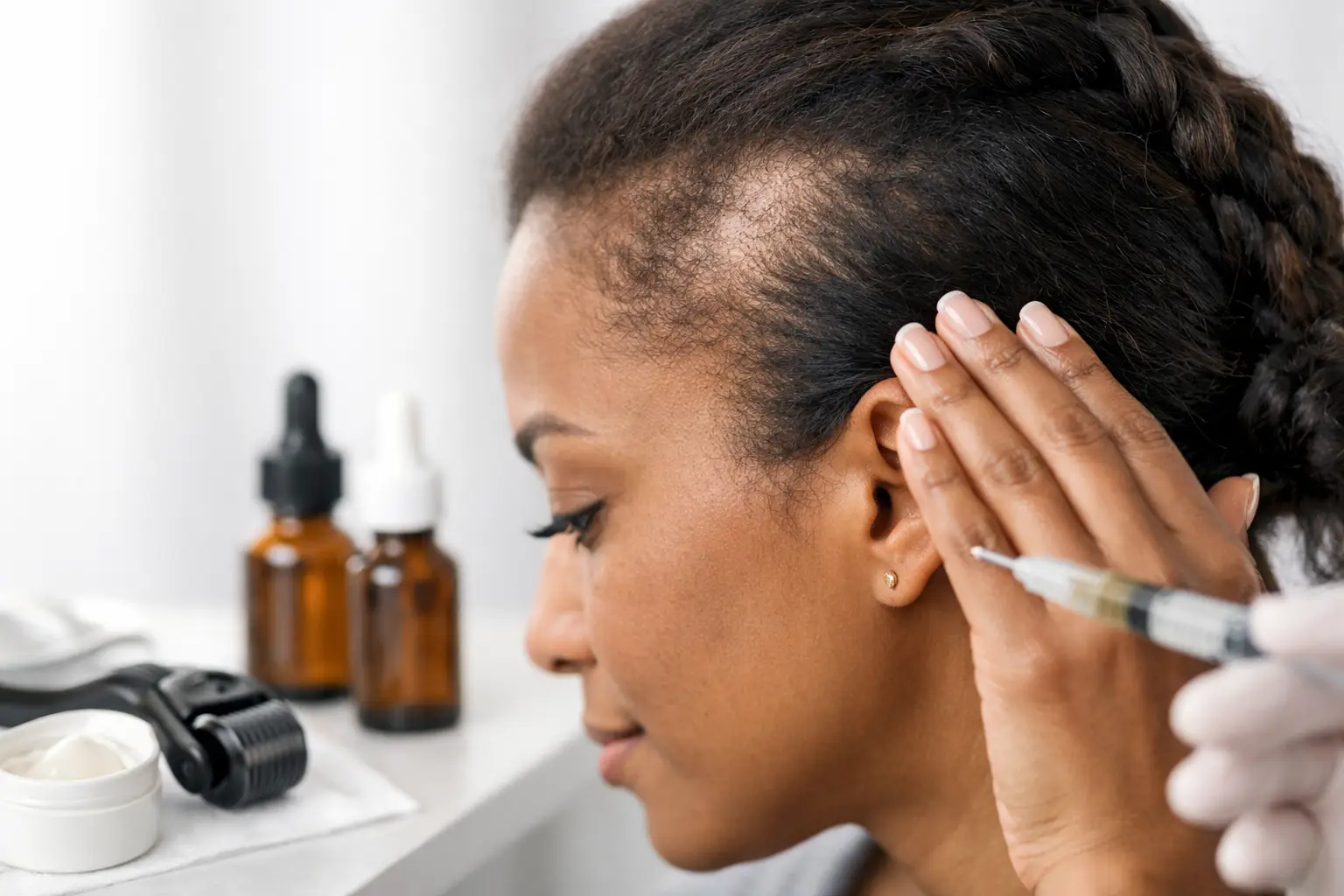
A tight ponytail, braids, extensions, or a sleek bun can look polished, but repeated pulling can gradually damage the hair follicles along the hairline, temples, and part line. The best treatments for traction alopecia depend on one critical detail: whether the follicles are still capable of producing hair. When treatment begins early, regrowth is often possible. When scarring has developed, a more permanent restoration approach may be needed.
Traction alopecia is common among women and men who regularly wear tension-heavy hairstyles, head coverings, wigs, weaves, or extensions. It is not a reflection of poor hair care. It is a medical hair-loss condition caused by sustained mechanical stress, and it deserves an informed, personalized plan.
Why Early Treatment Changes the Outcome
Traction alopecia usually begins subtly. You may notice tenderness after styling, broken hairs around the edges, small bumps, a receding hairline, or a widening part. Some people see a fringe of short hairs at the front of the scalp while the hair behind it becomes thinner. This can be an early warning sign rather than new growth.
In the early stage, follicles are inflamed and weakened but may still be alive. Removing the source of tension and supporting the scalp can give them a chance to recover. Over time, however, chronic traction may replace follicles with scar tissue. Once that happens, topical treatments and injections cannot create new follicles, although hair transplant surgery may restore coverage in suitable candidates.
A proper consultation matters because traction alopecia can overlap with other causes of hair thinning, including androgenetic hair loss, hormonal changes, nutritional deficiencies, or inflammatory scalp conditions. An experienced hair restoration physician can examine the pattern, scalp health, hair density, and donor area before recommending treatment.
Best Treatments for Traction Alopecia in the Early Stage
Remove the Pulling Force First
The most effective first step is to stop or significantly reduce the tension that caused the problem. No medical treatment can fully overcome continued pulling on vulnerable follicles.
Choose looser styles, alternate the placement of buns and ponytails, and avoid hairstyles that cause pain, headache, or scalp tightness. Extensions, braids, wigs, and weaves should be fitted without excessive tension and removed if they cause soreness or bumps. Reducing the use of chemical relaxers, harsh adhesives, and high-heat styling can also help limit breakage and irritation while the scalp recovers.
This does not necessarily mean giving up protective styling altogether. The goal is a routine that protects both the hair shaft and the follicle. A clinician can help you identify which habits are most likely contributing to your particular pattern of thinning.
Medical Treatment for Inflammation and Regrowth
When traction alopecia is active, a physician may recommend medication to calm inflammation and encourage growth. The precise plan depends on scalp findings, medical history, and whether there is itching, redness, scaling, pustules, or pain.
Topical minoxidil is commonly considered for early traction-related thinning because it may help prolong the growth phase of existing follicles. It requires consistent use and patience. Shedding can appear temporarily at the beginning, and visible improvement typically takes several months. It is not suitable for everyone, particularly during pregnancy or breastfeeding, so medical guidance is essential.
If the scalp shows significant inflammation, a doctor may use prescription topical treatments or carefully placed corticosteroid injections. These are intended to reduce inflammation around the follicles, not to serve as a stand-alone cure. Treating active symptoms promptly can help protect the remaining hair.
PRP Hair Therapy as a Supportive Option
Platelet-rich plasma, or PRP, uses concentrated platelets from your own blood to support scalp health and follicle activity. During treatment, a small blood sample is processed, and the platelet-rich portion is injected into targeted thinning areas.
PRP Hair Therapy can be a useful supportive treatment for patients with early-stage traction alopecia and viable follicles. It may improve hair quality, thickness, and growth response when paired with tension-free styling and a physician-led plan. Results vary, and PRP cannot revive follicles that have been permanently destroyed by scarring.
Most patients need a series of sessions followed by maintenance based on their response. For busy patients in Dubai and across the GCC, PRP is often appealing because sessions are relatively quick and require little interruption to daily life. The right schedule should be based on a scalp assessment rather than a one-size-fits-all package.
When Hair Transplant Is the Best Option
Hair transplant surgery becomes a strong consideration when traction alopecia has been stable for a prolonged period and the affected follicles are scarred. The key word is stable. Performing a transplant while active inflammation or continued traction is present can compromise the result.
Modern FUE techniques move healthy follicles from a donor area, usually at the back or sides of the scalp, into thinning or bald regions. With Sapphire FUE, specialized sapphire blades create precise recipient channels that support careful graft placement. This can be particularly valuable when reconstructing a natural-looking hairline, where direction, angle, density, and facial proportions all matter.
A successful traction alopecia hair transplant is not simply about placing the maximum number of grafts. It is about designing a hairline that looks appropriate now and continues to look natural over time. For women with temple thinning, for example, conservative placement and realistic density planning are often more convincing than an overly low or sharply defined hairline.
Not every patient is immediately eligible. A consultation should confirm that the donor area is healthy and sufficiently dense, that traction has stopped, and that the scalp condition is under control. If these factors are favorable, transplanted follicles can provide long-lasting growth because they retain much of their resistance to the forces that caused the original thinning.
What Results Can You Realistically Expect?
Early traction alopecia can improve, but regrowth is gradual. Fine new hairs may appear before density becomes noticeable, and it can take six to 12 months to judge the full response to conservative treatment. Consistency with medical treatment and styling changes has a direct effect on the outcome.
After a hair transplant, the transplanted hairs typically shed during the early healing phase before new growth begins. Initial growth is often seen around three to four months, with progressive improvement through 12 months and, for some patients, beyond. The waiting period is normal, but it should be explained clearly before treatment so expectations remain realistic.
The most reliable outcomes come from addressing both sides of the condition: restoring hair where appropriate and changing the styling habits that created traction in the first place. A beautiful surgical result still needs protection from repeated tension.
Choosing a Treatment Plan With Confidence
There is no single best solution for every case of traction alopecia. Someone with recent edge thinning and scalp tenderness may benefit from hairstyle changes, medication, and PRP. Someone with smooth, scarred temple loss may be better served by a carefully planned FUE hair transplant. Many patients need a combination approach.
At AHT Aesthetic Medical Center, the focus is on identifying what your scalp can still recover on its own and where advanced restoration can make a meaningful difference. A detailed assessment can replace uncertainty with a plan that protects your remaining hair and pursues natural-looking improvement.
If you have noticed persistent thinning around your hairline, do not wait for it to become a permanent concern. The earlier you address traction alopecia, the more options you may have to preserve, restore, and feel confident in your hair again.
Ready to explore your hair restoration options?
Complete a free Hair Analysis or book a consultation with AHT Aesthetic Medical Center in Dubai.
Ready to explore your hair restoration options?
Complete a free Hair Analysis or book a consultation with AHT in Dubai.