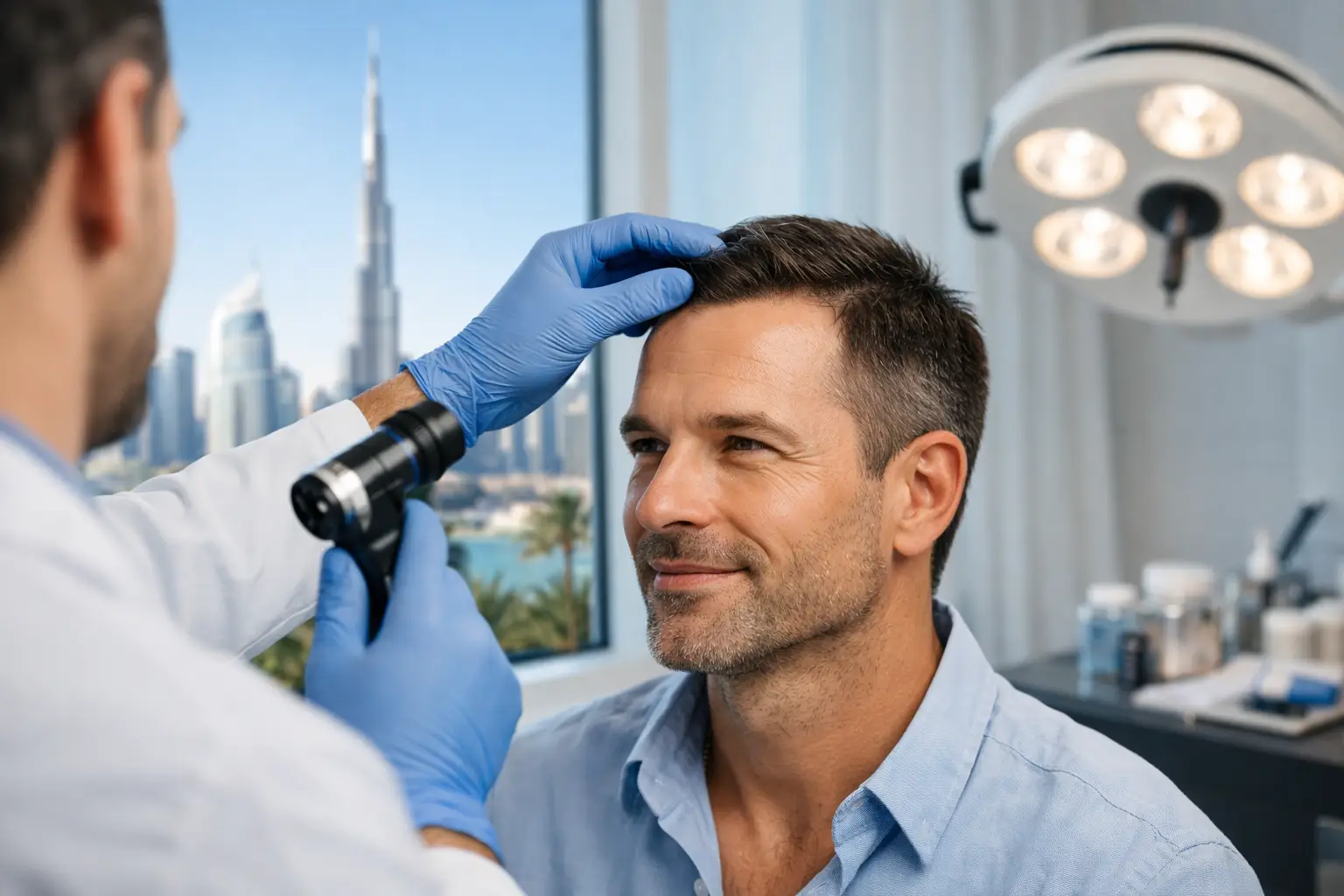
A receding hairline can change the way a person approaches photographs, meetings, and everyday social moments. For patients considering a hair transplant in Dubai, the goal is rarely to look different. It is to restore a fuller, natural-looking appearance that feels like their own – with a plan that respects their hair type, age, lifestyle, and long-term goals.
A successful transplant is not simply about placing the highest possible number of grafts. It depends on careful diagnosis, thoughtful hairline design, responsible donor-area management, and precise implantation. The right procedure can create a meaningful improvement in density and confidence. The wrong plan can overuse the donor area or produce a hairline that does not age naturally.
What a Hair Transplant Actually Treats
Hair transplantation redistributes healthy, genetically resistant follicles from a donor area, usually the back and sides of the scalp, to areas affected by thinning or baldness. These follicles are then positioned at the correct angle, direction, and density to replicate natural growth.
The procedure is commonly chosen for male-pattern hair loss, receding temples, thinning at the crown, and selected cases of female pattern hair thinning. It may also help restore hair after scars or certain injuries, provided the scalp is healthy and has adequate blood supply.
A transplant does not stop the underlying progression of hair loss. This is an essential consideration for younger patients or anyone whose thinning is still active. Your medical team may recommend a broader hair restoration plan, including PRP hair therapy or appropriate medical guidance, to support existing hair while transplanted follicles establish themselves.
Is a Hair Transplant in Dubai Right for You?
The best candidates have stable donor hair, realistic expectations, and a clear understanding of what can be achieved in a single session. A consultation should look beyond the visible bald area. It should assess donor density, hair caliber, curl pattern, scalp condition, family history, and the likely pattern of future loss.
Thicker, wavier hair can often create the visual impression of greater coverage than very fine, straight hair. Similarly, a small area of thinning may require fewer grafts than a wide crown, but crown restoration can demand careful planning because of the natural swirl pattern. There is no universal graft number that suits every patient.
Women can also be suitable candidates, especially when thinning is localized and donor density is strong. However, diffuse thinning across the entire scalp requires a more detailed assessment. In these cases, identifying the cause of hair loss before considering surgery is vital.
Patients should also share relevant medical information, including medications, prior scalp procedures, allergies, and smoking habits. This allows the clinic to plan for safety, healing, and the most predictable result.
A natural hairline is a long-term decision
A low, dense hairline may sound appealing, particularly to someone who has recently noticed recession. Yet the most attractive hairline is usually one that is age-appropriate and designed for the future. It should have irregularity at the front, soft single-hair graft placement, and a shape that complements facial proportions.
An experienced team balances present-day goals with the need to preserve donor follicles for future needs. This is one of the most important differences between a customized treatment plan and a one-size-fits-all procedure.
Understanding FUE and Sapphire FUE
Follicular Unit Extraction, or FUE, is a widely used technique in which individual follicular units are extracted from the donor area and implanted into tiny recipient sites. Because grafts are harvested individually, FUE avoids a linear scar associated with older strip-based methods.
At AHT Aesthetic Medical Center, treatment planning is built around the individual rather than a standard package. The selection of technique, graft distribution, and hairline design should reflect the patient’s anatomy and desired coverage.
Sapphire FUE is a refined form of FUE that uses sapphire blades to create recipient channels. These blades can support precise channel creation, which is particularly valuable when controlling the angle and direction of implanted hairs. The objective is not to choose a technique based on a label alone. It is to use the right approach to support natural density, proper healing, and a result that blends with existing hair.
For some patients, the priority is rebuilding a frontal hairline. For others, it is adding density through the mid-scalp or crown. A responsible surgeon will explain where grafts will make the greatest visual difference and where expectations may need to be adjusted.
What Happens Before and During the Procedure
Before treatment, your consultation should include a detailed scalp and donor-area examination. You should be able to discuss the expected graft range, proposed hairline, recovery timeline, and any complementary therapies that may benefit your current hair.
On the day of the procedure, the donor area is usually trimmed to allow precise extraction. Local anesthesia is used to keep the treatment comfortable. Follicular units are carefully harvested, prepared, and then implanted into channels created according to the planned hair-growth pattern.
The length of the appointment depends on the number of grafts required. Larger sessions can take most of the day, while smaller areas may require less time. Your team should provide clear aftercare instructions before you leave, including how to sleep, wash the scalp, manage swelling, and protect grafts during the first days of recovery.
Recovery: What to Expect After Treatment
Most patients can return home the same day. Mild tenderness, swelling, redness, and small scabs in the recipient area are normal during the early recovery phase. These changes are temporary, but the newly implanted grafts need careful protection while they settle.
Avoid touching, rubbing, or picking the transplanted area. Strenuous exercise, direct sun exposure, swimming, and activities that increase sweating may need to be paused for a short period, based on your clinician’s instructions. Patients traveling from abroad should allow enough time in Dubai for their immediate post-procedure review and avoid scheduling demanding travel plans too soon afterward.
Transplanted hairs commonly shed within the first few weeks. This can be concerning, but it is a normal part of the process. The follicles remain beneath the skin and enter a resting phase before new growth begins. Early growth may appear around three to four months, with more noticeable improvement developing over six to nine months. Final maturation can take up to 12 months or longer, especially in crown areas.
Choosing a Clinic With Confidence
A hair transplant is a medical procedure with a highly visible outcome, so clinic selection deserves more attention than promotional pricing or dramatic before-and-after images. Ask who will assess your case, who performs the key stages of the procedure, and how the clinic protects and handles grafts.
You should also ask how the team plans for future hair loss, not just the first surgery. A transparent consultation explains the limitations of the donor area, the likely appearance at different stages of growth, and whether additional non-surgical support may be appropriate.
Look for evidence of individualized planning. A carefully designed transplant should account for the direction of your existing hair, the density you can realistically achieve, and how the result will look when your hair is wet, short, or styled differently. Natural results are created through detail, not promises of unlimited grafts.
Beyond the Scalp: Beard and Eyebrow Restoration
The same principles of graft selection and artistic placement apply to beard and eyebrow transplantation. Beard restoration may address patchiness, scars, or limited facial-hair density. Eyebrow transplantation requires especially fine control because eyebrow hairs grow at a very shallow angle and must follow the natural arch and direction of existing hairs.
These procedures need a conservative, facially balanced approach. The goal is refined enhancement, not an overdone result. During consultation, your clinician can assess whether surgical restoration, PRP therapy, or another approach is most suitable for the concern you want to address.
The best next step is a personal assessment rather than a guess based on someone else’s result. A well-planned consultation can replace uncertainty with a realistic path toward fuller hair, a natural hairline, and confidence that grows with every stage of recovery.
Ready to explore your hair restoration options?
Complete a free Hair Analysis or book a consultation with AHT Aesthetic Medical Center in Dubai.
Ready to explore your hair restoration options?
Complete a free Hair Analysis or book a consultation with AHT in Dubai.