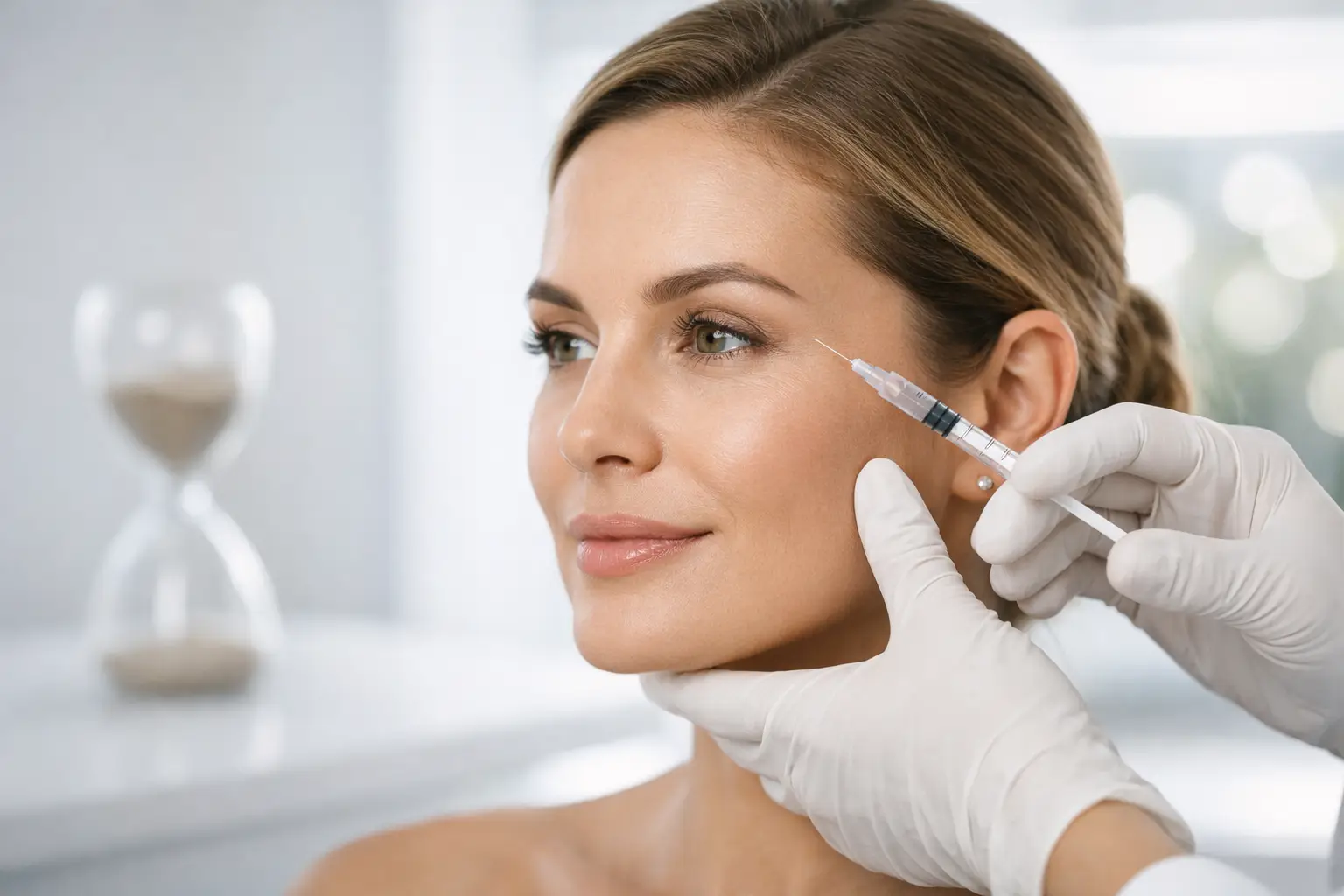
Most people do not want a dramatic change. They want a rested expression, softer lines, and results that still look like them. So, how long does Botox last? For most patients, the visible effect lasts around three to four months, although the exact timeline depends on the treatment area, dose, muscle activity, and individual metabolism.
Botox is not a permanent treatment, and that is part of its appeal. A skilled injector can tailor each session to your facial anatomy and aesthetic goals, then make thoughtful adjustments over time. The goal is not simply to make lines disappear. It is to preserve natural movement while reducing the appearance of expression lines.
How Long Does Botox Last in Most Patients?
Botox typically begins to take effect within three to seven days. Results usually reach their full effect at approximately 10 to 14 days after treatment. From there, most patients enjoy smoother-looking skin and reduced muscle movement for three to four months.
Some patients notice their results fading closer to eight to 10 weeks, while others may maintain visible improvement for four to six months. This variation is normal. Botox works by temporarily relaxing targeted muscles, and every person processes the product at a different rate.
The first few treatments may wear off a little sooner for some people. With consistent, appropriately spaced appointments, certain patients find that their results become more predictable. That does not mean Botox permanently weakens every muscle or that everyone will need less product over time. Your treatment plan should be reviewed at each visit rather than based on a fixed schedule.
Botox Results by Treatment Area
Not every facial area responds in exactly the same way. Muscles differ in size, strength, and how frequently they are used throughout the day.
Forehead lines
Horizontal forehead lines commonly respond well to Botox and often last about three to four months. The forehead requires a careful approach because excessive relaxation can affect brow position or make the expression look heavier. Conservative, precisely placed treatment generally produces the most natural result.
Frown lines between the eyebrows
The vertical lines between the eyebrows, often called the “11 lines,” are created by strong muscles that contract when you concentrate, squint, or frown. Botox in this area frequently lasts three to four months, though patients with particularly active muscles may notice movement returning sooner.
Crow’s feet
Lines around the outer corners of the eyes may soften for three to four months. Because this area contributes to a warm, natural smile, many patients prefer a lighter treatment that softens creasing without removing all movement.
Brow lift effect
A subtle Botox brow lift can be achieved by selectively relaxing muscles that pull the brows downward. The longevity generally follows the same three- to four-month timeline, but the visible lift can be subtle and depends greatly on your natural brow shape, eyelid anatomy, and muscle balance.
Jawline and masseter treatment
When Botox is used to relax enlarged masseter muscles or reduce teeth grinding, results can last longer than facial line treatments. Muscle relaxation may be noticeable within two weeks, while jawline slimming develops gradually over several weeks. Many patients see benefits for four to six months, although stronger muscles may require an individualized maintenance plan.
What Affects How Long Botox Lasts?
Your results are influenced by more than the number of units used. The best treatment plan balances longevity, safety, and a natural-looking outcome.
Muscle strength is one of the biggest factors. Patients with highly expressive faces, stronger frown muscles, or frequent squinting may metabolize the effect sooner in those areas. A very active lifestyle and a naturally faster metabolism may also influence how quickly movement returns, although results are not always predictable from lifestyle alone.
The treatment dose and placement matter as well. Under-treating a strong muscle may lead to a shorter or less noticeable result. Using more product is not automatically better, however. Over-treatment can create a stiff appearance, unwanted asymmetry, or heaviness in the forehead and brows. An experienced medical injector considers muscle movement, skin quality, facial proportions, and your preferred level of expression before recommending a dose.
Treatment history can also play a role. Patients who receive regular treatments may become more familiar with their personal timeline and preferred maintenance interval. Still, appointments should never be scheduled too close together simply because movement has started to return. A qualified provider will assess whether a touch-up is appropriate and safe.
When Should You Schedule Your Next Botox Appointment?
Most patients plan maintenance appointments every three to four months. If you are preparing for a wedding, holiday, professional event, or other special occasion, schedule your treatment at least two weeks beforehand. This gives Botox time to settle and allows your injector to review the result if a small adjustment is needed.
Avoid waiting until every line has fully returned if your goal is consistent wrinkle prevention and a smooth, refreshed appearance. At the same time, there is no need to rush into another treatment the moment you notice slight movement. A personalized schedule based on your response is more useful than following someone else’s timeline.
If you are receiving Botox for the first time, plan a follow-up assessment around two weeks after your appointment if your clinic recommends it. This is the right point to evaluate symmetry, movement, and whether the treatment achieved the intended result.
Can You Make Botox Last Longer?
There is no proven way to dramatically extend Botox beyond your body’s natural response, and claims that a particular supplement or facial exercise will make it last much longer should be treated cautiously. However, good skin care and sensible treatment planning can help you get the most from each appointment.
Daily broad-spectrum sunscreen, adequate hydration, and a skincare routine suited to your skin can improve overall skin quality. This will not stop muscle movement from returning, but it may reduce the factors that make lines look more pronounced, including sun damage and dehydration. If you squint frequently because of uncorrected vision or bright sun exposure, wearing appropriate glasses and sunglasses may also reduce repetitive facial strain.
Choose a provider based on training, facial anatomy knowledge, and a conservative aesthetic approach rather than looking for the lowest price or the highest advertised dose. Proper placement is essential for results that look balanced and feel comfortable throughout the treatment period.
What Botox Cannot Do
Botox is highly effective for dynamic wrinkles, which are lines caused by repeated facial movement. It is less effective for deep lines that remain visible when your face is completely at rest, loose skin, volume loss, or significant sagging. In these cases, your provider may discuss other options that address skin texture, collagen support, or facial volume.
This distinction matters because realistic expectations lead to better decisions. Botox can soften the muscle action that contributes to lines, but it does not replace a complete treatment plan when several concerns are present.
Choosing Safe, Natural-Looking Botox Treatment
Botox should be administered only after an in-person medical assessment by a qualified, properly licensed professional. Your provider should review your medical history, medications, previous injectable treatments, allergies, and any concerns about asymmetry or eyelid heaviness.
You should also disclose if you are pregnant, breastfeeding, have a neurological condition, have an infection at the planned injection site, or take medications that may increase bruising. In many cases, elective Botox treatment is postponed during pregnancy and breastfeeding as a precaution.
A professional consultation should feel clear and unhurried. You should understand which muscles are being treated, what result is realistic, when to expect improvement, and what aftercare instructions to follow. Mild redness, swelling, or small bumps at the injection points can occur shortly after treatment and usually settle quickly. Contact your provider promptly if you experience unexpected symptoms or have concerns after your appointment.
The most satisfying Botox results rarely announce themselves. They let you look rested, approachable, and confident while your expression remains your own. When you are ready to explore treatment, choose a clinician who will assess your face carefully and build a plan around your goals, not a one-size-fits-all formula.
Ready to explore your hair restoration options?
Complete a free Hair Analysis or book a consultation with AHT Aesthetic Medical Center in Dubai.
Ready to explore your hair restoration options?
Complete a free Hair Analysis or book a consultation with AHT in Dubai.