The first 10 days after a hair transplant usually shape the result more than patients expect. The procedure may be complete, but the healing phase is where grafts settle, the scalp recovers, and early mistakes can affect growth. That is why a clear hair transplant aftercare guide matters just as much as choosing the right clinic.
Most aftercare advice sounds simple until you are home and second-guessing every step. Can you touch the grafts? When can you wash your hair normally? Is swelling expected, or is it a problem? A good recovery plan should answer those questions clearly and help you protect the outcome you invested in.
Hair transplant aftercare guide: the first 72 hours
The first three days are about protecting newly implanted grafts. At this stage, the follicles are still settling into place, so friction, pressure, and unnecessary handling should be avoided. That means no scratching, rubbing, or picking at the treated area, even if itching starts.
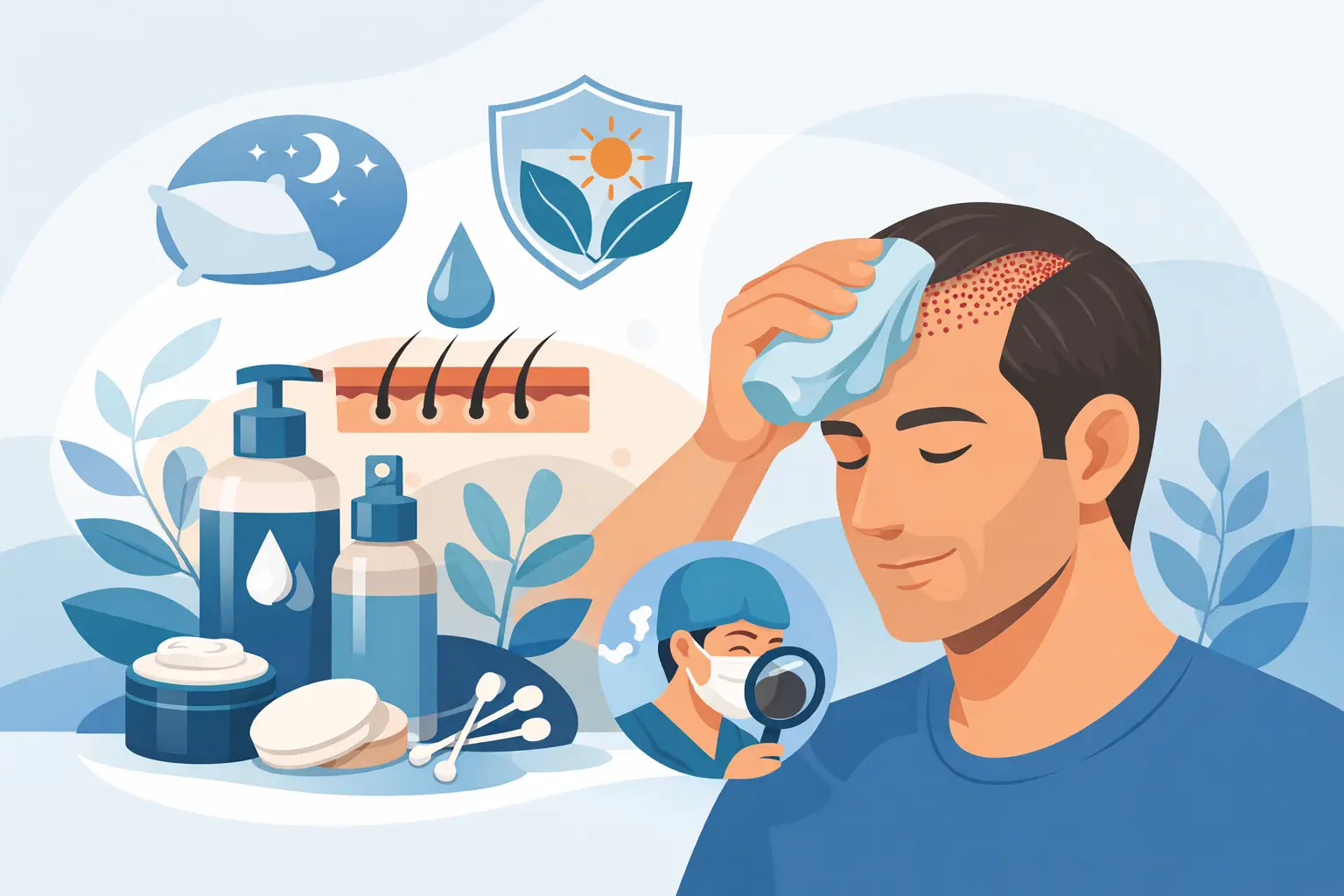
Sleeping position matters more than many people realize. Keeping your head elevated can help reduce swelling, especially around the forehead and eyes. Many patients do best sleeping on their back with supportive pillows for several nights. If you tend to move during sleep, a travel pillow can help keep the head more stable and reduce accidental contact with the grafted area.
You should also avoid hats unless your surgeon specifically says they are safe. Tight headwear can create pressure and disrupt healing. The same caution applies to pulling shirts over your head roughly, leaning the scalp against car headrests, or allowing pets or children to bump the area by accident.
Mild oozing, redness, and tenderness can be normal early on. What matters is whether symptoms stay within the range explained by your medical team. If pain is increasing instead of improving, or bleeding seems persistent rather than light and temporary, it is worth checking in promptly.
Washing your hair without disturbing grafts
Washing is often the part patients fear most, but proper cleaning supports healing. The scalp needs to stay clean, yet the technique has to be gentle. In most cases, clinics provide a very specific washing routine for the first several days, and those instructions should always come first.
Usually, the goal is not to wash the hair the way you normally would. Water pressure should be soft, product use should be controlled, and the transplanted area should never be scrubbed. Many providers recommend dabbing or pouring water rather than placing the scalp under strong shower pressure right away.
The same goes for shampoo. A mild product is typically used in small amounts, often applied carefully and rinsed without rubbing. Patients sometimes assume that if a little washing is good, a deeper wash is better. It is not. Overhandling the area can loosen crusts too early and irritate the scalp.
As healing progresses, washing becomes easier and more routine. Still, timing matters. Removing scabs too aggressively can interfere with recovery, while leaving heavy buildup for too long can also be unhelpful. This is one of those areas where the right schedule matters more than doing more.
Swelling, scabs, and itching: what is normal
A hair transplant creates tiny controlled wounds, so some visible healing signs are expected. Swelling often appears around the forehead a couple of days after the procedure and then settles. Not every patient gets it to the same degree. Factors like technique, number of grafts, skin sensitivity, and how carefully aftercare instructions are followed all play a role.
Scabs are also part of the process. They form as the scalp heals around implanted follicles. What patients should not do is pick at them. Even when the area feels dry or tight, forcing scabs off before they are ready can traumatize the grafts and delay recovery.
Itching is another common complaint. It can happen in both the donor area and the recipient area. In most cases, it reflects healing rather than a problem. Still, scratching is off limits. If itching becomes intense, the safest step is to speak with the clinic and use only approved products or medications.
When healing looks uneven
Patients often worry when one area appears redder, crustier, or slower to settle than another. Mild uneven healing can be normal. The donor and recipient zones recover differently, and some parts of the scalp may stay pink longer, especially in fair or sensitive skin.
What deserves more attention is warmth, spreading redness, pus, or a strong unpleasant odor. Those are not routine healing signs. If something feels off, trust that instinct and get medical guidance rather than waiting it out.
Activity, heat, and daily habits that can affect results
For active adults, the hardest part of recovery is often slowing down. Exercise, sweating, and heat exposure can all irritate the scalp early on. High-intensity workouts raise blood pressure and can increase swelling or discomfort, while sweat can sting and make the area harder to keep clean.
That does not mean every patient needs the exact same downtime. A desk-based professional may return to light daily activity quickly, while someone whose work is physically demanding may need more caution. The key is to avoid anything that creates pressure, friction, overheating, or risk of impact to the scalp.
Sun exposure is another factor patients underestimate. A healing scalp is more vulnerable, and direct sun can worsen redness and sensitivity. This matters even more in hot climates such as Dubai, where routine outdoor exposure can be intense. Early on, limiting direct sunlight is often safer than trying to cover the area with anything too tight.
Smoking and alcohol are also worth discussing honestly. Both can affect circulation and healing. If your surgeon has advised avoiding them before and after the procedure, that advice is there for a reason. The short-term inconvenience is minor compared with protecting long-term growth.
Shedding after a transplant is usually part of the process
One of the most alarming moments in recovery is seeing transplanted hairs shed. Many patients think something has gone wrong when this happens, but early shedding is often expected. The hair shaft may fall out while the follicle remains in place and begins a new growth cycle later.
This phase requires patience. A transplant does not produce an overnight cosmetic change. The scalp has to heal, follicles have to reset, and new growth takes time. Some patients see early signs sooner than others, but consistency matters more than speed.
Why results are not immediate
Hair grows in cycles, and transplanted follicles follow biology, not a deadline. You may notice periods where very little seems to be happening, followed by gradual thickening over the months ahead. That can feel slow, especially if you are used to quick cosmetic treatments, but it is normal for hair restoration.
This is one reason aftercare should not stop once the scabs are gone. Long-term follow-up, supportive treatments when recommended, and realistic expectations all contribute to a better experience.
Medications and products: less experimenting, better healing
After a transplant, patients are often tempted to add extra oils, sprays, vitamins, or scalp products in hopes of speeding up growth. That approach can backfire. The early healing period is not the time to experiment with harsh actives, fragranced products, or trending home remedies.
Use only the medications and aftercare products approved by your provider. If you have been prescribed antibiotics, anti-inflammatory medication, saline spray, or a specific shampoo, follow the schedule closely. Skipping prescribed care while adding unapproved products is a common mistake.
The same caution applies to resuming treatments like minoxidil or other hair loss therapies. In some cases, they are useful as part of an overall plan. In others, starting too soon can irritate the scalp. The timing should be individualized rather than guessed.
A practical hair transplant aftercare guide for warning signs
Most recoveries are straightforward, but patients should know when to ask for help. Significant swelling that worsens instead of improving, severe pain, fever, discharge, or sudden trauma to the grafted area all deserve prompt medical review.
It is also worth reaching out if you are unsure rather than waiting for a follow-up. Good aftercare is not just a set of instructions. It is support. Clinics that prioritize patient outcomes expect questions during recovery, because small concerns are easier to address early.
At A H T Aesthetic Medical Center, aftercare is treated as part of the treatment itself, not an afterthought. That level of support matters because even an excellent procedure needs careful healing to deliver the most natural-looking result.
The best recovery approach is usually the simplest one: protect the grafts, follow instructions closely, stay patient with the timeline, and ask when something does not feel clear. A calm, careful first few weeks can make all the difference in how confidently you move toward your final result.