You usually know the moment hair loss starts to feel different. It is no longer a little extra shedding in the shower or a wider part under bright light. It becomes the thing you notice in photos, in meetings, and in the mirror before you leave the house. That is why hair restoration procedures matter – not only for appearance, but for confidence, control, and peace of mind.
The good news is that treatment has moved far beyond one-size-fits-all solutions. Today, the best outcomes come from matching the right procedure to the right pattern of hair loss, the quality of your donor hair, your goals, and your timeline. Some patients need a surgical solution for permanent density. Others do better with regenerative support, early intervention, or a combination plan. The key is not choosing the most talked-about treatment. It is choosing the most appropriate one.
What hair restoration procedures actually include
Many patients use the term broadly, and that makes sense. Hair restoration procedures can refer to surgical hair transplantation, non-surgical treatments that support regrowth, and targeted restoration for areas beyond the scalp, such as the beard, mustache, or eyebrows.
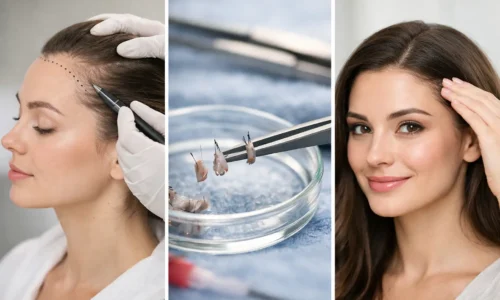
Hair transplantation remains the most definitive option when follicles have stopped producing healthy hair in a specific area. In these cases, the goal is to move strong, genetically resistant follicles from a donor zone, usually the back or sides of the scalp, into thinning or bald areas. When performed with proper planning and artistic precision, the result can look natural, age-appropriate, and long lasting.
Non-surgical options play a different role. Treatments such as PRP and PRF are often used to support existing hair, improve scalp health, and strengthen weaker follicles. These procedures can be especially useful for early-stage thinning, post-transplant healing, or patients who are not yet ready for surgery.
Hair transplant procedures and when they make sense
A hair transplant is often the right choice when hair loss has become established and visible density needs to be restored. Men with receding hairlines or crown thinning often consider transplant surgery after medical products fail to produce meaningful change. Women may also be strong candidates, especially when thinning is concentrated rather than diffuse and donor hair remains healthy.
The most common modern approach is follicular unit extraction, often called FUE. In this technique, individual follicular units are harvested and placed with careful attention to angle, direction, and density. Patients tend to prefer FUE because it is minimally invasive, avoids a linear scar, and supports a more comfortable recovery than older methods.
That said, a transplant is not just about moving hair. Design matters as much as technique. A natural hairline should fit your facial features, age, and future loss pattern. Packing grafts too aggressively or placing a low hairline that will not age well can create problems later. This is where medical judgment and experience make a real difference.
It also helps to be realistic. A transplant can significantly improve fullness, but it does not create unlimited density. The donor area is finite, and every graft should be used strategically. For some patients, especially those with extensive hair loss, the best result comes from balancing coverage, density, and long-term planning rather than trying to recreate teenage hair.
Non-surgical hair restoration procedures for early thinning
Not every patient needs surgery. In fact, some of the best candidates for non-surgical care are those who act early, before miniaturized follicles stop functioning altogether.
PRP, or platelet-rich plasma, uses components from your own blood to support the scalp and stimulate weakened follicles. PRF, a related option, contains growth factors and fibrin in a way that may offer a slower release. These treatments are commonly used when the goal is to improve hair quality, reduce shedding, and support existing growth rather than replace missing hair.
The benefit of regenerative treatment is that it can be done with minimal downtime and integrated into a broader plan. The trade-off is that results vary. Patients with active follicles and recent thinning often see more benefit than those with long-standing bald areas. This is why a proper assessment matters. If the follicle is no longer viable, stimulation alone will not bring it back.
Beyond the scalp: beard, mustache, and eyebrow restoration
Hair loss is not limited to the top of the head, and not every restoration goal is about scalp density. Patchy beard growth, sparse mustaches, and thinning eyebrows can also affect facial balance and self-confidence.
Beard and mustache transplantation can help create fuller, more even facial hair using carefully placed grafts that match the natural direction of growth. Precision is essential here because facial hair is highly visible at close range. The same is true for eyebrow transplantation, where graft placement must be delicate and exact to avoid an artificial look.
These procedures can be an excellent option for patients with naturally sparse growth, scarring, overplucked brows, or uneven density. The same principle applies as with scalp restoration: success depends on planning, artistry, and a realistic understanding of what your donor area can support.
Choosing the right procedure starts with diagnosis
One reason patients feel overwhelmed is that hair loss can look similar while having very different causes. Male pattern baldness, female pattern hair loss, hormonal shifts, traction, stress-related shedding, and inflammatory scalp conditions may all present as thinning. Treating them the same way is a mistake.
A strong treatment plan starts by identifying whether the issue is active shedding, follicle miniaturization, localized baldness, or permanent follicle loss. It should also account for how long the problem has been present, whether it is progressing, and whether there is enough donor hair for transplantation.
This is why consultation matters more than trends. The best clinics do not push every patient toward surgery. They assess scalp condition, review your history, examine pattern and stability, and explain what will and will not work. For some patients, the right first step is a transplant. For others, it is regenerative treatment, medical support, or a staged approach.
What to expect from treatment and recovery
One of the biggest concerns around hair restoration procedures is whether they will be painful, obvious, or difficult to recover from. Modern techniques have improved that experience considerably.
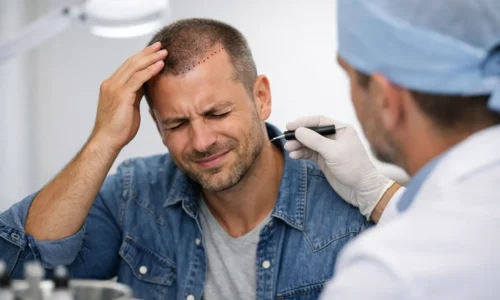
Most patients describe transplant treatment as manageable, especially when performed with careful local anesthesia and a patient-focused approach. Mild soreness, swelling, or scabbing can happen in the first days after the procedure, but recovery is generally straightforward when aftercare instructions are followed closely.
Results take patience. Transplanted hairs commonly shed before regrowing, which can surprise first-time patients. Early growth often begins after a few months, with more visible improvement over time. Full maturation takes longer, so judging a result too early can lead to unnecessary worry.
Non-surgical treatments are easier from a downtime standpoint, but they still require consistency. One session rarely tells the whole story. Most patients need a series of treatments and maintenance at appropriate intervals to preserve the benefit.
The trade-offs patients should understand
There is no single best procedure for everyone, and that is worth saying clearly. Surgery offers the most dramatic and lasting visual change in the right candidate, but it requires planning, a healthy donor area, and patience during regrowth. Non-surgical treatment is less invasive and can be a smart early move, but it may not restore density where follicles are already gone.
Cost, maintenance, and expectations all matter too. A lower upfront cost may not be the better value if it leads to weak results or repeated treatment that does not match your actual needs. On the other hand, not every thinning area requires surgery right away. Good medicine is often about timing.
For patients considering treatment in a specialist setting such as A H T Aesthetic Medical Center, the advantage is not just access to procedures. It is access to individualized planning, medically supervised care, and a strategy built around natural-looking results.
How to know you are ready
Most people are ready for treatment before they feel fully decided. They are frustrated by worsening density, tired of cover-up tactics, and looking for an answer that feels credible. What matters most at that stage is not having every detail figured out. It is asking the right questions.
Are you trying to restore lost hair, strengthen existing hair, or both? Is your hair loss stable, or still changing? Do you want the most permanent option, the least downtime, or a balanced approach? Your answers help clarify which path makes sense.
The right treatment should make you feel more like yourself, not like you are chasing an unrealistic version of the past. When hair restoration procedures are selected carefully and performed with skill, they can do exactly that. A thoughtful consultation is often the point where uncertainty starts to turn into a plan.